












By Ben Musanje
Deputy Inspector General of Government, Anna Twinomugisha Muhairwe, has delivered a powerful and emotional testimony on Uganda’s HIV/AIDS journey, recounting how her family survived the trauma and stigma associated with HIV while rallying women to take a central role in the fight to end the epidemic by 2030.
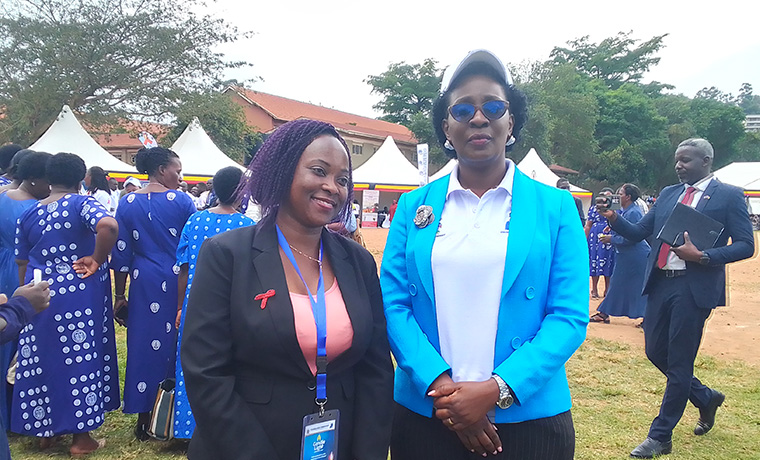
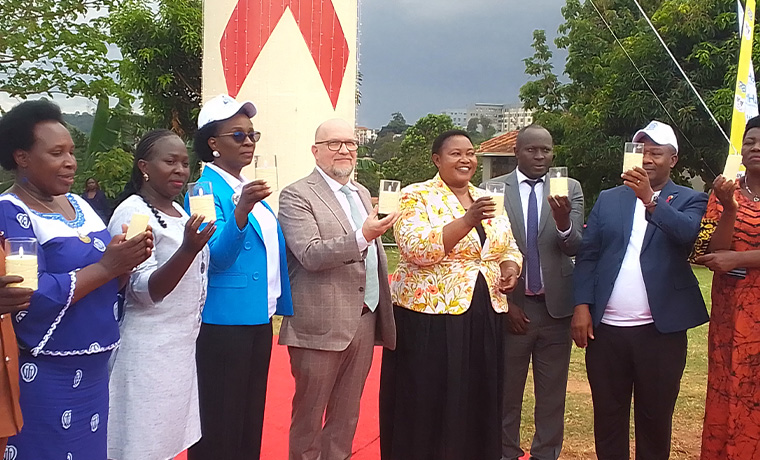
Muhairwe made the remarks on Tuesday while delivering the keynote address during the 2026 HIV/AIDS Candlelight Memorial event organized by the Uganda AIDS Commission at Kitante Hill Secondary School grounds under the theme: “Ending AIDS by 2030: Embracing the Role of Women.”
Addressing health workers, activists, mourners, students and government officials, Muhairwe said the memorial was not only a moment to remember lives lost to HIV/AIDS, but also an opportunity to celebrate courage, resilience and recommitment towards eliminating the disease as a public health threat.

“We gather not only to mourn lives lost, but also to honour courage, celebrate resilience and reaffirm our determination to end AIDS as a public health threat by 2030,” Muhairwe said.

In one of the most emotional moments of her speech, the Deputy IGG narrated how her mother, a retired nurse who worked at Mulago Hospital in the early 1990s, suffered severe stigma after accidentally pricking herself with a needle while drawing blood from an HIV-positive patient.
Muhairwe explained that although her mother did not contract HIV, fear and misinformation at the time caused colleagues, neighbors and even relatives to isolate and discriminate against her.
“She was ostracized by colleagues at work, neighbours, family and everyone who heard her story. She faced stigma even though she never contracted the virus,” Muhairwe recalled.

She said the painful experience shaped her understanding of the devastating social effects HIV/AIDS had on Ugandan families during the peak of the epidemic in the 1980s and 1990s.
According to Muhairwe, HIV/AIDS remains one of the greatest crises Uganda has ever faced because it affected nearly every family, institution and generation. She described a period when hospitals overflowed with patients, schools lost teachers, children became orphans and grandparents were forced to raise families again.
“Entire villages buried their young people. The military and public institutions lost some of their finest officers and personnel. Fear spread faster than facts,” she said.
Muhairwe paid tribute to health workers, mothers, caregivers and ordinary Ugandans whose sacrifice and compassion helped the country survive one of the darkest periods in its history.
She particularly applauded women for carrying the greatest burden during the epidemic, noting that they became caregivers, counselors and emotional pillars for struggling families long before donor-funded HIV interventions existed.
“Women have not merely participated in the HIV response; they have been the backbone of the response,” she stated.
Muhairwe said Ugandan mothers spent sleepless nights at hospital bedsides comforting the sick, feeding abandoned patients and supporting orphaned children despite widespread stigma and fear.
She, however, warned that women continue to face a disproportionate burden in the HIV epidemic due to poverty, gender inequality, economic vulnerability and gender-based violence.
Citing national statistics, Muhairwe said HIV prevalence among women in Uganda currently stands at 6.4 percent compared to 3.4 percent among men, highlighting the urgent need to empower women socially and economically.
“An economically empowered woman is less vulnerable to exploitation. When women are educated and supported, families and communities become stronger,” she noted.
The Deputy IGG also expressed concern about what she described as growing complacency in the fight against HIV/AIDS, warning that progress achieved over the years could easily be reversed.
She noted that risky sexual behaviour among young people is increasing while fear of HIV has reduced because treatment is now widely available.
“Drug and alcohol abuse are increasing. Transactional sex is rising. Early sexual activity is becoming normalized among the youth,” she warned.
Muhairwe further revealed that approximately 10,000 Ugandan girls aged between 10 and 19 are currently living with HIV/AIDS, calling the trend deeply worrying.
In a deeply personal reflection, she narrated the story of a young woman she mentors whose marriage plans recently collapsed after testing positive for HIV during premarital screening.
“She is devastated. If you are a young person here and you are still safe, this is the time for reckoning,” she cautioned.
Throughout her address, Muhairwe repeatedly emphasized the importance of values, discipline and responsibility in ending the epidemic. She credited Uganda’s earlier success in controlling HIV to the famous ABC strategy — Abstinence, Being Faithful and Condom Use.
She revealed that she personally benefited from youth empowerment and HIV prevention campaigns spearheaded by Uganda’s First Lady, Janet Kataaha Museveni, through the Uganda Youth Forum.
“I attended those conferences in the 1990s and we were taught to abstain. If young people admire me today, it is because I abstained,” Muhairwe told the audience amid applause.
She applauded the First Lady for promoting moral values, discipline, faithfulness and youth empowerment, arguing that the fight against HIV cannot be won through medicine alone.
Muhairwe also paid glowing tribute to Dr. Noerine Kaleeba, the co-founder of The AIDS Support Organization (TASO) for restoring hope and dignity to people living with HIV/AIDS during periods of severe stigma.
Through TASO, Muhairwe said thousands of people who had lost hope regained confidence and access to care because compassion replaced judgment.
“Uganda learned an important lesson through TASO — compassion is also medicine,” she remarked.
She also recognized unsung heroines including nurses, village health teams and community volunteers who walked long distances to educate communities and support affected families.
Muhairwe then linked the HIV/AIDS fight to corruption and governance, arguing that integrity and accountability are essential in ending the epidemic.
“As Deputy Inspector General of Government, allow me to emphasize that integrity and accountability are essential components of ending HIV/AIDS by 2030,” she said.
She warned that corruption in the health sector directly threatens lives because stolen medicines, mismanaged funds and weak systems deny vulnerable communities access to treatment and prevention services.
“When medicines are stolen, lives are endangered. When funds are mismanaged, vulnerable families suffer most,” she stressed.
Muhairwe said every shilling allocated to HIV/AIDS programs must reach intended beneficiaries and called for transparency, ethical leadership and responsible public service.
She disclosed that all ministries, departments and government agencies are required to allocate at least 0.1 percent of their annual budgets to HIV/AIDS interventions.
According to Muhairwe, the Inspectorate of Government allocated 0.25 percent of its 2024/2025 budget towards HIV/AIDS activities, more than double the minimum requirement.
“This demonstrates that stronger commitment is both possible and necessary,” she said.
As she concluded her address, Muhairwe urged men to become active partners in the struggle against HIV/AIDS, saying responsible masculinity should protect rather than exploit women and girls.
“A responsible father keeps his daughter in school. A responsible husband supports his partner. True masculinity is not recklessness; it is responsibility,” she emphasized.
She called upon Ugandans to restore compassion, integrity, family values and collective responsibility in order to protect future generations from HIV/AIDS.
“Let every candle become a call to action, a call to restore compassion, integrity and family values, and a call to empower women,” Muhairwe said.
The candlelight memorial attracted government officials, HIV/AIDS activists, health workers, students and members of the public who gathered to commemorate lives lost and renew commitment towards ending HIV/AIDS in Uganda by 2030. (For comments on this story, get back to us on 0705579994 [WhatsApp line], 0779411734 & 041 4674611 or email us at mulengeranews@gmail.com).