








By Mulengera Reporters
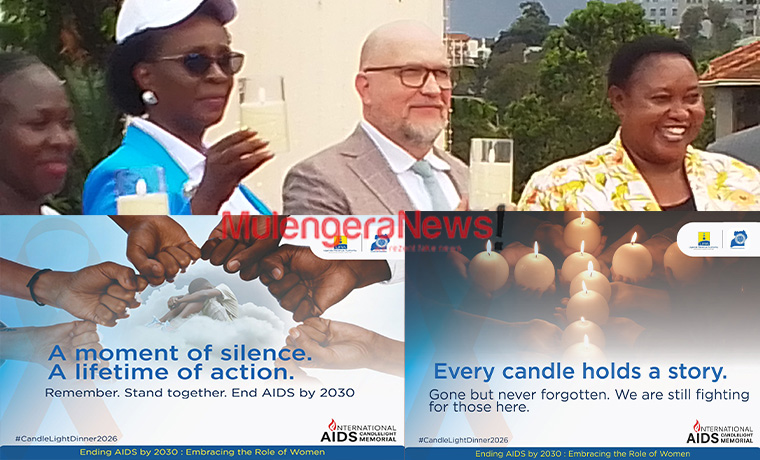
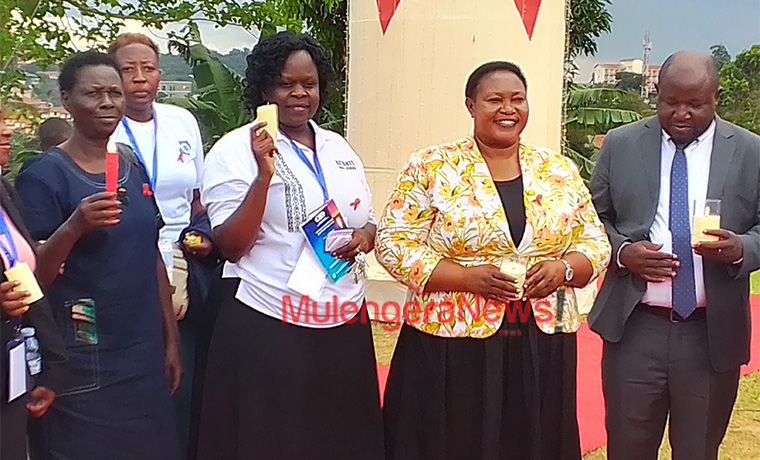
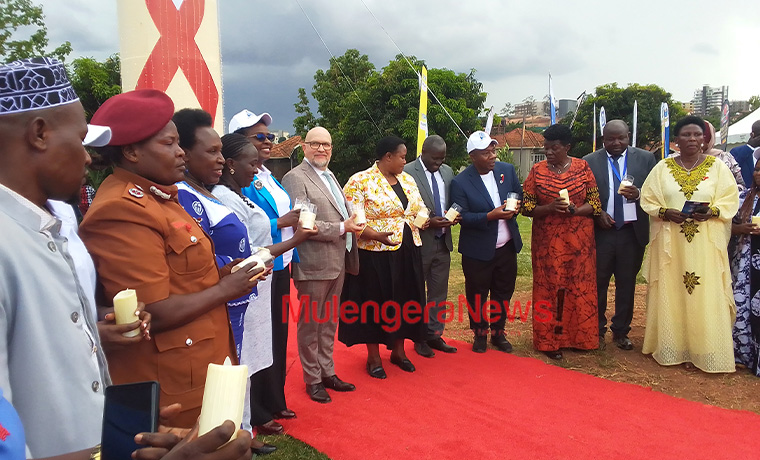
Uganda Revenue Authority (URA) joined hundreds of Ugandans at Kitante Hill Secondary School grounds in a moving candlelight commemoration organized by the Uganda AIDS Commission to honor lives lost to HIV/AIDS, celebrate the resilience of survivors, and renew the country’s determination to end AIDS as a public health threat by 2030.
Held under the theme, “Ending AIDS by 2030: Embracing the Role of Women,” the event brought together government officials, health experts, development partners, civil society organizations, students, and people living with HIV in a powerful display of remembrance and solidarity.
Minister for the Presidency Milly Babalanda attended as the Chief Guest, while Deputy Inspector General of Government Anna Twinomugisha Muhairwe delivered the keynote address. The gathering also featured remarks from Ministry of Health officials and leaders from the Uganda AIDS Commission.

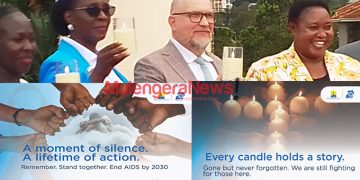
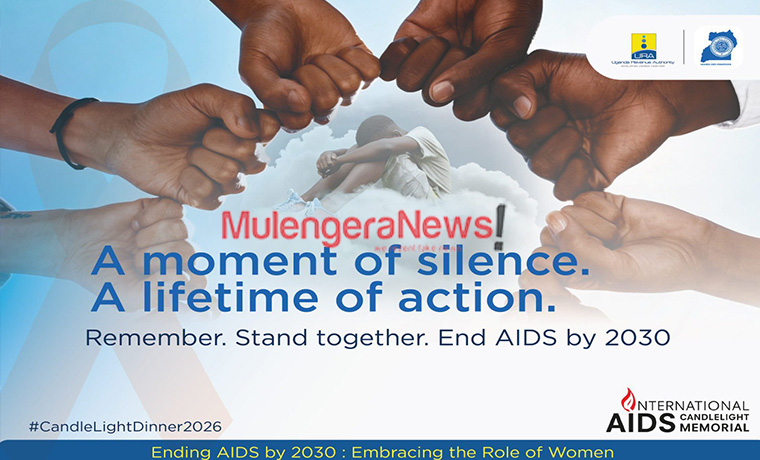
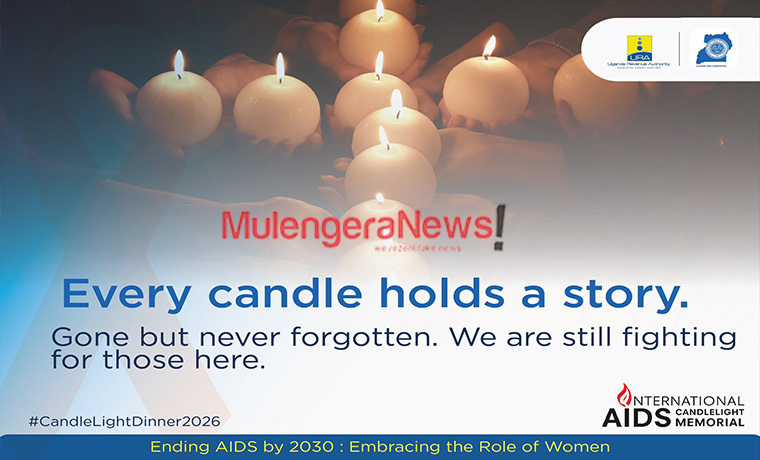
URA, through a message shared on its social media platforms, emphasized that the fight against HIV/AIDS remains far from over despite decades of progress.

The authority noted that although a candle may flicker briefly, the fight against HIV/AIDS continues every day, and called on Ugandans to stand for awareness, dignity, and action toward ending AIDS by 2030.
As participants raised candles into the sky, speakers reflected on Uganda’s long journey in combating HIV/AIDS and the need for renewed collective action, especially in protecting women, children, and young people who remain disproportionately affected by the epidemic.
Representing the Ministry of Health, Dr. Robert Mutumba, Program Manager of the AIDS Control Program, said the candlelight memorial symbolized more than remembrance, adding that it represented a movement rooted in love, loss, and resilience.

Dr. Mutumba explained that Uganda had registered remarkable progress in the fight against HIV over the last three decades, with national HIV prevalence reducing from 18 percent in the early 1990s to approximately five percent today.
According to Dr. Mutumba, mother-to-child transmission had also significantly declined, dropping from about 25,000 cases in the early 2010s to around 4,700 currently, which he said demonstrated that the country remained on the right track despite existing challenges.
He revealed that Uganda currently has an estimated 1.53 million people living with HIV, of whom nearly 1.5 million — representing about 97 percent — are on antiretroviral treatment. He added that more than 90 percent of those on treatment had successfully suppressed their viral load, describing it as a major milestone in controlling the spread of the virus.
However, Dr. Mutumba warned that children and adolescents continue to lag behind in treatment access and viral suppression, calling for targeted interventions to close the gap.
He further disclosed that the Ministry of Health is implementing a combination HIV prevention strategy that includes traditional awareness campaigns alongside biomedical interventions such as pre-exposure prophylaxis (PrEP) and the recently introduced Lenacapavir six-month injection.
Dr. Mutumba thanked the United States government and the Global Fund for supporting Uganda in introducing Lenacapavir, which he described as a potentially transformative intervention in reducing new HIV infections.
He also highlighted the continuing vulnerability of adolescent girls and young women, explaining that stigma, misinformation, and economic hardships still prevent many people from seeking treatment and care.
Dr. Mutumba noted that close to 100 new HIV infections are recorded every day in Uganda, with about 33 of those occurring among young people.
The Ministry of Health official acknowledged that Uganda’s HIV response is currently facing financial pressure following reductions in external donor funding and changing policies affecting HIV programs.
In response, he said government had adopted an integrated whole-of-government approach aimed at sustaining HIV services nationwide despite the funding constraints.
He called upon communities to support ongoing interventions, emphasizing that solidarity and collective action would be critical in carrying forward the country’s hope of ending AIDS.
Dr. Mutumba also announced that Uganda recently signed a five-year memorandum of understanding with the United States government to support integrated healthcare services, with significant focus on strengthening the resilience of the HIV response.
He paid tribute to health workers, village health teams, community volunteers, and development partners for their continued efforts in the fight against HIV/AIDS.
Dr. Mutumba urged Ugandans to honor those lost to AIDS not only through remembrance, but also through bold and compassionate action aimed at ensuring that no life is lost to the disease and no one is forgotten.
Speaking at the same event, Dr. Vincent Bagambe from the Uganda AIDS Commission praised Uganda’s multisectoral approach to combating HIV/AIDS, saying partnerships remain central to the gains achieved so far.
Dr. Bagambe explained that although the Uganda AIDS Commission is mandated to coordinate the national HIV response, the achievements registered over the years would not have been possible without strong partnerships involving multiple stakeholders.
He reiterated that the annual candlelight commemoration, observed every May 3, is intended to honor people who have died from HIV/AIDS while standing in solidarity with those still living with the virus.
Dr. Bagambe encouraged Ugandans to continue lighting candles not only during official commemorations but also in homes and workplaces as a sign of remembrance and support.
The Uganda AIDS Commission official emphasized that the 2026 theme recognizes women as both vulnerable populations and essential partners in ending AIDS.
He pointed out that a large proportion of new HIV infections in Uganda occur among adolescent girls and young women, adding that women remain disproportionately vulnerable to HIV despite years of interventions and advances in technology.
At the same time, he described women as critical leaders in prevention, treatment, care, and advocacy efforts across communities.
Dr. Bagambe highlighted partnerships with organizations such as Mothers Union, the National Women’s Council, guild leaders, women in cultural institutions, and student organizations to strengthen women’s participation in the HIV response.
He further pledged that the Uganda AIDS Commission would continue promoting evidence-based interventions, addressing barriers to healthcare access, and strengthening partnerships aimed at ending AIDS by 2030.
The commission also announced plans for a nationwide AIDS Marathon later this year, expected to cover 10 cities as part of activities leading to World AIDS Day on December 1.
As candles continued to glow across the grounds at Kitante Hill, the evening closed with a message of hope, unity, and determination — a reminder that while Uganda has made tremendous strides against HIV/AIDS, the journey toward ending the epidemic is still ongoing.