






By Ben Musanje
Newly appointed Minister of ICT and National Guidance, Justine Kasule Lumumba, has signaled a tougher government approach toward radio broadcasting and political programming, directing regulators to ensure that media platforms prioritize national guidance and development information over what she described as excessive political content.
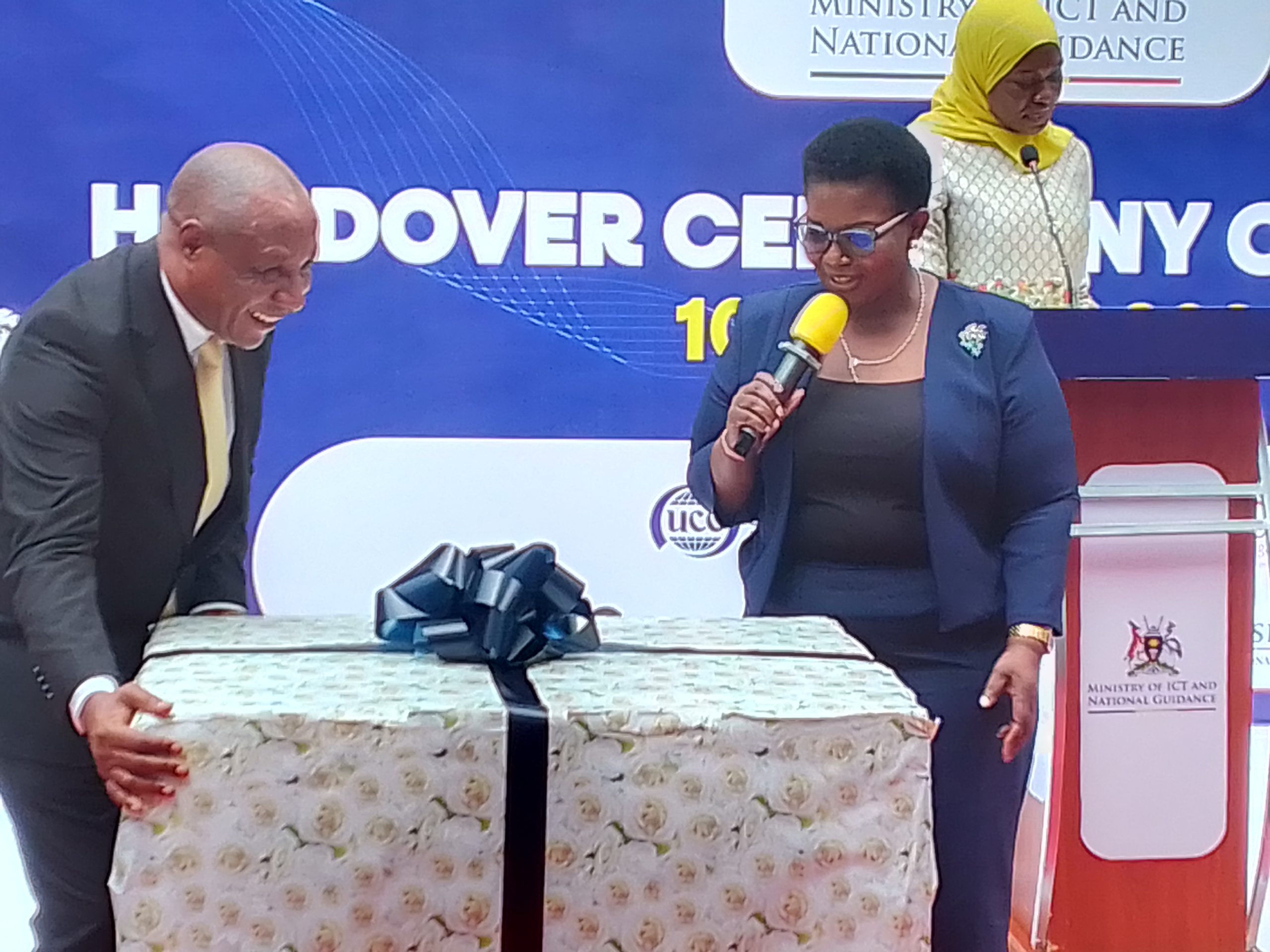
Speaking on Wednesday during her official handover ceremony at the Ministry of ICT and National Guidance in Kampala, Lumumba outlined an ambitious agenda that places government communication, national mobilization, technology-driven governance, and tighter oversight of the media sector at the center of her leadership.
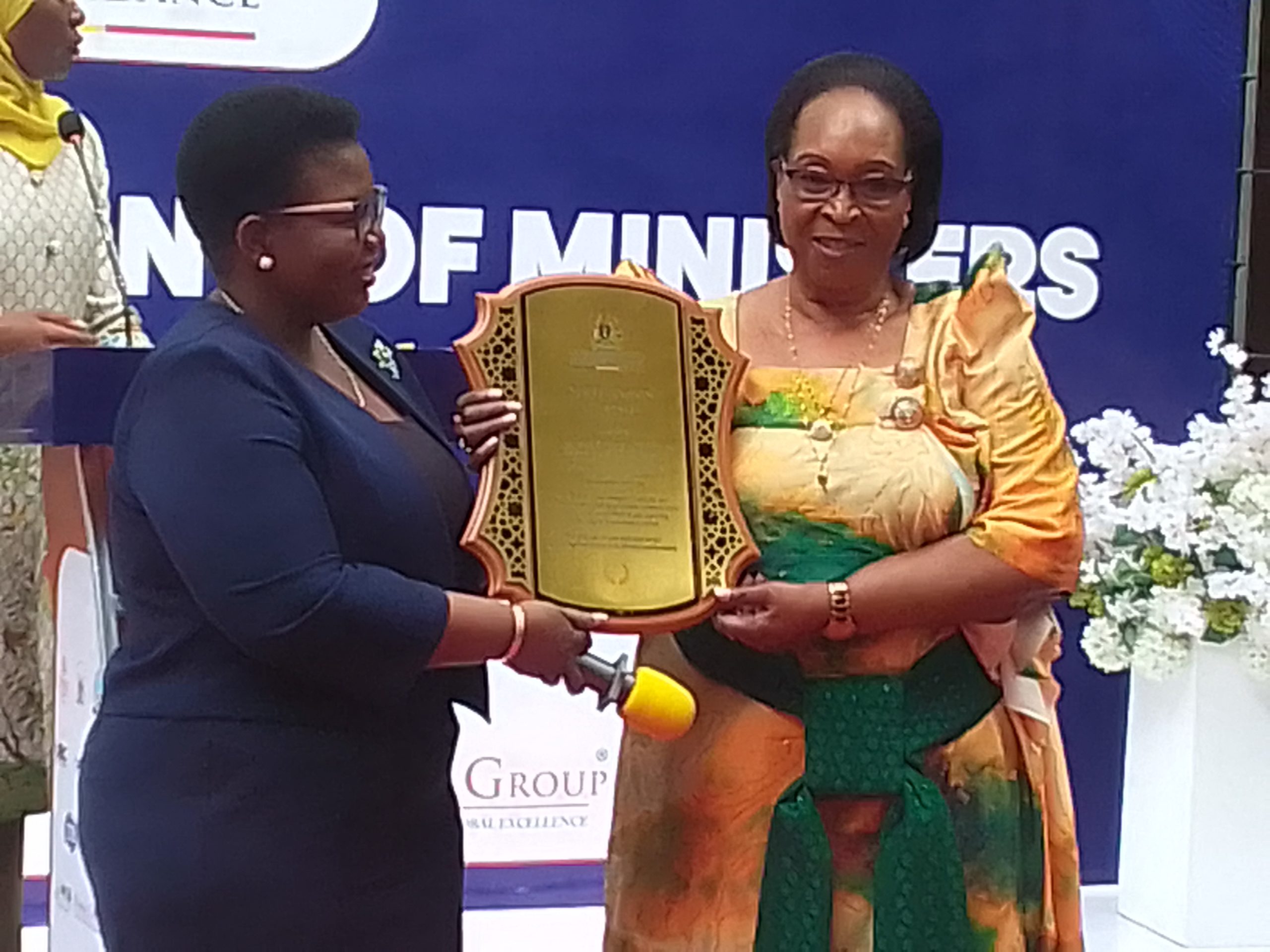
The former Minister for General Duties in the Office of the Prime Minister officially assumed office from Dr. Chris Baryomunsi, who was transferred to the Ministry of Health in a recent Cabinet reshuffle.
In a speech that blended politics, governance, technology, and media regulation, Lumumba announced her arrival as the political head of the ministry and made it clear that she intends to take an active role in directing the sector.

“I am here, I have arrived,” Lumumba told ministry officials, agency heads, and staff, setting the tone for what appeared to be a declaration of firm political leadership over one of government’s most strategic ministries.

One of the strongest messages from her address focused on the role of radio stations in Uganda’s political discourse. Lumumba argued that many radio stations have become overly focused on politics at the expense of development information and national guidance.
“People are misusing radios. They are using them more for politics, more than passing on useful information, but also guidance,” she said.
The minister expressed concern that broadcasting platforms, particularly radios and televisions, have increasingly taken over roles traditionally played by families and communities.

“Parenting has gone down. Our TVs have now become the parents in the home. Our radios have become the parents in the sitting rooms,” she said.
She questioned how government could ensure that media platforms contribute more effectively to shaping morals, values, and national priorities.
Lumumba particularly cited her home region of Busoga, which she said has become heavily influenced by political debates broadcast on local radio stations.
“I come from Busoga. We are one of the areas where politics is up there and it takes priority over the rest of other activities through radios. How do we make them tone it down so that they bring what is most important to the people?” she asked.
Although she did not explicitly mention sanctions, her remarks are expected to place renewed attention on the role of the Uganda Communications Commission (UCC), the government regulator responsible for licensing and supervising broadcasters.
Her comments suggest that the ministry may seek stronger enforcement of broadcasting standards aimed at ensuring that radio stations allocate more airtime to government programs, public information campaigns, and national development issues.
Lumumba also issued a direct challenge to the Uganda Broadcasting Corporation (UBC), calling for the state broadcaster to expand its reach and become the primary source of information for Ugandans.
“UBC, we must cover the whole country if we want everybody to hear our message,” she said.
She argued that government should strengthen its own media platforms rather than rely heavily on private broadcasters.
“How do we market our UBC to be listened to like they listen to the others? We are government. We are the ones who license the others. How do we make UBC be the center and attract everybody to listen to UBC?” she said.
In one of the most notable sections of her speech, Lumumba suggested that citizens should increasingly turn to UBC for information because of its role in promoting national values and government priorities.
“If it means leaving even the others and pay attention to UBC, let that be, because that is what is the center of parenting, of morals, of values, of attitude, and also shaping the future of the country,” she said.
Beyond media regulation, Lumumba positioned the ICT ministry as a key pillar of national security and governance.
She argued that technology should no longer be viewed merely as a support service but as a central driver of security, monitoring, service delivery, and accountability.
“The insecurity these days is more or less centered on issues to do with ICT technology. So you are a security ministry,” she told ministry staff.
She called for greater use of digital systems in fighting corruption, monitoring public projects, tracking government performance, and enhancing transparency.
According to the minister, ICT should provide tools that allow authorities to detect wrongdoing, monitor infrastructure projects, and ensure public officials are held accountable.
“When you use IT, you leave traces,” she said while emphasizing the importance of technology in combating corruption.
Lumumba also emphasized the ministry’s responsibility in promoting government programs and ensuring that citizens receive information about services available to them.
She cited government-supported irrigation schemes and agricultural insurance programs as examples of initiatives that many citizens remain unaware of despite their potential benefits.
“We must provide a platform,” she said, arguing that communication gaps often undermine otherwise effective government programs.
The minister repeatedly reminded ministry staff that they serve under delegated authority from President Yoweri Museveni and should ensure that their work aligns with government objectives.
“You are doing work on behalf of somebody called Yoweri Kaguta Museveni,” she said.
Throughout the address, Lumumba stressed that the ICT ministry must become the engine that enables other government institutions to succeed.
She challenged officials to think beyond traditional communications functions and instead position the ministry as a driver of digital transformation, resource mobilization, public service delivery, and economic development.
The minister also acknowledged that she is not a technical expert in ICT but pledged to learn from ministry professionals and agency staff.
“I come in as somebody who is not an expert in ICT,” she admitted.
However, she insisted that her role would be to provide political leadership, supervision, and direction while relying on technical teams to implement government priorities.
The speech also highlighted emerging technologies such as artificial intelligence, robotics, blockchain, cloud computing, big data, and the Internet of Things, which Lumumba said she is eager to understand better as she settles into her new role.
As she concluded her remarks, Lumumba called on ministry staff to work together to ensure Uganda remains competitive in a rapidly evolving technological environment.
“We should be ahead of them in terms of technology and in terms of national guidance, in terms of information, in terms of communication, we should be the leaders,” she said.
Her arrival at the ministry signals what could become a more assertive era of government involvement in media regulation, national messaging, and digital governance. The coming months are likely to reveal how her calls for controlling political content on radio stations and expanding the influence of UBC will be translated into policy and regulatory action. (For comments on this story, get back to us on 0705579994 [WhatsApp line], 0779411734 & 041 4674611 or email us at mulengeranews@gmail.com).