







By Ben Musanje
The Minister of Gender, Labour and Social Development, Maj. Gen. (Rtd) Henry Tumukunde, has directed officials in his ministry to engage anti-human trafficking campaigners over the plight of hundreds of Ugandans stranded in Cambodia after receiving alarming reports that at least 97 victims are in imminent danger and require urgent rescue.
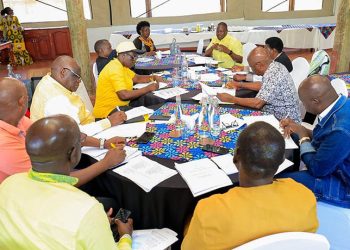
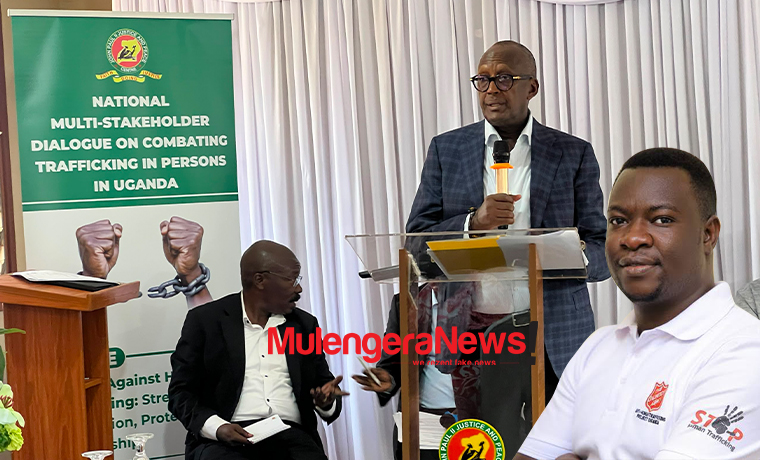
Tumukunde made the commitment during the National Multi-Stakeholder Dialogue on Combating Trafficking in Persons in Uganda held at the John Paul II Justice and Peace Centre in Nsambya, Kampala, where government officials, development partners and civil society organizations met to assess the country’s response to the growing vice of human trafficking.
The intervention followed an appeal by Emmanuel Wataka, Project Manager of The Salvation Army’s Anti-Human Trafficking Project, who informed the minister that his organization had documented nearly 600 Ugandans trapped in Cambodia after being lured abroad through fraudulent employment opportunities.

Wataka said the organization was working to ensure the victims were repatriated and successfully reintegrated into their communities upon return.

He further revealed that the situation had become increasingly desperate for 97 victims whose identities had already been established, adding that information received from contacts in Cambodia indicated that their lives were in immediate danger and that they required urgent rescue.
Wataka appealed to the government to intervene and support efforts to rescue the victims and facilitate their safe return to Uganda.
Responding to the concerns, Tumukunde directed ministry officials to schedule a meeting with representatives of The Salvation Army early next week so that the information could be verified against government records before any intervention was undertaken.

The minister said the organization should present all its documentation for comparison with the ministry’s records, after which government would determine the appropriate course of action.
Tumukunde also sought details about the local organizations The Salvation Army was working with in Cambodia, particularly whether they were non-governmental organizations involved in anti-trafficking work.
After learning that the organization was collaborating with local civil society groups in Cambodia, the minister said government would examine the available information and explore possible areas of cooperation.
He noted that addressing international human trafficking cases often required governments to navigate complex diplomatic processes as well as misinformation surrounding such operations, but assured stakeholders that the ministry would carefully review the evidence before deciding on the next steps.
The latest revelations add to growing concerns over the plight of Ugandans trafficked to Southeast Asia, particularly Cambodia, where criminal syndicates have increasingly targeted young Africans with fake job offers advertised on social media and through unlicensed labour recruitment agents.
Many victims reportedly travel expecting employment in customer care, information technology or hospitality, only to find themselves confined in heavily guarded compounds and forced to operate illegal online scam businesses under threats, violence and psychological abuse.
In February this year, the Ugandan government announced plans to repatriate up to 500 Ugandans believed to have been stranded in Cambodia after falling victim to human trafficking networks. The victims are part of a wider international trafficking operation involving migrants from Africa and Asia who have been exploited in illegal online scam centres across Southeast Asia.
The appeal also comes less than a week after President Yoweri Museveni urged Ugandans to abandon the belief that prosperity could only be found abroad.
Speaking at Kyankwanzi during the pass-out ceremony of 1,030 Ugandans evacuated from South Africa following xenophobic attacks, Museveni said many young people continued to risk their lives in pursuit of opportunities overseas despite Uganda offering enormous potential for wealth creation through agriculture, manufacturing, services and the digital economy.
The President expressed concern that many Ugandans were being deceived by false promises of employment abroad, yet the country offered numerous opportunities for economic transformation through local enterprise.
He encouraged returnees to embrace government livelihood initiatives such as the Parish Development Model and Emyooga instead of falling prey to traffickers who exploit unemployment and desperation.
As Uganda continues to grapple with rising cases of labour trafficking, stakeholders at the dialogue called for stronger regulation of labour recruitment agencies, enhanced international cooperation and increased public awareness to protect vulnerable job seekers from criminal syndicates operating across borders.
With Tumukunde committing to personally review the documentation presented by The Salvation Army, stakeholders expressed hope that government would expedite rescue efforts for the 97 Ugandans reportedly facing imminent danger while accelerating plans to bring hundreds of others safely back home. (For comments on this story, get back to us on 0705579994 [WhatsApp line], 0779411734 & 041 4674611 or email us at mulengeranews@gmail.com).