






By Ben Musanje
Uganda’s 28th Annual Report on the State of Human Rights has laid bare a turbulent electoral period marked by allegations of excessive force, media restrictions, civil society suspensions, and hundreds of arrests, even as millions of citizens turned out to participate in the 2025/2026 general elections.
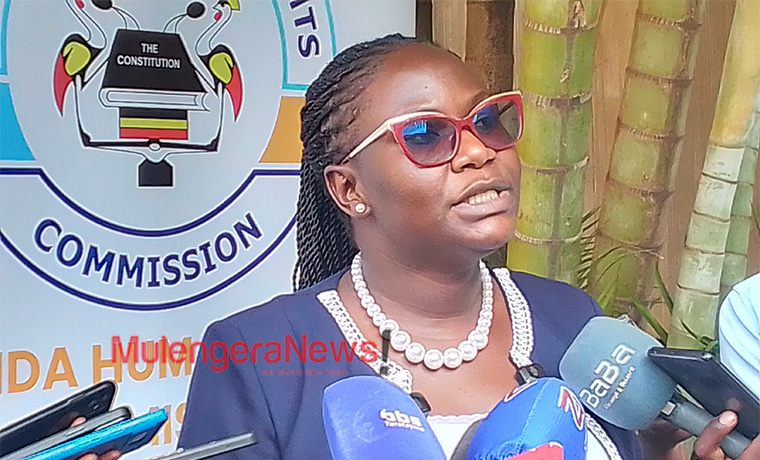
Presented by Hope Bagota, Senior Human Rights Officer of the Uganda Human Rights Commission (UHRC) at Protea Hotel in Kampala, the report captures a year of contrasts—one in which democratic participation expanded on paper, but was repeatedly strained by operational, political, and security-related challenges.
According to the Commission, 21,649,068 Ugandans registered to vote in the presidential, parliamentary, and local government elections, with 11,366,201 ultimately casting ballots. The UHRC described this as evidence of sustained civic engagement, noting that citizens actively participated in campaigns, party primaries, nominations, and rallies across the country.

However, the Commission warned that the electoral environment was far from fully free and fair, citing incidents of intimidation, restrictions, and violence in several regions.

The report documented the arrest of more than 300 people during the electoral period across districts including Kampala, Wakiso, Kiruhura, Gulu, Mbale, Arua, Lira, Ssembabule, Mbarara, Kayunga, and Jinja. It also noted that deaths occurred in districts such as Iganga, Amuria, Butambala, Sembabule, Wakiso, and parts of Kampala, raising concerns about the protection of the right to life during politically sensitive periods.
Security operations during rallies and campaign events came under particular scrutiny. The UHRC reported instances where police and other security agencies used force to disperse supporters and manage confrontations between candidates and their followers. These actions, the Commission said, undermined constitutional guarantees on peaceful assembly and freedom of expression in some areas.
The report also highlighted restrictions on media freedom, pointing to the banning of Nation Media Group from covering parliamentary sittings and certain political figures. It stressed that any limitations on media must comply with Article 43 of the Constitution, which requires that restrictions be demonstrably justifiable in a free and democratic society.

Internet disruptions ahead of polling day were also cited as a major concern. According to the UHRC, limited access to digital platforms affected the flow of information, constrained journalistic reporting, and restricted citizens’ ability to communicate freely during a critical democratic period.
Civil society operations were similarly affected. The report noted that the NGO Bureau under the Ministry of Internal Affairs suspended several civic, human rights, and election-monitoring organizations, citing alleged non-compliance and security concerns. The Commission warned that these suspensions weakened accountability mechanisms and reduced independent oversight during elections.
The UHRC also flagged concerns about the monetization of politics, citing incidents of voter bribery and excessive campaign spending that distorted political competition and disadvantaged candidates without financial backing. It further noted that unequal access to campaign resources remained a systemic barrier to fair political participation.
Technology failures added another layer of complexity to the electoral process. The report stated that Biometric Voter Verification Kits (BVVKs) malfunctioned or failed to reach polling stations in several districts, including Yumbe and Wakiso, while performing inconsistently in others such as Kyankwanzi, Kiruhura, Bunyangabu, Moroto, Napak, and parts of Nakapiripirit. These failures, the Commission said, undermined efficiency and public confidence in the voting process.
Despite these challenges, the Commission acknowledged moments of calm and orderly voting in parts of the country, noting that security agencies in many areas managed to contain tensions without escalation.
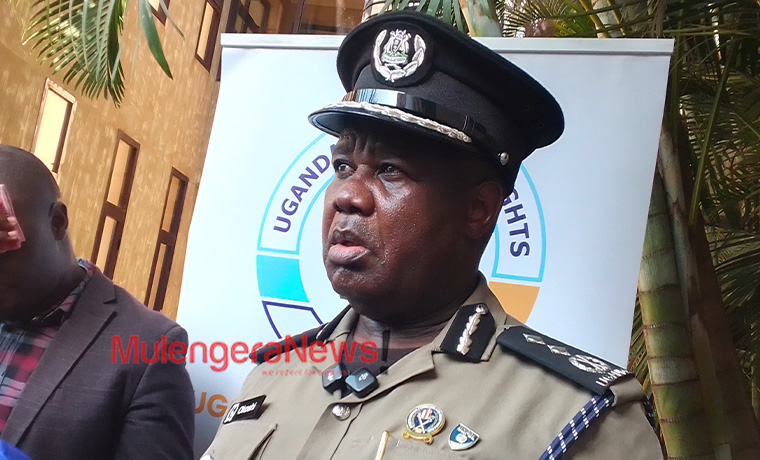
Following the presentation of the report, Commissioner of Police Simon Peter Okoshi, Deputy Director of Operations responded to the concerns raised, particularly those relating to arrests, use of force, and extended detention periods beyond the constitutional 48-hour rule.
Okoshi defended the conduct of police, saying that while the 48-hour guideline is generally respected, there are exceptional circumstances where strict adherence may not be possible. He cited serious crimes such as murder, defilement, and aggravated robbery as situations that may require extended detention.
“Maybe that’s what I can say. There are circumstances as grave as that whereby we may not necessarily strictly follow the 48-hour rule,” he said, adding that delays are not driven by intent to violate rights but by operational realities.
He also defended the use of arrest-first approaches in certain cases, arguing that immediate action is sometimes necessary to prevent ongoing harm, while investigations continue thereafter. However, he acknowledged that the approach varies depending on the nature of the offence.
On claims of political prisoners, Okoshi declined to comment directly, stating that such matters fall outside his mandate.
Addressing election-related violence, he said security forces exercised restraint during the electoral period, describing incidents of confrontation as isolated rather than widespread. He maintained that officers were often responding to provocation and were operating under difficult conditions.
He further defended the use of force in life-threatening situations, saying officers are trained to protect both their lives and public safety when confronted with armed suspects. He argued that in such scenarios, the law permits the use of lethal force when necessary to neutralize imminent threats.
The UHRC report concluded with recommendations urging security agencies to avoid excessive use of force, strengthen respect for constitutional rights during operations, and improve coordination during electoral periods. It also called on the Electoral Commission to enhance the reliability of biometric systems through better testing, training, and deployment of technical support teams.
Additionally, the Commission urged improvements in voter education to reduce ballot errors and strengthen citizen participation.
As Uganda reflects on the 2025/2026 electoral season, the report presents a country navigating a complex democratic landscape—where high voter engagement and institutional reforms coexist with persistent concerns over civil liberties, political competition, and the conduct of security agencies. (For comments on this story, get back to us on 0705579994 [WhatsApp line], 0779411734 & 041 4674611 or email us at mulengeranews@gmail.com).