







By Mulengera Reporters
There was controversy in the ongoing criminal proceedings involving city pastor Robert Kayanja after court heard that a deleted WhatsApp group allegedly linked to him was used to exchange sodomy-related videos and photographs among several members.
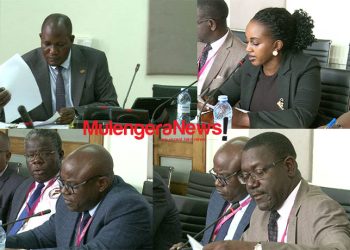
The revelations came on Thursday, May 21, 2026, during proceedings before Mwanga II Magistrate’s Court in Mengo, where police forensic analyst Enock Kaneene concluded his testimony and was formally discharged as a witness after both prosecution and defence lawyers completed examining him.
Kaneene told court that during forensic extraction of digital material from a one Reagan Ssentongo’s (20) phone, submitted as exhibit, investigators recovered traces of a previously deleted WhatsApp group allegedly involving Kayanja and several other individuals, including Fred Kisitu, Enock, and another contact saved under Highway of Holiness Miracle Centre.
According to Kaneene, the recovered chats indicated that members of the group exchanged pornographic and sodomy-related videos, pictures and messages before the group was eventually deleted.
The testimony added a fresh dimension to the already sensitive case in which nine men are facing charges linked to allegations involving unnatural offences and fabricated accusations against the Rubaga Miracle Centre Church pastor.
Court proceedings were dominated by sharp disagreements between Chief State Attorney Jonathan Muwaganya and lawyers from Ojambo & Ojambo Advocates over forensic findings connected to video files allegedly exchanged between Reagan Ssentongo, the first accused person, and a contact saved as “Mzee” in his phone.
Kaneene reaffirmed under re-examination that forensic analysis linked the “Mzee” number to Kayanja. He further testified that evidence showed video files had been exchanged between the two contacts before some of the files were allegedly deleted from the sender’s side.
Although the forensic analyst managed to recover traces of the deleted files, he explained that the videos couldn’t successfully open or play during examination, making it impossible for investigators to independently verify their exact content.
Nevertheless, Kaneene maintained that forensic indicators confirmed file transmission had taken place prior to deletion.
His testimony appeared to contradict claims previously circulated by some media outlets sympathetic to Kayanja, which had suggested that no videos or photographs were ever transmitted from the pastor’s phone number to Ssentongo.
The issue immediately sparked heated exchanges in court after prosecutor Muwaganya objected to the defence line of questioning, arguing that matters concerning deleted outgoing videos from Kayanja’s number had not been part of earlier cross-examination and therefore should not have been revisited during re-examination.
Muwaganya further demanded that the forensic expert explain how he concluded that the deletions had originated from Kayanja’s side rather than Ssentongo’s device.
Defence lawyers strongly resisted the move, insisting that the prosecution had already concluded its cross-examination and could not introduce fresh questioning through objections raised during re-examination.
The disagreement forced Magistrate Adams Byarugaba to intervene and issue a ruling allowing limited clarification on the disputed forensic findings.
Following the ruling, Kaneene displayed the WhatsApp chats before court, including alleged deleted video files exchanged between the two contacts. However, attempts to open the recovered files in court were unsuccessful after the videos failed to visualize.
Despite the technical limitations, Mr. Kaneene maintained his position that the deleted files had existed and had been transmitted before deletion. (For comments on this story, get back to us on 0705579994 [WhatsApp line], 0779411734 & 041 4674611 or email us at mulengeranews@gmail.com).