










By Mulengera Reporters
Uganda Telecommunications Corporation Limited (UTeL) has joined efforts to support mental health services at Butabika National Referral Mental Hospital, with company officials calling for an end to stigma surrounding mental illness and greater corporate involvement in supporting vulnerable communities.
During a visit to the country’s main mental health facility, UTeL officials donated assorted items including soap, jerrycans and hygiene supplies to support patients and staff at the hospital, at a time when the country remains alert to Ebola prevention measures.
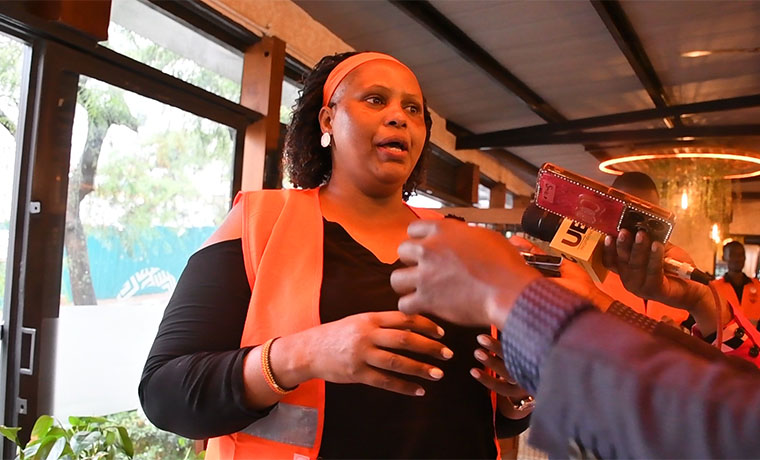
Speaking during the engagement, UTeL Chief Operations Officer Maggie Mukiibi Lutwama said the company considered it important to stand with mental health patients and health workers while promoting awareness about mental wellness.

“We are here today to support the initiative of mental health here in Butabika,” Lutwama said. “As a government organization, we thought it was important to support our own people but also minimize the stigma that mental health has out there.”

She said the visit was intended not only to provide material support but also to send a message that seeking mental health treatment should not be feared or hidden.
“We wanted to demonstrate love to the patients that are here, but also for us as individuals at company level to know that should you have a challenge of mental health, you can freely walk in here and get the service,” she added.
Lutwama noted that after touring the facility, UTeL officials were impressed by the services being offered despite the challenges facing the institution.

“The facilities look amazing and that is one of the reasons why we are saying that as a company, why not support this,” she said. “Should any of our staff have a mental challenge, they can come here and get support so that we can have a vibrant team.”
The UTeL executive linked employee wellness to organizational performance, arguing that companies must prioritize both the physical and mental health of workers.
“The greatest asset of any organization are the people,” she said. “If we are able to take care of their health mentally and physically, we can soar and flourish as an organization.”
According to Lutwama, the company has created internal staff initiatives aimed at strengthening teamwork, innovation and social responsibility. Employees are grouped into teams that participate in community outreach activities under the theme “Together We Create Impact.”
“We believe that when we work together as a team, no one will be left behind,” she said. “Coming to Butabika today is a demonstration that we value the human being and the worker.”
Beyond mental health awareness, UTeL officials also highlighted the role telecommunications companies can play in public sensitization campaigns, particularly during health emergencies such as Ebola outbreaks.
Lutwama said the company has introduced internal awareness systems to educate staff about disease prevention.
“When anyone puts on their screen in office, there is a sensitization message about Ebola reminding them how to keep safe,” she explained. “We have also put up posters all over the organization to remind staff that Ebola is real and prevention starts with us.”
She said the company hopes the awareness created internally can spread to families and communities across the country.
However, even as UTeL pledged continued support, officials at Butabika Hospital painted a picture of a health facility under immense pressure due to overcrowding and limited resources.
William Okura, the Acting Assistant Commissioner of Nursing Services at Butabika Hospital, said the hospital is currently overwhelmed by the growing number of patients seeking mental health treatment.
“Butabika Hospital is full,” Okura said. “The number of patients is more than the bed capacity.”
According to hospital administrators, the facility was originally constructed to accommodate about 550 patients but is currently handling more than 1,000.
Okura said the increasing patient population has placed enormous strain on the hospital’s workforce.
“The number of patients compared to our human resource personnel, the nurses, the doctors and clinicians, is very high,” he said. “We are very few on the ground and this creates burnout.”
He explained that mental health patients often require intensive and continuous care, making the workload physically and emotionally exhausting for nurses and clinicians.
“A particular nurse can get so tired in the effort of trying to manage these clients,” he noted.
Besides staffing shortages, the hospital is also grappling with inadequate logistical resources. Despite the constraints, Okura said the institution continues to manage patients through teamwork and coordinated planning among administrators, clinicians and hospital leadership.
“We have a multifaceted approach,” he explained. “We plan together to manage this great institution under the directives of our executive director.”
Hospital administrators welcomed UTeL’s intervention, saying public support remains critical to sustaining operations at the country’s largest mental health referral facility.
Allian Nahabwe, Human Resource Officer at UTeL emphasized the importance of appreciating the realities faced by patients and health workers inside the hospital.
“When you are outside there, you don’t really know what happens inside here until you come,” Nahabwe said. “That is when you appreciate what is done and how these people are taken care of.”
She reminded guests that mental illness can affect anyone regardless of social status or profession.
“Any of us can be a candidate of this facility,” she said. “You can never know how life may turn out.”
Nahabwe praised UTeL for taking time to support the hospital and encouraged the company to maintain a long-term partnership with the institution.
“This donation has come at the right time, especially when we are dealing with the Ebola scare,” she said. “It supplements what we already have.”
She also challenged more organizations and corporate entities to participate in community support initiatives beyond one-off donations.
“There are many activities that can be ventured into, including tree planting and other projects,” she said. “We are moving together hand in hand.”
The visit ended with interactions between hospital officials and UTeL staff, underscoring a shared message that mental health deserves greater public attention, compassion and investment. (For comments on this story, get back to us on 0705579994 [WhatsApp line], 0779411734 & 041 4674611 or email us at mulengeranews@gmail.com).