






By Mulengera Reporters
Long before he became Executive Director of the Uganda Wildlife Authority (UWA), long before he was entrusted with safeguarding Uganda’s national parks, wildlife reserves and some of the country’s most treasured natural assets, Dr. James Musinguzi was a schoolboy standing quietly before a chimpanzee enclosure.
While many of his classmates were captivated by the animals’ playful antics and striking resemblance to humans, Musinguzi found himself drawn to something deeper. He watched how the chimpanzees interacted with one another. He noticed their discipline, their social order and the deliberate way they selected and used simple tools.
The experience left a lasting impression on him. He recalls being fascinated by the remarkable level of organization and intelligence displayed by the animals.

What began as childhood curiosity would eventually become a lifelong calling.

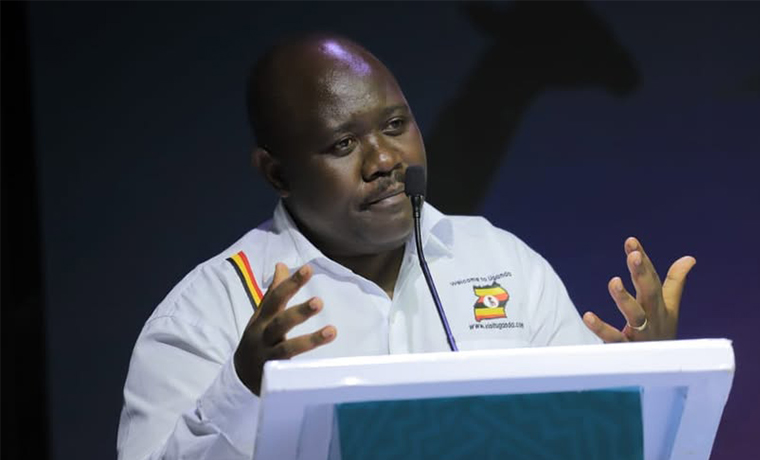
Today, Musinguzi occupies one of the most important positions in Uganda’s conservation sector. As Executive Director of UWA, he oversees the country’s wildlife resources and protected areas, balancing the demands of conservation, tourism, community development and environmental protection. Yet the path from that school excursion to the executive director’s office was shaped not by a single moment, but by years of growing understanding about nature, people and the intricate relationship between them.
For Musinguzi, conservation has never been simply about animals. It is about connections.
Growing up, he became increasingly aware of how dependent life is on healthy ecosystems. Human beings rely on nature for food, water, medicine and livelihoods. Animals depend on functioning habitats. Plants support both wildlife and human communities. Every element is linked to another.

He believes that people, animals and the environment are interdependent, with each relying on the other for survival and wellbeing.
This realization guided his academic and professional journey into conservation biology and wildlife management. But as his knowledge deepened, so did his appreciation of conservation’s broader significance.
He became fascinated by the role of wild plants in medicine and the ways ecosystems support human wellbeing and economic development. Wildlife, he discovered, was not only a natural heritage worth protecting but also a resource capable of transforming communities through tourism and sustainable livelihoods.
Along the way, he found what would become his life’s mission.
He came to believe that plants and animals, despite lacking a direct voice in human affairs, needed advocates who could speak on their behalf and ensure their interests were represented.
That sense of responsibility now sits at the heart of his leadership. His role is not merely to manage wildlife populations or protected areas. It is to ensure that nature has a place in national conversations about development, policy and the future.
Away from the office, Musinguzi describes himself as a Christian, a family man and a believer in community service. He enjoys engaging with people and supporting local initiatives. During the Covid-19 lockdown, he mobilized residents in his village to reopen roads that had become impassable.
The story illustrates a principle he often returns to: progress is achieved through partnership.
Whether in community development or wildlife conservation, he believes solutions emerge when people work together across social and economic divides.
That belief is particularly important as he takes over UWA at a critical moment. Tourism has been identified as one of the sectors expected to drive Uganda’s economic transformation, with nature-based tourism remaining one of its strongest pillars.
For Musinguzi, conservation and development are inseparable.
Healthy ecosystems attract visitors. Tourism generates jobs and income. Revenue from tourism supports conservation efforts. Conservation, in turn, protects the very resources that make tourism possible.
The challenge, as he sees it, is ensuring that this cycle remains sustainable.
One tool he believes is essential to that effort is storytelling.
Stories help people connect emotionally with nature. They shape public attitudes and inspire action. People are more likely to protect what they understand and value.
That is why Musinguzi views journalists, photographers, filmmakers and content creators as important allies in conservation. He argues that their ability to capture authentic images and experiences makes them powerful storytellers capable of strengthening public appreciation for wildlife and natural heritage.
In his view, storytelling is not simply about promotion. It is part of conservation itself.
Yet he remains realistic about the challenges facing Uganda’s wildlife.
Poaching continues to threaten protected species. Climate change is placing new pressures on ecosystems. Human-wildlife conflict remains a daily reality for many communities living near protected areas.
Addressing these challenges will require both innovation and determination.
Musinguzi speaks of strengthening ranger training, improving intelligence gathering, expanding surveillance systems and embracing technology. Among the initiatives he is particularly enthusiastic about is the establishment of a DNA forensic laboratory to support wildlife crime investigations.
The facility would help authorities trace the origins of wildlife products and provide stronger evidence for prosecutions.
He emphasizes that UWA is pursuing a policy of zero tolerance towards poaching and believes that effective conservation requires a combination of public education, awareness and strong law enforcement.
But perhaps no issue occupies his thoughts more consistently than the relationship between wildlife and the communities that live alongside it.
For decades, many communities near protected areas have shouldered the costs of conservation through crop destruction, livestock losses and other forms of human-wildlife conflict.
Musinguzi argues that conservation cannot succeed if local communities do not experience its benefits.
He maintains that communities living near protected areas must feel and experience the benefits that come from conservation.
That conviction informs his support for revenue-sharing programmes, employment opportunities, scholarships and livelihood projects designed to improve local welfare.
His goal is simple: to transform neighbouring communities into conservation partners rather than reluctant bystanders.
He wants people to see protected areas not as burdens, but as opportunities.
Despite the demands of leadership, Musinguzi’s love for wildlife remains deeply personal.
When asked about his favourite animal, he immediately identifies the giraffe. He admires its elegance, height and unique perspective, saying he has always been fascinated by the way giraffes appear to survey the landscape from above with their long necks.
His favourite destination is Kidepo Valley National Park, which he describes with unmistakable admiration.
To him, Kidepo represents one of Africa’s last truly wild landscapes, where vast open spaces, dramatic mountains and sweeping valleys create a sense of wilderness that is increasingly rare.
As modern travellers seek more authentic and immersive experiences, he believes Kidepo offers exactly what many eco-tourists are looking for: an undisturbed and unspoiled natural environment.
Beyond the country’s iconic wildlife attractions, Musinguzi believes Uganda possesses countless other stories waiting to be shared with the world.
Birdlife. Unique plant species. Archaeological sites. Rock art. Landscapes. Cultures. Communities.
He says UWA is working to identify, package and market tourism products that showcase Uganda beyond its wildlife, broadening the country’s appeal and highlighting its diverse natural and cultural heritage.
Ultimately, however, Musinguzi believes the first ambassadors of Uganda must be Ugandans themselves.
He argues that Ugandans must first appreciate and understand their own country because people can only effectively promote what they know and value.
He speaks about Uganda’s wildlife, landscapes and people with the enthusiasm of someone who continues to discover new reasons to admire it.
The climbing lions. The shoebills. The forests. The wilderness.
For him, appreciating Uganda is the first step towards protecting it.
And perhaps that journey begins the same way his own did—with curiosity.
A young boy standing before a chimpanzee enclosure, watching closely, seeing something others had missed and beginning a conversation with nature that would last a lifetime.
Today, that conversation continues, only now it carries the weight of a nation’s conservation future. (For comments on this story, get back to us on 0705579994 [WhatsApp line], 0779411734 & 041 4674611 or email us at mulengeranews@gmail.com).