







By Ben Musanje
A new national survey has revealed that poverty in Uganda remains both persistent and fluid, with significant movements of households into and out of poverty over time, according to findings from the Uganda Harmonized Integrated Survey covering 2021/22 to 2024/25.
The report by the Uganda Bureau of Statistics (UBOS) shows that 8.9 percent of households remained chronically poor across all three survey waves, highlighting a segment of the population trapped in long-term deprivation despite broader socio-economic improvements.
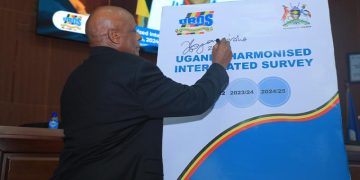
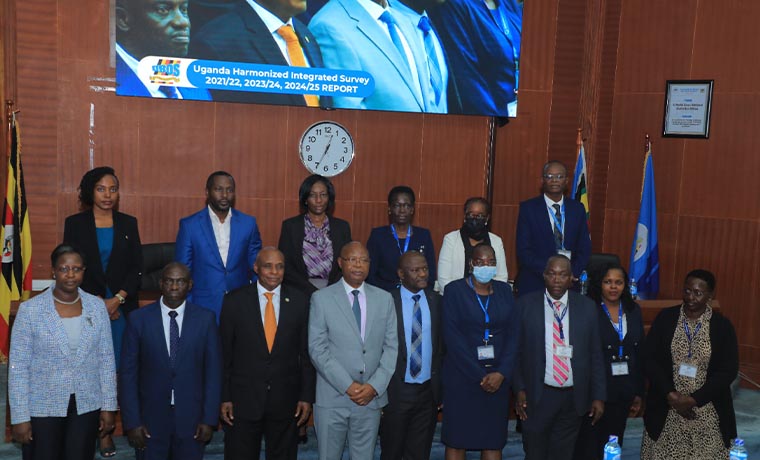
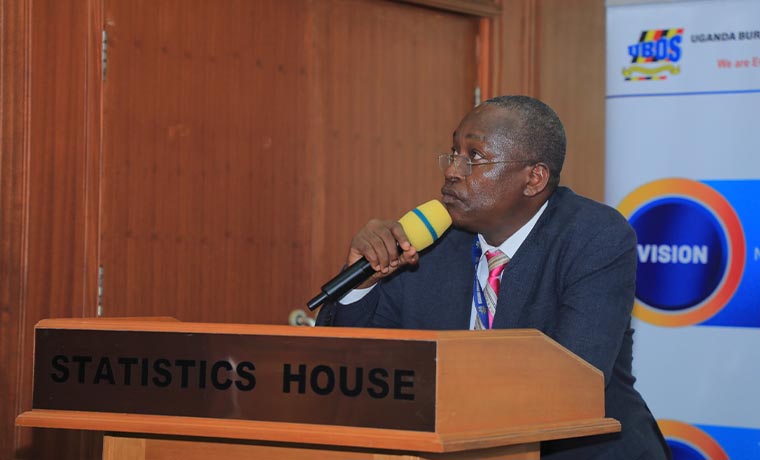
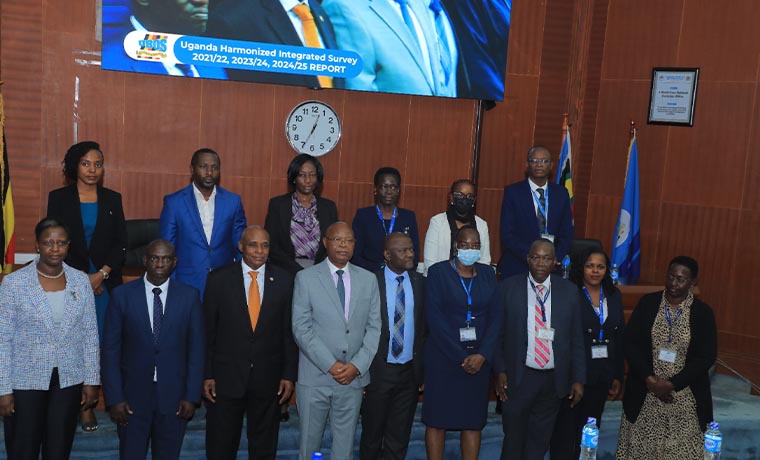
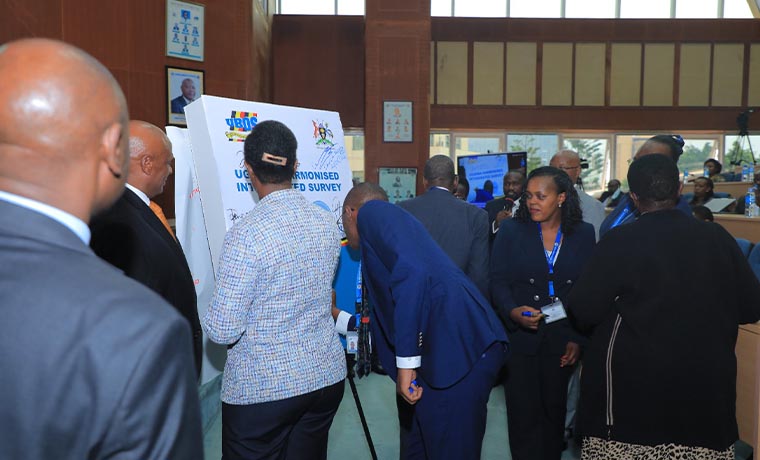
The findings were presented at Statistics house in Kampala by Steven Baryahirwa during the dissemination of the survey results.

Beyond chronic poverty, the data reveals significant movement in household welfare status. About 14.5 percent of households moved into poverty over the three-year period, indicating that economic shocks, vulnerability, and income instability continue to push households below the poverty line even after previously being non-poor.

At the same time, 9.7 percent of households managed to move out of poverty, reflecting some degree of upward mobility driven by improvements in income sources, employment opportunities, and household resilience strategies.
The findings point to a dynamic poverty landscape in Uganda, where households frequently shift between economic stability and vulnerability. While a core group remains stuck in long-term poverty, a larger proportion experiences transitions that reflect both gains and setbacks in household welfare.
The survey underscores that poverty in Uganda is not static, but rather shaped by changing economic conditions, labour market participation, agricultural productivity, and access to basic services. These movements suggest that policy interventions must not only focus on lifting households out of poverty but also on preventing those above the poverty line from falling back into deprivation.

The data is drawn from a nationally representative panel survey conducted over three waves between 2021/22 and 2024/25, covering thousands of households across the country. The panel design allowed researchers to track the same households over time, providing deeper insights into poverty dynamics rather than single-point estimates.
Baryahirwa notes that the persistence of chronic poverty at 8.9 percent remains a key concern, particularly as it represents households that have not experienced meaningful improvements in welfare across multiple survey years. These households are often affected by structural challenges such as limited access to productive assets, low education levels, and dependence on subsistence livelihoods.
Meanwhile, the fact that 14.5 percent of households moved into poverty highlights ongoing vulnerability within the population. Shocks such as fluctuating agricultural output, rising living costs, health emergencies, and employment instability are among the key factors that can push households into poverty.
On the positive side, the 9.7 percent of households that moved out of poverty demonstrates that upward mobility is possible, particularly for households that successfully diversify income sources, engage in non-farm employment, or benefit from improved access to financial services and markets.
Statisticians say the findings reinforce the need for targeted social protection programmes and inclusive economic policies that address both chronic deprivation and transient vulnerability.
Overall, the UBOS survey presents a nuanced picture of poverty in Uganda—one defined not only by those who remain poor, but also by the constant movement of households across poverty lines. (For comments on this story, get back to us on 0705579994 [WhatsApp line], 0779411734 & 041 4674611 or email us at mulengeranews@gmail.com).