










By Ben Musanje
The proportion of Ugandan households engaged in agriculture has slightly declined over the past three survey waves, even as crop choices shift and access to agricultural support services remains limited, according to findings from the Uganda Bureau of Statistics (UBOS).
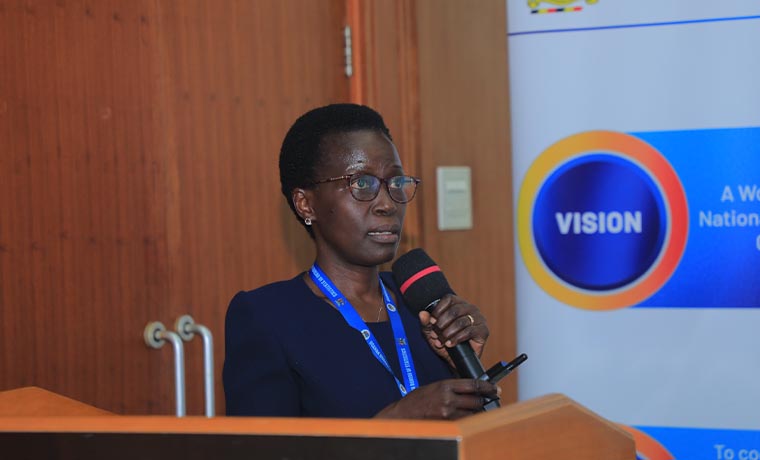
The results, drawn from the Uganda Harmonized Integrated Survey covering 2021/22, 2023/24 and 2024/25, were presented by Flavia Aumo during a dissemination event at Statistics House in Kampala.
Agricultural Household Participation Shows Mild Decline

The report shows that the proportion of agricultural households fell slightly from 65.4 percent in 2021/22 to 63.8 percent in 2023/24, before stabilizing at 63.9 percent in 2024/25.

While agriculture remains the backbone of Uganda’s household economy, the data suggests a gradual diversification of livelihoods, with more households shifting into non-agricultural activities such as trade, services, and informal employment.
A deeper analysis of household participation over the three years shows varied movement patterns. A majority of households engaged in agriculture consistently across all three survey waves, accounting for 56.6 percent of households.
However, a notable share of households either exited or entered agriculture during the period. Some households were completely outside agriculture across all three years, while others either joined agriculture in 2025 or exited by 2025. This fluidity reflects the dynamic nature of rural livelihoods, influenced by market conditions, land availability, and employment opportunities outside farming.

Crop Farming Remains Dominant but Structural Changes Emerging
Among households consistently engaged in agriculture across all three years, crop production remained the dominant activity.
The proportion of agricultural households involved in crop growing stood at 97.1 percent in 2021/22, but declined to 90.9 percent in 2024/25. This represents a 6.2 percentage point decrease, suggesting a gradual shift away from exclusive reliance on crop farming or increasing diversification into other agricultural activities such as livestock or mixed farming systems.
Despite the decline, crop farming remains overwhelmingly central to Uganda’s agricultural economy, particularly among rural households.
Shifts in Major Crop Production Patterns
The survey further highlights changing crop preferences among agricultural households over the three-year period.
Among households engaged in crop production throughout the period, there was an increase in the proportion growing cash and staple crops such as coffee and cassava.
Coffee production rose from 27.5 percent of agricultural households in 2021/22 to 32.2 percent in 2024/25, indicating growing participation in cash crop farming and possible responses to improved market incentives or export demand.
Cassava cultivation also increased from 46.2 percent to 51.3 percent over the same period, reflecting its resilience as a staple crop and its importance in food security strategies for many households.
Banana (food type), commonly known as matooke, also showed an upward trend, although specific figures indicate a general increase in participation among farming households between the survey waves.
However, not all crops experienced growth. The data shows a decline in the proportion of households growing several key staples.
Sweet potato cultivation fell sharply from 37.3 percent in 2021/22 to 25.1 percent in 2024/25. Similarly, bean production declined from 59.4 percent to 54.0 percent over the same period. Maize production also recorded a downward trend among consistently farming households.
These shifts may reflect changing dietary patterns, land use decisions, climate variability, input costs, or market price fluctuations influencing farmer choices.
Limited Access to Agricultural Extension Services
One of the most striking findings in the report relates to agricultural extension services, which remain extremely limited for most farming households.
Among households engaged in agriculture across all three years, only 0.7 percent reported receiving extension services consistently throughout the period. A further 24.1 percent received extension services in at least one of the years, while a significant majority—75.2 percent—did not receive any extension support across the entire three-year span.
This indicates a major gap in agricultural knowledge dissemination, advisory services, and technical support, which are essential for improving productivity, adoption of modern farming methods, and climate resilience.
The findings suggest that despite agriculture’s dominant role in Uganda’s economy, institutional support systems such as extension services are not reaching most farmers consistently.
Access to Agricultural Information
In contrast to the low levels of extension service delivery, access to agricultural information appears relatively high among farming households. The report indicates that a large share of agricultural households had access to some form of agricultural information over the survey period, reaching as high as 96.3 percent in 2024/25.
This suggests that while formal extension services are limited, farmers may be accessing information through alternative channels such as radio programs, peer networks, mobile platforms, cooperatives, or private sector actors.
However, the quality, reliability, and depth of such information remain unclear compared to structured extension systems.
Fertiliser Use Remains Modest but Present
The report also highlights trends in fertiliser use among agricultural households. Although detailed annual breakdowns are limited in the summary, overall usage stands at around 41.1 percent among agricultural households in 2024/25.
This indicates that fertiliser adoption remains moderate, with a significant proportion of farmers still relying on traditional farming methods with limited input use. The level of fertiliser use is a key indicator of agricultural modernisation and productivity potential.
Interpretation: A Sector in Gradual Transition
Taken together, the findings point to a sector undergoing gradual but uneven transformation.
On one hand, agriculture remains dominant, with nearly two-thirds of households still engaged in the sector. Crop farming continues to play a central role in household livelihoods, and cash crops like coffee and staples like cassava are gaining importance.
On the other hand, declining participation in certain staple crops, limited extension service coverage, and moderate fertiliser use highlight persistent structural challenges.
The decline in household participation in agriculture, though slight, also signals diversification of income sources as households increasingly engage in non-farm activities.
Conclusion
The UBOS findings presented by Flavia Aumo paint a picture of an agricultural sector that remains vital but is gradually evolving.
While Uganda’s agriculture continues to support the majority of households, the data reveals important shifts in crop choices, participation patterns, and access to support services.
The persistent gap in extension service delivery stands out as a critical challenge, with implications for productivity, food security, and rural transformation.
Overall, the report underscores the need for strengthened agricultural support systems, improved service delivery, and targeted interventions to ensure that Uganda’s agricultural sector remains both productive and resilient in the face of changing economic and environmental conditions. (For comments on this story, get back to us on 0705579994 [WhatsApp line], 0779411734 & 041 4674611 or email us at mulengeranews@gmail.com).