











By Mulengera Reporters
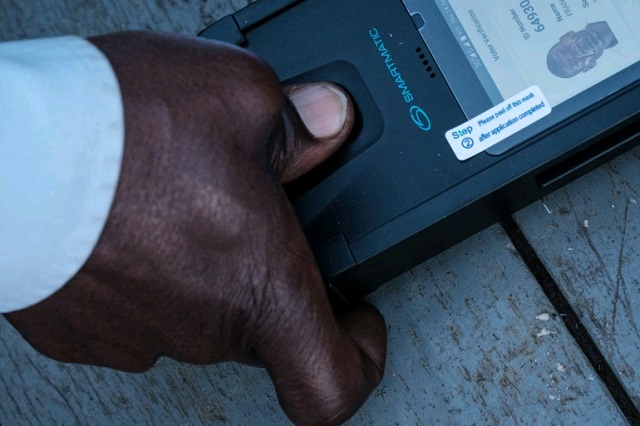
The Electoral Commission has assured Members of Parliament that the Biometric Voter Verification Kits (BVVK) set to be used in the 2026 General Elections are secure, transparent, and capable of preventing electoral fraud.
The assurance was made during a one-day training workshop held at Parliament on Thursday, where legislators were taken through the operation of the biometric kits and later participated in a mock voting exercise to familiarise themselves with the technology.
The training comes amid growing concerns from legislators and opposition leaders over the preparedness of the Electoral Commission and the absence of clear regulations governing the biometric voter verification system ahead of the elections.
Leading the training, the EC Director for Technical Services, Solomon Muhumuza, explained that the new biometric kits are an improved version of the systems previously used during the 2016 and 2021 general elections.
According to Muhumuza, the upgraded technology contains enhanced security features designed to prevent manipulation of the voting process and strengthen confidence in election outcomes.
“Before voting begins on polling day, the kits will be inspected in the presence of polling agents to confirm that they have not been tampered with,” Muhumuza said. “The devices are preloaded with voter data strictly meant to aid identification and verification at polling stations.”
His remarks followed concerns raised by legislators regarding the possibility of ballot stuffing and manipulation through preloaded information in the devices.
Emmanuel Otaala questioned how the Commission would guard against ballot stuffing, arguing that preloaded voter information could potentially be abused.
“I am concerned about prescanning ballot papers in favour of certain polling stations. How will the Commission prevent ballot stuffing where such a possibility exists?” Otaala asked.
Margaret Ayebare also sought clarification on how polling officials and agents would ascertain that the biometric kits are clean and begin with the first voter on polling day.
Other legislators raised concerns about voter education and public awareness regarding the new technology.
Sarah Opendi said the introduction of the biometric system had come close to the election period, leaving limited time for public sensitisation.
“This equipment is good, but it has come late,” Opendi noted. “Will the Electoral Commission have enough time to train polling agents and educate the public on how the system works before the elections?”
Meanwhile, Gorreth Namugga questioned what contingency measures the Commission had put in place in the event that biometric kits fail at polling stations during voting.
Responding to the concerns, EC officials explained that each voter at a polling station would first be identified using either a voter location slip or a national identity card before biometric verification is conducted using fingerprints or facial recognition technology.
Catherine Onekalit clarified that the preloaded voter information in the kits is intended solely to identify registered voters assigned to a specific polling station and should not be interpreted as prescanning of ballots.
“The kits contain voter data to support identification and verification,” Onekalit explained. “Voters will still be required to present voter location slips or national identity cards before verification using fingerprints or facial recognition is conducted.”
She added that the biometric system is intended to enforce the principle of one person, one vote by ensuring that only registered voters cast ballots and that no individual votes more than once.
Another Principal Election Officer, Samuel Kiyingi, assured legislators that the Commission had developed backup measures to address any technical failures that may arise during polling.
Kiyingi said the Commission would conduct extensive training and sensitisation exercises across the country ahead of the elections, including sessions at sub-county level for election officials and stakeholders.
“We are going to carry out trainings in different districts and ensure that polling officials are fully prepared,” Kiyingi said. “The Commission will also ensure timely delivery of ballot papers and election materials to all districts.”
The Electoral Commission revealed that it has procured 109,142 Biometric Voter Verification Kits for deployment at all 50,739 polling stations nationwide.
The Commission says the introduction of the biometric technology is part of broader reforms aimed at enhancing transparency, credibility, and accountability in Uganda’s electoral process ahead of the highly anticipated 2026 General Elections. (For comments on this story, get back to us on 0705579994 [WhatsApp line], 0779411734 & 041 4674611 or email us at mulengeranews@gmail.com).