













By Mulengera Reporters
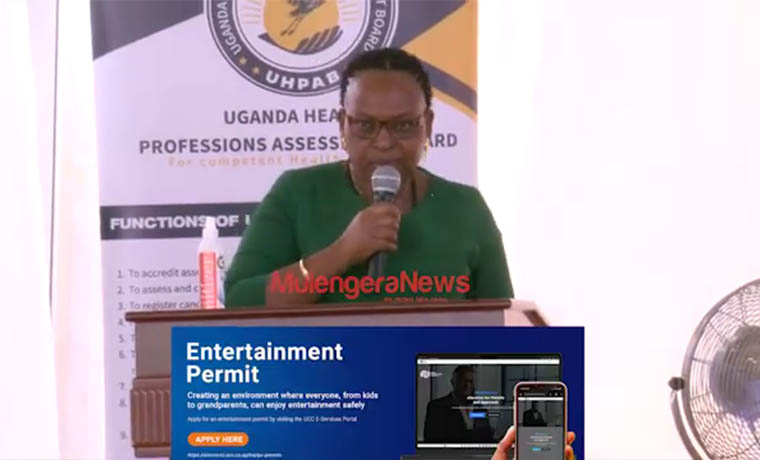
The Uganda Health Professions Assessment Board (UHPAB) has called on Parliament to strengthen oversight of health training institutions, warning that overcrowding, excessive student admissions, inadequate infrastructure and unqualified trainers could undermine the country’s efforts to produce competent health professionals.
UHPAB Board Chairperson Dr. Alfred Driwale said improving the quality of Uganda’s health workforce required more than strengthening examinations and certification, urging government to invest equally in all components of the Technical and Vocational Education and Training (TVET) system.
Dr. Driwale made the remarks during an engagement with the Parliamentary Committee on Education and Sports, which visited the Board as part of its institutional oversight responsibilities.

He explained that UHPAB was established under the TVET Act No. 3 of 2025 following the merger of the Uganda Nurses and Midwives Examination Board and the Uganda Allied Health Examinations Board, as part of a wider government reform intended to address competency gaps among graduates.

He said the reform was driven by concerns that some graduates were entering the workforce without the required knowledge, practical skills and professional attitudes to deliver quality services.
“The reform is arising out of the understanding that the competences of some of our graduates fall below standard. So government took a deliberate effort to ensure that we embark on a training programme, a reform that increases competence of the workforce it produces,” Driwale told legislators.
Under its mandate, UHPAB is responsible for assessing and certifying health professionals under the TVET framework, as well as developing health-sector TVET curricula. The Board currently oversees 45 programmes, comprising 31 allied health programmes and 14 nursing and midwifery programmes.
Parliament Urged to Address Training Gaps
Driwale emphasized that the success of the TVET reform depended on effective coordination among its three key components: regulation, training delivery and assessment.
He explained that the TVET Council is responsible for identifying labour market skills requirements, approving programmes, accrediting training institutions and registering trainers.
The Ministry of Education and Sports, through its Health Education and Training Department, oversees the delivery of training, ensuring institutions implement approved curricula and provide the appropriate learning environment.
UHPAB, as the assessment arm, develops curricula based on skills requirements identified by the TVET Council, conducts assessments and certifies graduates to establish whether they have acquired the required competencies.
However, he warned that strengthening the assessment function alone would not solve the challenges affecting the quality of health professionals if training institutions continued operating below the required standards.
“Those issues of overcrowding, over-admission, inappropriate infrastructure, trainers who are not appropriate must be addressed and the Council, your committee should take interest in it,” he said.
He called on Parliament to pay closer attention to the quality of training facilities, staffing and institutional capacity, particularly as the number of private health training institutions continues to expand.
Driwale also urged the Ministry of Education and Sports to strengthen its internal structures to effectively support and supervise the growing number of training institutions. (For comments on this story, get back to us on 0705579994 [WhatsApp line], 0779411734 & 041 4674611 or email us at mulengeranews@gmail.com).