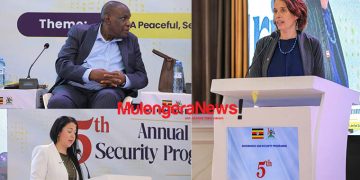








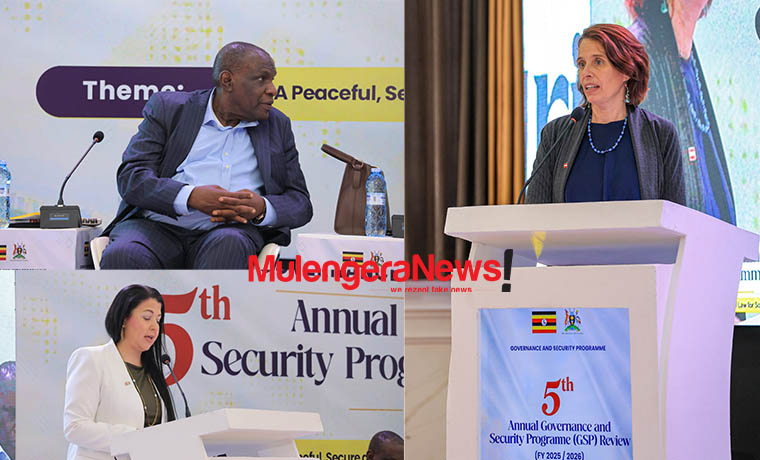
Uganda has registered notable progress in strengthening governance and security, with sub-county policing coverage reaching 93% nationally and the crime rate declining from 501 to 427, Permanent Secretary in the Office of the President Hajj Yunus Kakande has revealed.
The Permanent Secretary, who chairs the Governance and Security Programme (GSP) Programme Working Group, said the achievements demonstrate the importance of sustained investment in security institutions, coordinated action and accountability as the country pursues its economic transformation agenda.
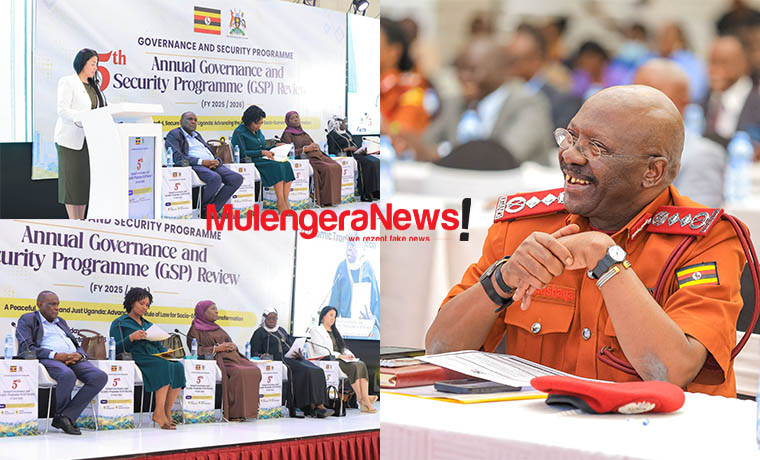
Opening the Fifth Annual Governance and Security Programme Performance Review for the financial year 2025/2026, Hajj Kakande challenged participating institutions to build on the gains by focusing on measurable results, stronger institutional accountability and improved service delivery.
He emphasized that economic transformation cannot be achieved independently of good governance, the rule of law, institutional accountability and national security, which he described as fundamental to investor confidence, social stability and effective public service delivery.
Kakande urged government institutions to go beyond reporting activities undertaken and funds spent, calling for assessments that demonstrate tangible outcomes, expose implementation gaps and establish how interventions are improving the lives of Ugandans.
While celebrating progress in the security sector, he acknowledged that challenges remain, particularly in addressing corruption, and urged institutions to strengthen their performance in delivering on the programme’s objectives.
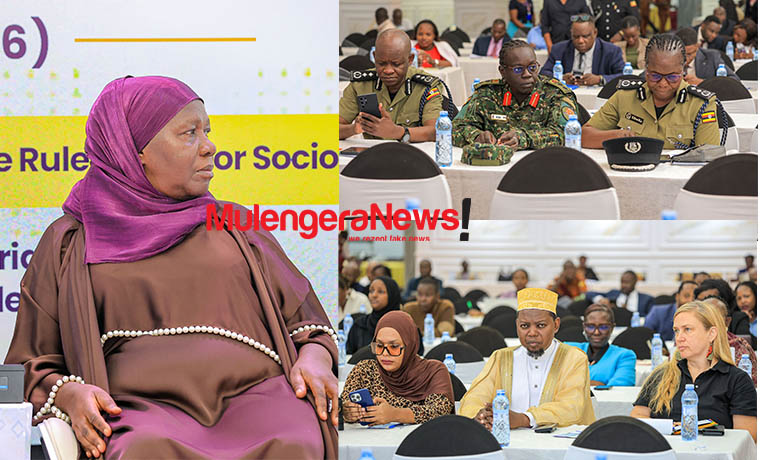
The review brings together government institutions, development partners and other stakeholders to assess the programme’s first year of implementation under the Fourth National Development Plan (NDP IV) and the Ten-Fold Growth Strategy, while identifying priorities for improving governance, justice and security services.
Uganda’s reform efforts also received recognition from Austrian development partners, who commended the government and participating institutions for the progress registered during the reporting period.
Beate Farukuoye, Deputy Head of Office at the Austrian Development Agency Coordination Office in Kampala, praised the alignment between development partners’ interventions and government priorities, describing it as evidence of strong collaboration in advancing the country’s governance and security agenda.
She encouraged stakeholders to build on the achievements by strengthening performance monitoring and demonstrating the practical impact of reforms on citizens, including progress towards the programme’s 2029 targets.
Farukuoye highlighted access to justice as a key priority, calling for the enactment of the Legal Aid Bill to enable Ugandans who cannot afford private legal services to access legal assistance.
She also commended the reported 74% diversion rate in juvenile justice and improvements in legal support and reintegration for children in conflict with the law, urging stakeholders to strengthen prevention, family support and timely case disposal.
On case management, she welcomed the operationalization of the National Alternative Dispute Resolution Policy and called for continued efforts to reduce case backlogs, improve information sharing among justice-sector institutions and strengthen police investigative capacity.
She further encouraged measures to address prison congestion, reduce prolonged remand periods and improve civil registration, noting that effective birth, death and marriage registration helps citizens access essential public services.
She also emphasized the need to translate investments in justice-sector infrastructure, police facilities and the DNA database into improved institutional coordination and better services for citizens.
Separately, Dr Katja Kerschbaumer, Head of the Austrian Embassy, recognized Uganda’s leadership in refugee protection, commending the country’s continued commitment to hosting one of the world’s largest refugee populations and the largest in Africa.
She noted that strong institutions are essential to ensuring refugees and host communities access services, resolve disputes peacefully and participate in social and economic life.
Kerschbaumer also underscored the importance of public trust, arguing that transparent, accountable and responsive institutions are critical to protecting citizens’ rights, promoting social cohesion and sustaining national stability.
The development partners’ remarks reinforced the importance of continued cooperation with government institutions to consolidate existing achievements and strengthen the delivery of justice and security services.
The annual review provides a platform for government and its partners to evaluate progress, address implementation challenges and agree on practical measures to advance Uganda’s governance and security priorities under NDP IV and the Ten-Fold Growth Strategy. (For comments on this story, get back to us on 0705579994 [WhatsApp line], 0779411734 & 041 4674611 or email us at mulengeranews@gmail.com).