







By Ben Musanje
The annual Uganda AIDS Commission Candlelight Memorial Day, held at Kitante Hill Secondary School, briefly took on a political flavor on Tuesday after Minister for the Presidency Milly Babirye Babalanda publicly acknowledged Kampala Lord Mayor Eng. Ronald Balimwezo (who is NUP) despite his absence from the main ceremony.
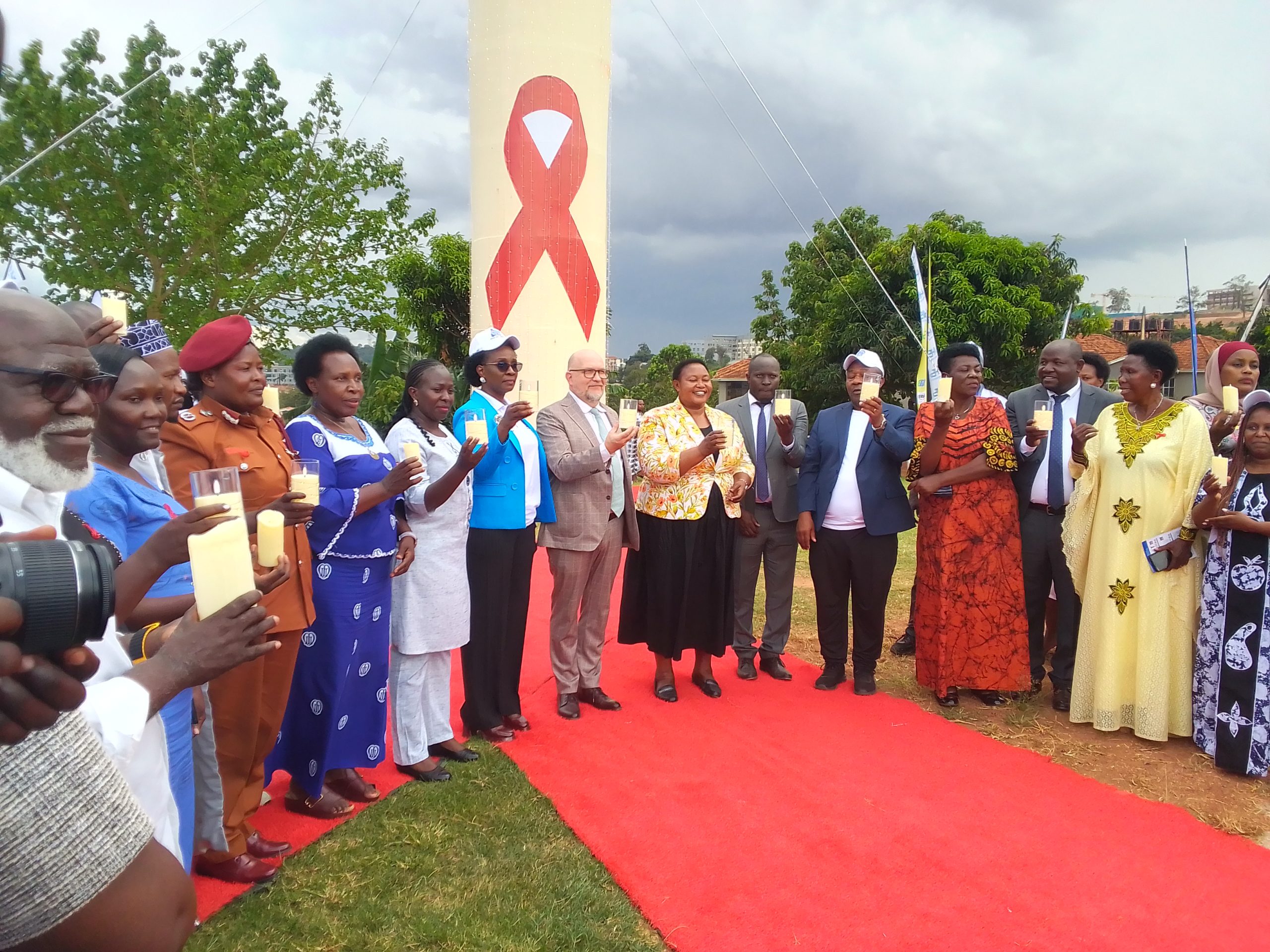
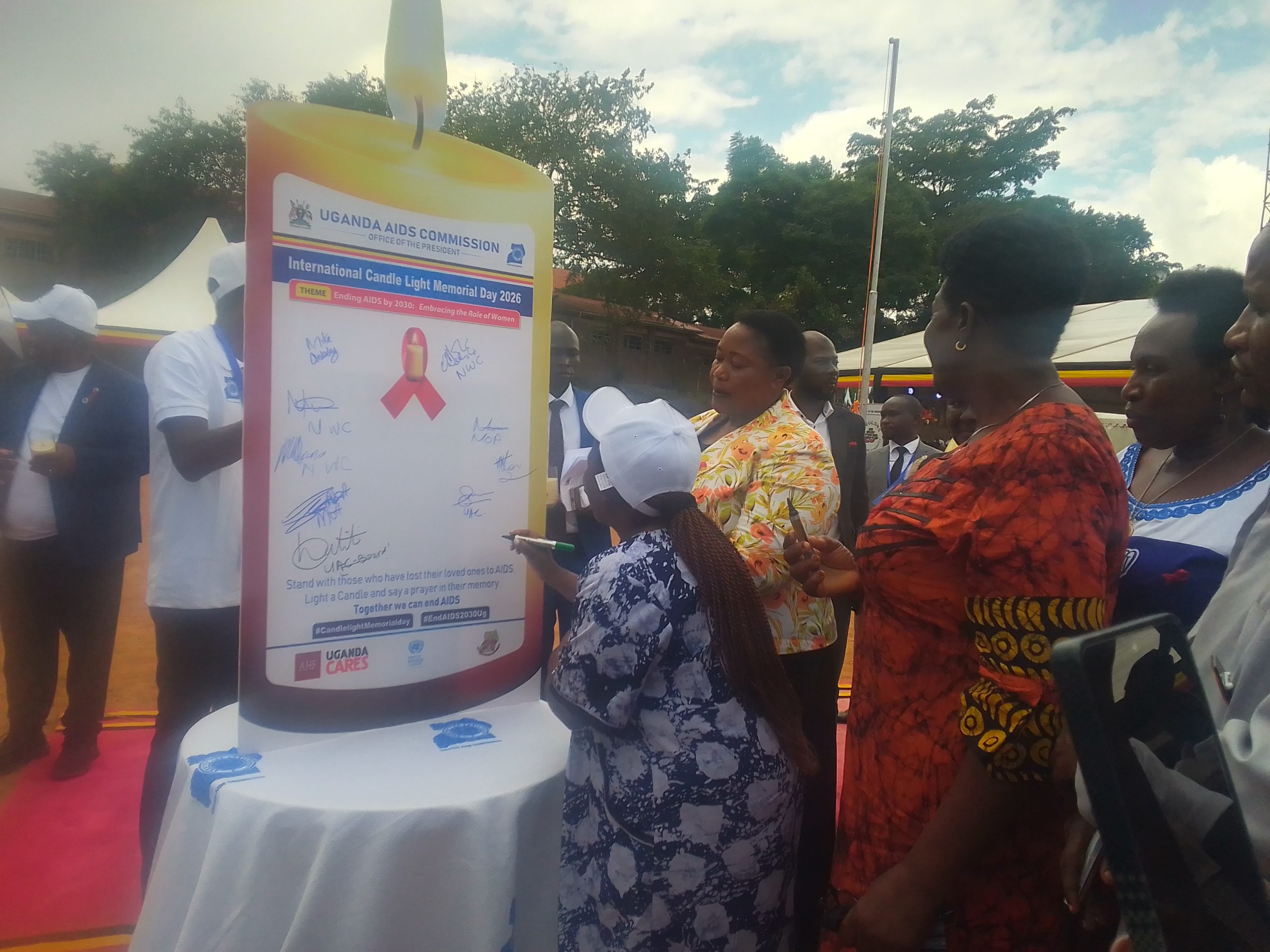
The commemoration, held under the national theme “Ending AIDS by 2030: Embracing the Role of Women,” brought together government officials, civil society actors, development partners, health workers, and people living with HIV to honor lives lost to AIDS-related illnesses while reaffirming Uganda’s commitment to ending the epidemic.
The day began with a symbolic candlelight march from Constitutional Square to Kitante Hill Secondary School grounds, which attracted several leaders, including Lord Mayor Balimwezo, who participated in the procession. However, as the main ceremony unfolded at the school grounds, his absence became increasingly noticeable after he did not arrive with other dignitaries.
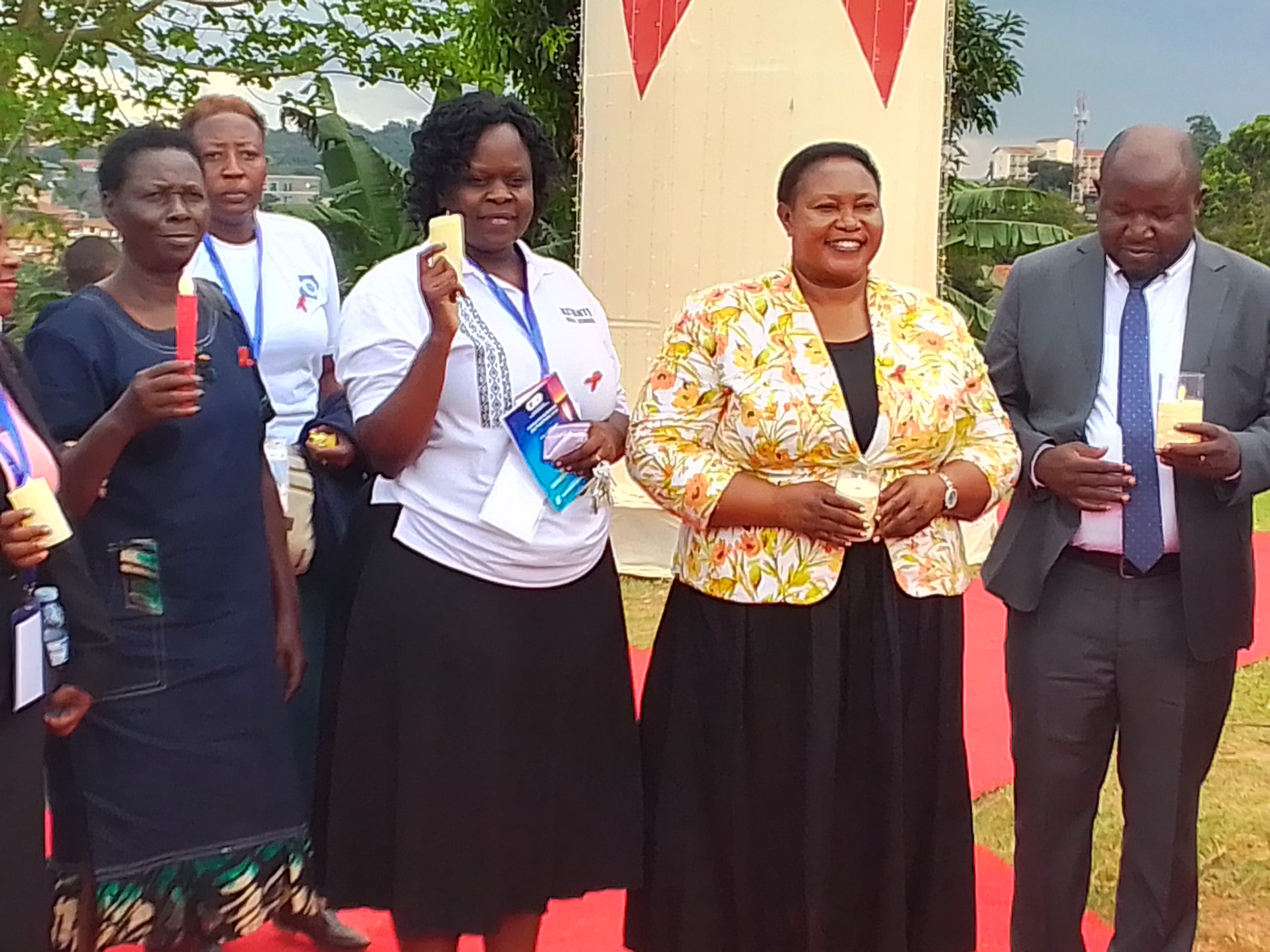
The moment drew attention when Minister Babalanda, while acknowledging protocol guests during her address, mentioned Balimwezo as though he were present. Her reference immediately prompted murmurs among attendees, with many turning to scan the venue in search of the Lord Mayor. Despite the attention, he was nowhere to be seen.

Inside the tents, sections of attendees—particularly women seated in groups—were overheard whispering in Luganda, wondering whether the Lord Mayor had already arrived or was still absent. “Balimwezo atuuse oba taliiwo?” one attendee asked, loosely translated as “Has Balimwezo arrived or is he not here?” The brief exchange reflected the curiosity his unexpected absence had generated.

Other attendees, however, used the moment to express admiration for the Lord Mayor, describing him as a leader who actively participates in government-led programs. Some contrasted him with other opposition figures, suggesting he is more cooperative in supporting national development initiatives. The conversations, though informal, added a subtle political undertone to what is traditionally a non-partisan public health event.
Despite the distraction, Minister Babalanda proceeded with her keynote speech as the Chief Guest, maintaining focus on Uganda’s progress in the fight against HIV and AIDS. She described the memorial as both solemn and inspiring, emphasizing its dual purpose of remembering those who have died while renewing commitment to ending AIDS as a public health threat.
“It is solemn because we remember the millions of lives that have been lost to AIDS-related illness across the world, including many Ugandans whose contributions to their families and communities were cut short,” she said. “We honour their memory and stand in solidarity with all families and communities affected by HIV and AIDS.”

At the same time, she noted that the occasion also reflects Uganda’s progress in combating the epidemic since the 1980s and early 1990s, when HIV threatened the country’s social and economic stability. She credited strong political leadership, community mobilization, openness, and collective responsibility for Uganda’s early and ongoing response.
In her remarks, Babalanda paid tribute to President Yoweri Kaguta Museveni, recognizing his long-standing role as a champion in the fight against HIV/AIDS. She said Uganda’s early openness in addressing the epidemic, at a time when many countries avoided public discussion, helped save countless lives and laid the foundation for current achievements.
She highlighted key gains, including a significant reduction in new HIV infections, a marked decline in AIDS-related deaths, and expanded access to antiretroviral therapy. According to her, approximately 1.4 million Ugandans are currently receiving life-saving treatment. She also pointed to progress in reducing mother-to-child transmission and Uganda’s movement toward achieving the global UNAIDS 95-95-95 targets.
“These achievements are not accidental,” she said. “They are the result of deliberate government commitment, resilient communities, committed health workers, civil society organisations, development partners, religious and cultural institutions, and the courage of people living with HIV themselves.”
However, she cautioned that despite the progress, Uganda still faces significant challenges. She noted that thousands of new infections continue to be recorded annually, with young women and girls disproportionately affected. She also highlighted gaps in testing and treatment among men, persistent stigma and discrimination, and ongoing vulnerabilities linked to poverty, gender inequality, unemployment, alcohol abuse, and harmful cultural practices.
“If we relax now, we risk reversing the gains we have made over the last four decades,” she warned.
Babalanda emphasized that the 2026 theme, focusing on women, is both strategic and urgent. She said empowering women through education, economic opportunities, protection from violence, and improved access to healthcare is essential in breaking the cycle of new infections.
However, she also stressed that the responsibility to end AIDS does not lie with women alone. She called on men to test and seek treatment early, young people to make responsible choices, parents to guide their children, and religious and cultural leaders to continue fighting stigma and promoting positive behavior.
She further urged leaders across all sectors to integrate HIV response efforts into national development plans, stressing that ending AIDS is a collective responsibility rather than a purely health-sector issue.
On financing, the minister noted that global HIV support is declining even as needs remain high. She called for stronger domestic ownership of the HIV response and improved accountability to ensure sustainability of services.
She commended the Uganda AIDS Commission for coordinating national efforts and maintaining strong partnerships with development agencies and civil society organizations.
The ceremony concluded with renewed calls for unity, responsibility, and sustained action toward ending AIDS by 2030. Despite the brief political chatter sparked by Balimwezo’s absence, the event ultimately reaffirmed its core purpose—honoring those lost to HIV/AIDS and strengthening Uganda’s resolve to eliminate the epidemic as a public health threat.
Your proposed headline is understandable, but it can be tightened for grammar, tone, and news style. Here are improved options: