






By Mulengera Reporters
After fleeing Burundi for Uganda in 2011, Maria Oweyimana arrived at Nakivale Refugee Settlement with two children, carrying the painful memories of conflict, loss and sexual violence. Today, despite years of hardship and the responsibility of raising seven children, she is rebuilding her life through a tailoring business supported by the Generating Growth Opportunities and Productivity for Women Enterprises (GROW) Project.
Oweyimana’s journey to Uganda was marked by tragedy. She says her husband was taken away by rebels during the conflict, after they had repeatedly been arrested. She later became pregnant following sexual violence by the rebels and gave birth to a boy in Uganda.
Her parents were also killed during the conflict, leaving her to navigate life as a refugee while caring for her children.

In Uganda, she later entered another relationship with a Congolese man, with whom she had another child. She subsequently had a relationship with a second Congolese man and gave birth to four more children. However, that relationship eventually broke down after disagreements involving the man and her three older children, and he disappeared from their lives.
Oweyimana also carries physical scars from the violence she experienced. She says she was pierced in the leg with a metal object while resisting rape, an injury that left a permanent scar.
More recently, she says she has faced threats from a man who expressed interest in starting a relationship with her. Although she did not reciprocate his feelings, she alleges that his advances turned into threats and intimidation after she resisted.
The matter was reported to the local council chairperson and is currently before the LC1 leadership. She was also referred to the police, although she says she has yet to receive a response.
Despite these personal challenges, Oweyimana has remained determined to provide for her seven children.
Turning to tailoring for survival
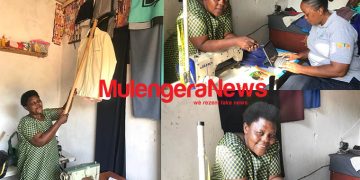
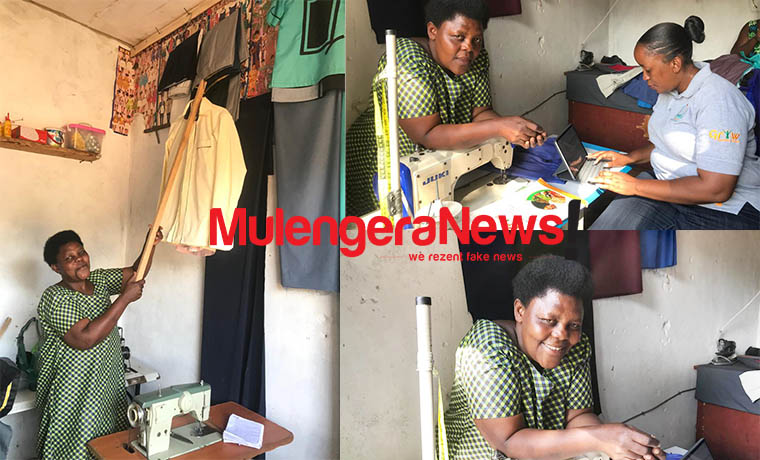
Based in Ruhamiraga Village, Kashumba Sub-county, New Congo, within Nakivale Refugee Settlement in Isingiro District, Oweyimana operates a small tailoring business specialising in trousers and women’s clothing.
On a productive day, she can make approximately three garments, charging Shs30,000 or more for each piece, depending on the order.
Her entrepreneurial journey began with training in animal feeds production and tailoring facilitated by Gudie Leisure Farm. She later received financial literacy training, which introduced her to the importance of managing business finances and planning for growth.
However, accessing sufficient capital remained a major obstacle.
Previously, she relied on loans from local women’s savings groups, but the amounts were often too small to meet her business needs.
Her fortunes began to change when she learnt about the Generating Growth Opportunities and Productivity for Women Enterprises (GROW) Project, a government initiative designed to improve women’s access to finance and business development opportunities under the World Bank funding.
She joined a group of refugee women who participated in training under the project, receiving instruction in bankable financial record-keeping facilitated by the Private Sector Foundation Uganda (PSFU) which is implementing the GROW Project through the Ministry of Gender, Labour and Social Development.
The training helped her appreciate the importance of maintaining proper financial records, managing business income and preparing to access formal financial services.
It also introduced her to the GROW loan facility, which attracted her because of its relatively lower interest rate compared to the loans she had previously obtained from women’s savings groups.
Through the programme, she opened a bank account with UGAFODE Microfinance Limited, paving the way for her first formal loan.
First loan opens new opportunities
Oweyimana secured Shs1 million, her first loan in her life, with friends acting as guarantors.
She invested the money in purchasing additional tailoring materials to expand her business. She also diversified her sources of income by venturing into the cultivation of beans, maize and sorghum.
Under the loan arrangement, she is required to repay approximately Shs135,000 monthly over an eight-month period.
Although the repayment obligation comes with pressure, she says she has not missed any monthly instalment.
For Oweyimana, the loan represents more than just access to money. It is an opportunity to grow her business, diversify her income and strengthen her ability to provide for her children.
Nevertheless, her business remains vulnerable to seasonal fluctuations.
She explains that there are periods when customers do not place many clothing orders, reducing her income and making loan repayment more challenging.
Despite these difficulties, she has continued meeting her monthly obligations.
She expects to complete the loan repayment in 2027, although she did not disclose the specific month.
Building resilience beyond displacement
For a woman whose life has been shaped by displacement, loss and difficult relationships, entrepreneurship has become an important pathway towards rebuilding stability.
Through tailoring and crop cultivation, Oweyimana is seeking to establish multiple sources of income while supporting her seven children.
Her experience also highlights the importance of financial literacy, affordable financing and business support in helping refugee women transition from informal survival activities to more sustainable enterprises.
The GROW Project’s support, including financial record-keeping training and access to formal credit, has given her an opportunity to invest in her enterprise and explore additional income-generating activities.
While challenges remain, Oweyimana continues to work towards a future in which her tailoring business can provide more reliable income and greater security for her family. (For comments on this story, get back to us on 0705579994 [WhatsApp line], 0779411734 & 041 4674611 or email us at mulengeranews@gmail.com).