







By Ben Musanje
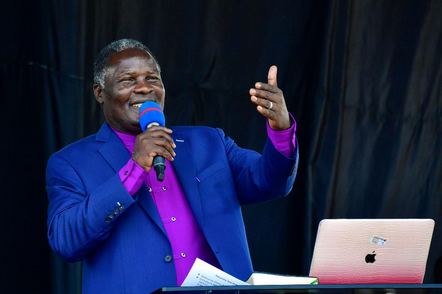
Bishop Joshua Lwere, former General Overseer of the National Fellowship of Born Again Pentecostal Churches of Uganda (NFBPC), electrified student leaders from 10 higher learning institutions across Buganda during the Nkobazambogo mentorship training at Makerere University on Monday, urging them to embrace civic responsibility, integrity, and transformative leadership ahead of the upcoming elections.
Bishop Lwere framed his message around the idea that spiritual equality translates into civic empowerment. He traced the origins of modern citizenship to the Reformation, explaining how it challenged the notion that kings were divinely chosen, insisting instead that every individual has a direct relationship with God and, by extension, an equal voice in government. According to Bishop Lwere, this principle forms the foundation for voting rights, civic duties, and participatory governance.
Drawing a vivid contrast between empires and nations, Bishop Lwere argued that empires treat people as subjects who obey and pay taxes for the benefit of the ruler, citing Uganda’s colonial past under Britain. In contrast, nations grant citizens rights, privileges, and opportunities, allowing them to choose careers, form families, run businesses, and even compete for political office. He emphasized that these freedoms come with equal responsibilities and obligations, echoing Uganda’s Constitution, which lists duties such as respecting national symbols, protecting children, and registering for electoral purposes.
The Bishop highlighted elections as a critical tool for holding leaders accountable. He noted that voting is not merely a political formality but a polite way to evaluate a leader’s performance, giving them a renewed mandate if successful or a clear signal of disapproval if not.

To illustrate the power of youth-driven transformation, Bishop Lwere recounted his experience at Atiak in Amuru district, near the South Sudan border, where local youth initially blamed external factors for their community’s problems. With mentorship, they began to take ownership, transforming primary schools, ensuring proper allocation of funds, and improving infrastructure within just two years. Bishop Lwere described their determination as extraordinary, noting that their focus and resolve brought about tangible improvements, earning him renewed hope in the country’s future.

A recurring theme in his address was the importance of a clear motive in leadership. He repeatedly emphasized that without a purposeful and righteous objective, no meaningful change can occur. He stressed that integrity, credibility, and honesty are key to earning the trust of others and achieving sustainable transformation. Bishop Lwere warned that leadership fueled by violence, manipulation, or selfish interests is doomed to fail, while leadership grounded in service and principle inspires cooperation and loyalty.
The Bishop also drew on biblical history to reinforce his message, recalling how God liberated Israel from Egypt and transformed them from subjects into citizens governed by law. He argued that, similarly, modern citizens must balance their rights and privileges with duties and responsibilities, ensuring that personal freedoms serve the greater good.
Bishop Lwere urged youth to start small but lead decisively, demonstrating credibility in even the smallest tasks. He cited the biblical figures David and Joseph as examples of young people, whose energy, determination, and faith led to extraordinary impact, emphasizing that God values youthful initiative and resolve.

The mentorship training concluded with a powerful call to action, inspiring students to pursue leadership without resorting to violence, coercion, or selfishness. Bishop Lwere left participants with the message that freedom is not doing whatever one wants, but rather taking responsibility for one’s life and influencing others through integrity, credibility, and a clear purpose.
By the end of the session, it was clear that Bishop Lwere had not only taught civic principles but ignited a sense of possibility in the youth, showing that positive, transformative leadership is within reach if grounded in values, discipline, and a genuine desire to serve.