







Article by Mwanje Gideon
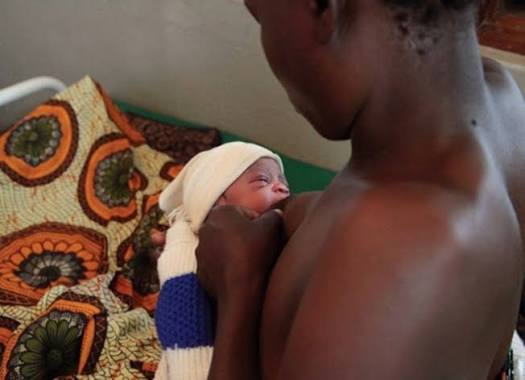
A child is a blessing and the ultimate symbol of a nation’s continuity and enduring vitality. Unfortunately, a state that waits ten long years for a census to discover how many citizens it possesses is a state walking blindfolded into the future.

Look at the world’s most prosperous nations. Their wealth does not just spring from resources; it springs from rigorous, unyielding data. They strictly enforce birth registration because they understand a fundamental truth my father always instilled in me: failure to plan is planning to fail. We cannot build a successful future for citizens we do not know exist.

Uganda is currently grappling with deeply interconnected crises: high poverty levels, rampant public corruption, and a youthful population suffocating under mass unemployment. According to the Uganda Bureau of Statistics (UBOS) Multidimensional Poverty Index (MPI) 2026 report (based on the 2024 Census), the national multidimensional poverty rate is 53.1%, with 27% of Ugandans classified as multidimensionally poor.

This poverty and the accompanying youth dependency are directly tied to our broken registration system. Because the government lacks accurate, real-time data on its youth, targeted economic empowerment remains impossible. The Myoga, PDMs and other youth wealth creation initiatives are so good but operate on blind spots and unreliable data.
Furthermore, this lacuna opacity acts as a breeding ground for corruption. Rogues and corrupt officials routinely exploit inflated, phantom figures to defraud the government, safe in the knowledge that the state cannot verify the real bodies behind the numbers.
On paper, Uganda understands the assignment. I will admit we have the best laws on paper but fail to enforce them. Section 28 of the Registration of Persons Act (Cap 332) explicitly mandates that the registration of every birth within Uganda is both compulsory and entirely free.
Surprisingly, the National Identification and Registration Authority (NIRA) guidelines reveal otherwise and bureaucratic steps undermine progress. It is a system currently in a state of coma. In reality, citizens face prohibitive, hidden costs. A birth certificate requires a bank payment receipt of UGX 5,000 for citizens (and $40 for non-citizens). While UGX 5,000 may seem nominal to policy-makers, to a rural family trapped in that 27% poverty bracket, it is a barrier that forces them to leave their children unregistered.
Compounding this bureaucratic drag and steps, the current law allows a lax window of 30 to 60 days to register a child. This extended timeline ensures that millions of births slip through the cracks entirely, completely severing the link between the citizen and the state from day one.
If we are to transform Uganda into a true middle-income state, we must radically overhaul this broken mechanism. We need a seamless, integrated system that tracks a citizen from the cradle to the grave.
To achieve this, the government must adopt a bold, five-pronged legislative and administrative reform: Enforce a 3-Day Mandatory Window: We must slash the registration timeline from 60 days to a strict 1 to 3 days post-birth, Empower Local Councils (LCs) and Midwives: Registration must be deeply decentralized. Local Council systems must be empowered to register local traditional and professional midwives with the District Local Government. LCs must maintain localized, secure databases to record every child whose birth is witnessed in the community. A Truly Free System: We must eliminate the UGX 5,000 fee entirely. True compliance can only be achieved when “free” actually means zero shillings. Deploy an Immediate Social Security Number (SSN): Upon birth registration, a child should immediately be issued an SSN linked to their birth certificate. This unique identifier must be made a mandatory prerequisite for accessing vital state services, including: Free immunization and healthcare benefits, Universal Primary Education (UPE) and Universal Secondary Education (USE) enrollment, Tax deductions for parents and children’s banking
I submit that we need an Inter-Ministerial Integration: NIRA’s system cannot operate in a silo. We must build a fully integrated digital network where the Ministry of Internal Affairs seamlessly shares real-time data with vital ministries, such as the Ministry of Gender, Labour and Social Development, and the Ministry of Health.
A simple, strictly enforced mechanism implemented at the dawn of life is the key to solving the vast majority of our national ailments. By knowing exactly who our children are, where they are, and what they need, we close the door on corruption, open the door to precise economic planning, and finally empower the youth who hold the keys to our future.
Only when we track a birth up to its death will Uganda finally shed the weight of over-dependence, optimize its resources, and thrive as the prosperous nation it is destined to be. The author is a legal scholar at the Law Development Centre, Kampala.