







By Asuman Kiyingi
The dramatic, high-stakes unraveling of Speaker Anita Annet Among’s political dominance in Uganda offers a classic study in the pathology of institutional capture, patronage, and the fragile nature of personalist power. Within a remarkably short period, a political titan—elected unopposed in Bukedea, victorious over the formidable Rebecca Alitwala Kadaga for the NRM’s Second National Vice Chairperson position, and backed by a vast patronage network—now appears to face unprecedented resistance within the ruling establishment itself.
As a former insider within Uganda’s accountability framework, I view these developments not with personal triumph, but with deep structural anxiety. The rapid realignment of power in Kampala raises profound questions about the integrity of our governance institutions, the selective application of anti-corruption mechanisms, and the increasingly overt militarization of civilian political processes.
The Historical Cycle of the “Defanged Speaker”

To understand the current crisis, one must recognize that Anita Among’s trajectory fits into a recurring historical pattern within Uganda’s political architecture. The Executive branch has historically struggled to tolerate an independent or competing centre of power within the Legislature. Over time, Parliament’s leadership has repeatedly been managed through a cycle of co-optation, exhaustion, containment, or political displacement.

Early manifestations of this dynamic emerged during the eras of James Wapakhabulo and Edward Ssekandi, where tensions periodically surfaced between the institutional autonomy of Parliament and the expanding dominance of the Executive. The pattern became more visible during the tenure of Rebecca Kadaga, particularly amid disputes concerning parliamentary independence, legislative oversight, and the growing centralization of political authority.
Among’s predicament, however, represents a more complex mutation of this cycle. Unlike some of her predecessors, she was not perceived as challenging executive authority through parliamentary independence. On the contrary, her leadership was widely associated with the consolidation of executive dominance over the Legislature. Yet in Uganda’s political economy, even loyalty does not guarantee permanence. Once personal patronage networks grow sufficiently expansive, autonomous, and politically consequential, they may themselves become objects of suspicion within the broader architecture of power.
From Ascendancy to Vulnerability: The Anatomy of an Executive Pivot

The speed with which the political ground appears to have shifted beneath the Speaker illustrates the fragility of transactional political loyalty. The chronology of recent events is instructive:
- The Zenith of Influence: Among consolidated her position within the ruling establishment by defeating Rebecca Kadaga for the influential office of NRM Second National Vice Chairperson, reinforcing her standing as one of the country’s most powerful political actors.
- The Consolidation of Executive Dominance Over Parliament: Under her stewardship, Parliament increasingly attracted criticism for functioning less as an independent legislative body and more as an extension of executive power. The “tyranny of numbers” repeatedly neutralized opposition initiatives and facilitated the passage of controversial legislation, including the recent Protection of Sovereignty Bill.
- Institutional Endorsement: The NRM Central Executive Committee reportedly endorsed both the Speaker and her Deputy, Thomas Tayebwa, to retain their respective leadership positions in Parliament, reflecting apparent confidence in their continued stewardship.
- The Crisis of Optics and Elite Perception: However, growing public scrutiny surrounding ostentatious displays of wealth and widening allegations of corruption appear to have altered political calculations within sections of the ruling establishment. The controversy surrounding the acquisition of a luxury Rolls Royce vehicle became symbolically damaging at a time of mounting public economic hardship and governance criticism.
- The Militarization of Political Signaling: The subsequent public interventions by the Patriotic League of Uganda (PLU), associated with the Chief of Defence Forces, dramatically escalated the situation. Statements and social media messaging perceived as favouring specific political outcomes in the parliamentary leadership contest deepened concerns regarding military involvement in civilian political processes.
- The Emerging Realignment: Reports of high-level consultations at State House involving senior ruling party figures and discussions regarding alternative parliamentary leadership candidates further reinforced perceptions that a coordinated political realignment was underway.
Conceptualizing the Crisis: The Janus-Faced Integrity Apparatus
To fully grasp the gravity of this moment, we must demystify the technical realities underpinning Uganda’s governance crisis.
In Roman mythology, Janus is the god of two faces, simultaneously looking in opposite directions. Uganda’s anti-corruption architecture—comprising institutions such as the Inspectorate of Government (IGG), the Leadership Code Tribunal (LCT), the Auditor General, and other accountability organs—often appears trapped in a comparable duality.
When politically connected actors remain in favour, accountability institutions frequently become procedurally cautious, legally restrained, and administratively dormant. Technicalities multiply. Processes stall. Investigations await “appropriate timing” or further reports. Yet once political protection weakens, the same institutions can suddenly transform into hyperactive instruments of enforcement.
This selective elasticity damages public confidence. The issue is not whether corruption should be investigated—it absolutely must be—but whether accountability mechanisms operate according to constitutional principle or fluctuating political convenience.
The controversy surrounding the Parliamentary Commissioners’ service awards exemplified this institutional dilemma. Critics argued that substantial awards were approved under circumstances raising serious concerns regarding fiduciary responsibility and conflict-of-interest safeguards. Yet meaningful institutional intervention appeared hesitant until broader political tides began to shift.
The Rise of the Praetorian State
Equally troubling is the increasingly visible role of military actors within civilian political contests.
A praetorian state is one in which the military establishment ceases to function merely as an instrument of national defence and instead emerges as a decisive arbiter in civilian political transitions and governance disputes.
Uganda’s Constitution, under Article 208(2), explicitly requires the UPDF to remain non-partisan, national in character, and subordinate to civilian authority. Yet recent political developments have increasingly blurred these constitutional boundaries. When senior military-linked actors openly participate in political signaling surrounding parliamentary leadership contests, the perception inevitably emerges that military endorsement is becoming an influential factor in civilian political outcomes.
That perception alone is profoundly damaging to constitutionalism.
The election of the Speaker under Article 82 of the Constitution was intended to reflect the free and independent judgment of Members of Parliament—not the visible shadow of coercive political power.
A Direct Appeal to the President: Restoring Institutional Integrity
Your Excellency, as the appointing authority under whom many of our accountability institutions ultimately function, you must reflect carefully on how the struggle against corruption has itself been undermined by political interference and institutional domestication.
Public confidence will not be restored merely by removing one compromised political figure while leaving intact the structural injustices and institutional sabotage that flourished under the same system.
While serving as Deputy Chairperson of the Leadership Code Tribunal, I took my oath of office seriously. Alongside other principled members, I insisted that the Leadership Code Act be enforced without fear or favour, including in relation to the controversial parliamentary service awards and related conflict-of-interest allegations involving parliamentary leadership.
My insistence on institutional autonomy and equal application of the law generated visible resistance within sections of the political and administrative establishment. During internal engagements, concerns were openly raised regarding my Constitutional Court petition seeking to affirm the autonomy and judicial character of the Tribunal. It became increasingly clear that my defence of institutional independence would weigh heavily against the renewal of my contract.
Over time, I learned from various insider sources within the Tribunal, supervising ministries, and political circles close to Parliament that powerful interests aligned to the parliamentary leadership were deeply unhappy with efforts to subject parliamentary commissioners to Leadership Code accountability. The convergence of political hostility, administrative obstruction, and the subsequent non-renewal of our mandates strongly demonstrated a coordinated effort to neutralize an assertive, independent Tribunal.
This is the deeper national tragedy: accountability institutions were not merely weakened by corruption; they were weakened by the deliberate erosion of their autonomy.
Mr. President, if the current campaign against parliamentary corruption is to be viewed as a genuine national correction rather than a selective political purge, then institutional justice must accompany political rhetoric. The state cannot continue benefiting from the marginalization of officers who sought to uphold the law in difficult circumstances.
Reinstating principled accountability officers who were pushed aside for defending institutional autonomy would send a powerful signal throughout the public service that integrity, constitutional fidelity, and professional courage are no longer liabilities within the Ugandan state.
The Way Forward: Restoring Constitutionalism
If Uganda is to emerge from this constitutional nadir, the remedy must be systemic rather than factional.
- Universality of Accountability: The current investigations into Parliament must not become instruments of selective justice or elite factional warfare. Accountability processes should comprehensively examine the 2024 and 2025 service awards controversies, allegations surrounding inflated parliamentary expenditures, the mabaati scandal, and all related questions of abuse of office—regardless of political alignment.
- Demilitarization of Civilian Politics: The Commander-in-Chief must ensure that military actors and affiliated political formations refrain from involvement in civilian legislative contests. Constitutional governance demands a clear separation between military command structures and parliamentary politics.
- Restoration of Institutional Independence: Uganda must revisit the unresolved constitutional question concerning the autonomy of accountability bodies such as the Leadership Code Tribunal. Institutions tasked with enforcing ethical governance cannot function effectively if they remain vulnerable to political intimidation, administrative retaliation, or executive domestication.
- Protection of Accountability Officers: Public officials who act in defence of constitutionalism and institutional integrity must not be politically isolated, professionally punished, or administratively discarded. A state that punishes integrity ultimately institutionalizes corruption.
Conclusion
The current troubles confronting Anita Among should serve as a sobering lesson to all who believe that uncritical political loyalty and expansive patronage networks guarantee permanent protection from accountability.
Yet if political transition is ultimately achieved through selective prosecution, institutional manipulation, and the visible intrusion of military influence into civilian governance, Uganda risks exchanging parliamentary kleptocracy for militarized authoritarianism.
True reform requires more than the fall of individuals. It requires a genuine return to constitutionalism, the restoration of institutional autonomy, equal application of the law, and the protection of those who risked their careers to defend the integrity of the Republic.
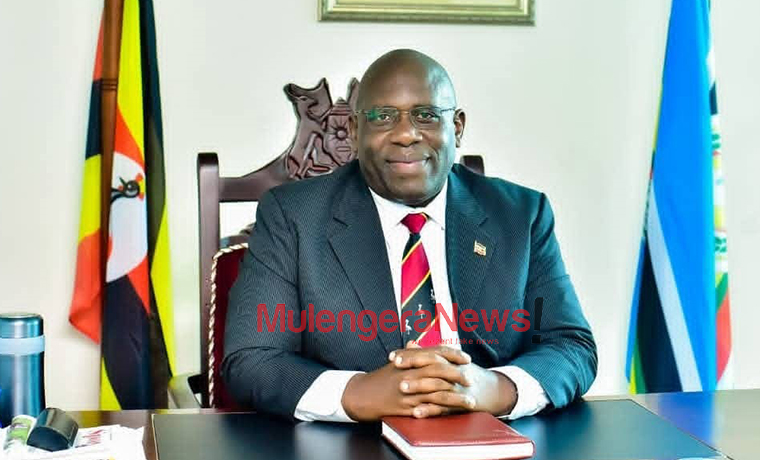
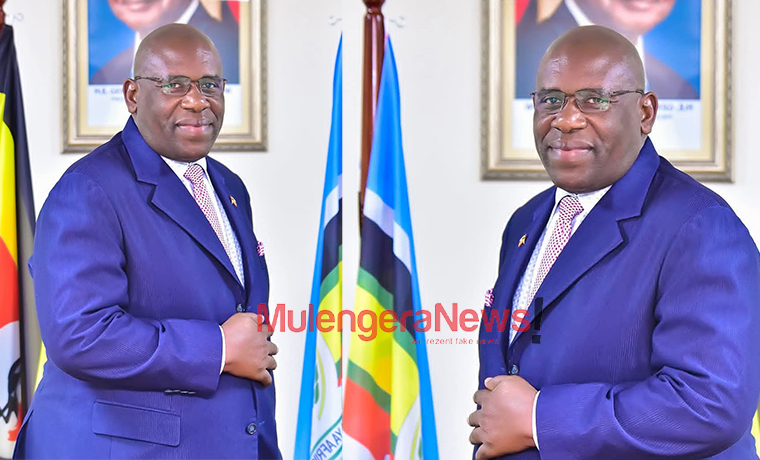
The writer is a former Deputy Chairperson of the Leadership Code Tribunal and former Minister. (For comments on this story, get back to us on 0705579994 [WhatsApp line], 0779411734 & 041 4674611 or email us at mulengeranews@gmail.com).