







By Aggrey Baba
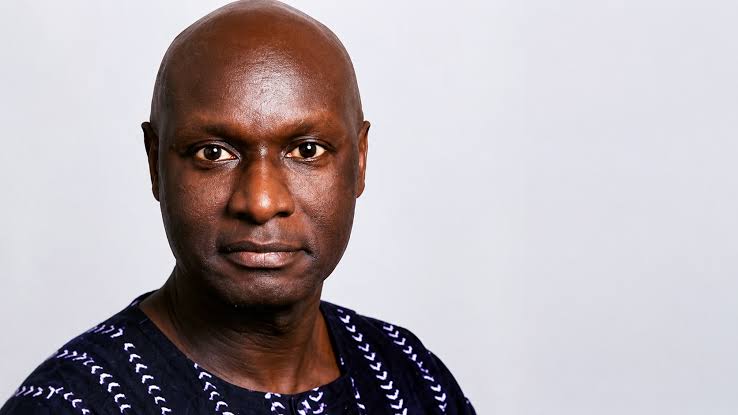
Uganda’s bid to have former UN Under-Secretary-General and ex-Uganda People’s Congress (UPC) leader Olara Otunnu become the next Secretary-General (SG) of the United Nations (UN) is increasingly presenting itself as a contest over more than diplomacy and regional representation.
At the heart of Otunnu’s pitch is a question confronting the UN itself, that can the organization continue to make decisions in global capitals without sufficiently understanding what those decisions produce on the ground?
That could become one of the strongest arguments for Otunnu’s candidacy.
Addressing stakeholders on Wednesday in New York as he presented his visions for the UN’s top position, Otunnu argued that the organization needs a leadership model capable of reconnecting its international policies with the realities facing communities affected by war, poverty and instability.
His argument drawn heavily from his own experience in northern Uganda, where he has spent the past five years working with communities recovering from the devastation caused by more than two decades of Lord’s Resistance Army (LRA) insurgency.
“I have some idea what peacebuilding means at the ground level,” Otunnu said, a statement which may appear simple, but captures an important challenge facing the UN, and thats none other than the difference between negotiating peace and building it.
For decades, the UN has been central to international mediation, humanitarian intervention, peacekeeping and the development of global standards. Yet some of the world’s most difficult conflicts have demonstrated how complicated it is to turn international agreements into lasting peace.
A ceasefire may stop fighting, but it does not automatically rebuild destroyed communities, while a peace agreement may end a war, but it does not necessarily restore livelihoods, repair institutions or heal relationships between communities.
This is where Otunnu’s experience could distinguish him from candidates whose careers have been built primarily around diplomacy and international administration.
His northern Uganda experience gives him a direct connection to the long and difficult process that follows conflict.
Otunnu is therefore placing the question of implementation at the centre of his argument.
Yesterday, he told stakeholders that the UN should formulate policies and standards at its headquarters but also follow through to assess their impact at national and community level.
That position is significant because the credibility of international institutions increasingly depends on results rather than declarations.
The UN can pass resolutions, issue statements and convene international conferences, but for communities caught in conflict, the real test is whether those interventions translate into security, justice, livelihoods and a return to normal life.
Otunnu’s argument is that the SG must understand both sides of that equation.
His wider proposal for the organization also suggests that he sees the current crisis of the UN as institutional rather than merely political.
He has warned that the UN cannot continue with “business as usual”, arguing that legitimacy, effectiveness and efficiency must become permanent priorities.
Rather than treating reform as an occasional response to a crisis, Otunnu wants it embedded in the culture of the institution.
This could be particularly relevant at a time when the UN is operating in an increasingly fractured international environment.
Conflicts in Ukraine, Gaza, Sudan, the Great Lakes region, the Horn of Africa, Iran and the Sahel present different political and historical complications, but they share one problem, and thays the difficulty of getting conflicting parties and powerful international actors to agree on common solutions.
The next SG will therefore require more than administrative competence, because the office demands mediation skills, political patience and the ability to bring parties with fundamentally different interests to the same table.
Otunnu is presenting his record of consensus-building and crisis management as evidence that he can perform that role.
His emphasis on dialogue is particularly important.
Rather than portraying the SG as someone who simply pronounces positions from the UN headquarters, Otunnu believes the office should involve listening to parties in conflict, opening communication channels and helping them identify peaceful solutions, an approach which could make his candidacy relevant beyond Uganda’s immediate interest in securing the position.
His human rights position adds another layer to the argument. Otunnu called for the UN to protect human rights while guarding against what he describes as the politicization and instrumentalization of rights.
He argued that the UN must also recognize cultural perspectives and social traditions that support human dignity, respect and social cohesion.
This could become one of the more difficult areas of his platform, given the competing political and cultural interpretations of rights among UN member states. But it also reflects his broader argument that the organization’s legitimacy depends on building consensus rather than assuming that consensus already exists.
The same philosophy runs through his position on technology. Otunnu said that artificial intelligence should be harnessed for the benefit of humanity, particularly in areas such as healthcare, poverty reduction and financial and digital inclusion.
But he also acknowledged the risks posed by autonomous systems and the rapid pace of technological development.
That suggests a candidate seeking to position the UN not only as a crisis-response institution but also as an institution capable of anticipating the next generation of global challenges.
Ultimately, however, Otunnu’s most politically useful credential may be the combination of international experience and African ground-level exposure.
He is not presenting himself simply as an Ugandan seeking an international position, but as a case for why the experiences of societies that have lived through conflict should inform the leadership of an institution whose major mandate is the prevention and resolution of conflict, which could be a powerful proposition in a world where many of the UN’s most difficult challenges are unfolding in developing countries.
The question for member states will therefore be whether they want another SG primarily equipped to manage the institution as it exists, or one prepared to push it towards a different way of working.
Otunnu’s answer is that the UN must become more effective, more connected to the communities it serves and more willing to continuously reform itself.