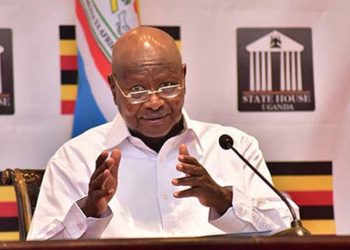






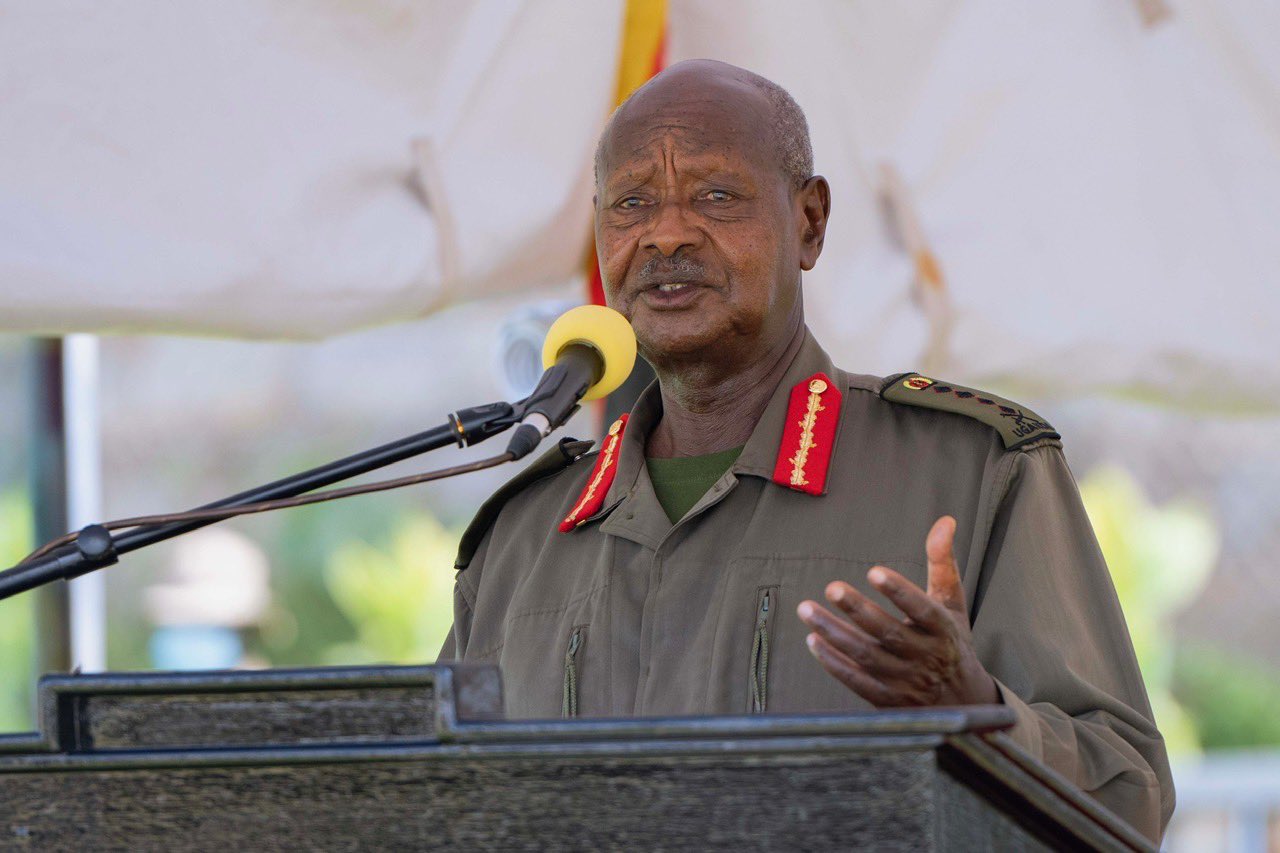

At the Nyerere-Museveni Generation Dialogue held at Makerere University Tuesday, President Yoweri Museveni warned that Africa risks remaining vulnerable to foreign aggression even if its countries become economically prosperous, insisting that political unity is necessary if the continent is to defend its interests against western influence.
Museveni made the case in his keynote address delivered by Second Deputy Prime Minister Crispus Kiyonga, using the occasion dedicated to Tanzania’s founding president, Julius Nyerere, to renew his longstanding call for an East African Federation (EAF).
His message was that economic prosperity alone cannot guarantee a country’s security. In his view, African countries can build their economies and improve the livelihoods of their people, but still remain exposed if they lack the political unity and collective strength needed to protect their interests.
“While economic integration brings prosperity, prosperity alone does not automatically generate a nation against aggression,” Museveni said in the address delivered by Kiyonga.
That is where Museveni’s push for the EAF comes in. He wants the region’s countries to move beyond economic cooperation and take political integration more seriously, arguing that a united East Africa would have greater capacity to defend itself in a world where powerful nations pursue their own interests.

Museveni’s argument also brought Nyerere’s legacy into the centre of the debate. The late Tanzanian leader was a strong advocate of African unity and supported the idea of an EAF, a vision that Museveni has continued to champion over the years.

For him, Nyerere’s ideas were not merely historical declarations to be celebrated during commemorative events. They remain relevant to the choices facing the present generation, particularly as African countries seek to strengthen their economies while protecting their political independence.
The Ugandan warrior has repeatedly argued that the separate states created under colonial rule left African countries divided, despite their shared histories, cultural connections and common interests. In the case of East Africa, he believes closer political integration would allow countries to pool their strength rather than face major challenges individually.
The warning at Makerere was that economic development without the ability to safeguard it leaves a critical gap. Countries may grow richer, but prosperity by itself does not remove the risks associated with political fragmentation or guarantee that external powers will respect their sovereignty.

Museveni’s proposed answer is a stronger regional political arrangement capable of defending East Africa’s interests collectively. He described the prospect of federation as a historic necessity, saying, “That is why a powerful, Swahili-speaking, politically united East African nation is an absolute historical destiny that has been waiting for us.”
It is an argument that puts the question of federation beyond trade agreements and regional meetings, bringing it instead to the heart of the debate about Africa’s security and future influence.
By invoking Nyerere’s vision while pressing for political federation, Museveni challenged the younger generation to consider whether East Africa will continue operating as a collection of separate states or make a more determined effort towards the unity its founding leaders advocated. (For comments on this story, get back to us on 0705579994 [WhatsApp line], 0779411734 & 041 4674611 or email us at mulengeranews@gmail.com).