






By Aggrey Baba
President Yoweri Museveni has recalled an incident in which his casual conversation in Lunyankole with a Tanzanian woman left Mwalimu Julius Nyerere wondering which language the two were speaking, in an encounter that exposed just how deeply colonial borders had divided people who shared the same cultural roots.
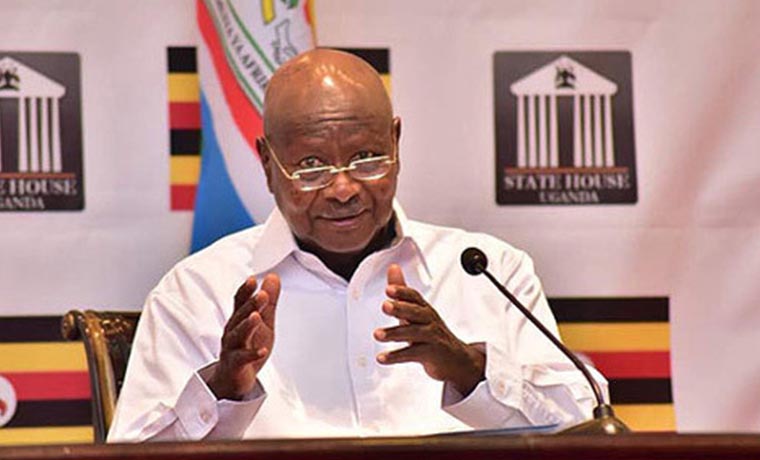
This was shared in his keynote address delivered by Second Deputy Prime Minister Crispus Kiyonga during the Nyerere–Museveni Generation Dialogue 2026 at Makerere University on Wednesday, October 14, where students, scholars and young leaders gathered to reflect on the legacy of the former Tanzanian president under the theme “Borrowing from the Past, Building the Future.”
The incident happened during one of Museveni’s visits to Nyerere in Arusha in the former Tanzanian president’s final years. Museveni says he was at Nyerere’s residence, located behind Mount Meru Hotel, when he spotted a Tanzanian woman who was working with the aides of the man fondly remembered across Africa as Mwalimu.

Having realized that the woman spoke a language familiar to him, Museveni casually engaged her in Lunyankole, asking her about the news and how things were going. The woman responded that everything was fine and that they had no problems where she was.

The two continued their conversation as naturally as people who had known each other for years, apparently giving little thought to the fact that one was in Tanzania and the other was a Ugandan visitor.
But their little chat had attracted the attention of the man inside the sitting room (Nyerere).
Nyerere, who had overheard them speaking, reportedly wanted to know which language they were using. The question surprised Museveni, who found it remarkable that the veteran Pan-Africanist had been so intrigued by a conversation that came naturally to two people whose communities shared linguistic and cultural connections across the border.

For Museveni, this was more than an amusing encounter. It illustrated the contradiction created by colonial boundaries, which divided communities that had long shared languages, family connections, clan ties and cultural practices.
The colonial map had drawn borders between Uganda and Tanzania, but those lines did not erase the relationships among the people living on either side. What appeared to be a conversation between a Ugandan president and a Tanzanian woman was, in Museveni’s telling, a reminder that the people themselves had not always understood their identities through the borders later imposed on them.
Museveni used the anecdote to reinforce his long-standing argument that East Africans have deeper historical connections than the political boundaries separating their countries suggest.
He has consistently advocated for the political and economic integration of East Africa, arguing that the region’s people stand to gain more by uniting than by remaining confined within the separate states inherited from colonial rule.
Museveni’s admiration for Nyerere, according to the address, was rooted partly in the former Tanzanian leader’s commitment to that same cause. He recalled being impressed by Nyerere’s support for East African Federation, his promotion of Kiswahili and his willingness to back liberation struggles against colonial and minority rule in southern Africa.
Nyerere’s support for Uganda during the struggle against Idi Amin also formed part of the relationship Museveni reflected on, alongside the former Tanzanian president’s broader commitment to African unity and the welfare of ordinary people.
The Lunyankole encounter therefore offered Museveni an opportunity to return to one of the central arguments associated with Nyerere’s political legacy, saying that Africa’s future cannot be separated from the task of overcoming divisions that were imposed on its people.
Museveni’s argument is that the same communities whose cultural and linguistic connections cross national borders could benefit from closer political cooperation, with a united East African nation speaking Kiswahili helping to advance the integration project.
The Makerere dialogue brought together four of Nyerere’s grandchildren, who travelled from Tanzania, as well as students from different universities and other participants interested in the political ideas and leadership legacy of the late pan-africanist.
By recalling a simple conversation at Nyerere’s residence, Museveni brought the debate about regional integration down from the level of political declarations to an everyday encounter between two people who could understand each other despite belonging to different countries. (For comments on this story, get back to us on 0705579994 [WhatsApp line], 0779411734 & 041 4674611 or email us at mulengeranews@gmail.com).