






By Mulengera Reporters
The United States has pledged continued support to Uganda’s HIV response while calling for intensified efforts to close gaps in HIV testing and prevention, particularly among men and young adults.
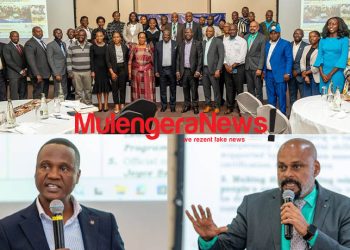
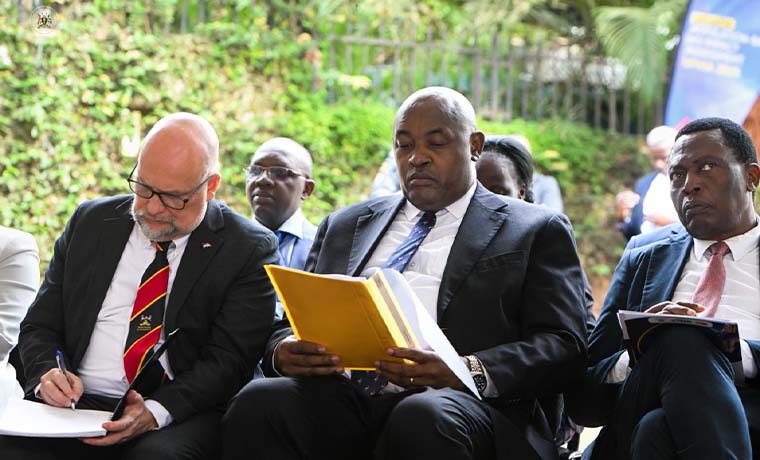
Speaking to journalists at the Uganda Media Centre during the release of preliminary results of the 2025 Uganda Population-Based HIV Impact Assessment (UPHIA), US Embassy Chargé d’Affaires Mikael Cleverley said the assessment had provided a clearer picture of the progress made and the challenges that remain.
Cleverley said HIV testing remains a major gap, noting that a significant proportion of adults living with HIV do not know their status, with larger gaps among men and young adults.

He also called for greater attention to HIV prevention, pointing to emerging long-acting prevention options that could strengthen efforts to reduce new infections.
“The fight against HIV is not done,” Cleverley said, adding that the findings provide Uganda with evidence to guide the next phase of its response.
The US envoy said the assessment also highlighted the need to integrate HIV services with broader healthcare after measuring chronic conditions alongside HIV for the first time.
The assessment found elevated blood pressure among 15.5 percent of adults, with higher rates recorded among people living with HIV.

Cleverley said the finding underscored the importance of providing integrated care that addresses the full range of health needs among people living with HIV.
The call for renewed action comes amid significant gains in Uganda’s HIV response, which Cleverley attributed to more than two decades of cooperation between the United States and the Ugandan government.
He said more than 1.5 million people living with HIV in Uganda are alive today as a result of sustained efforts supported through US health assistance, including HIV testing, treatment and the strengthening of national health systems.
Cleverley said the proportion of adults living with HIV who have maintained treatment and achieved viral-load suppression had risen from about 60 percent to 86 percent over the past decade.
He described the progress as evidence of the impact of sustained investment in Uganda’s HIV response, while stressing that further work is required to reach the goal of ending HIV as a public health threat.
Uganda takes greater lead
Cleverley also highlighted the 2025 UPHIA as a milestone in Uganda’s growing ownership of its health programmes.
He said, for the first time, the population-based HIV impact assessment was fully led and implemented by Ugandan institutions and experts.
The Ministry of Health provided overall leadership, with Makerere University School of Public Health serving as the prime implementing organisation. The Uganda Bureau of Statistics led survey sampling, while the Uganda Virus Research Institute and National Health Laboratory and Diagnostic Services led laboratory operations.
Cleverley said the development reflected the shift towards greater Ugandan leadership and ownership of the country’s health response.
He said the United States would continue supporting Uganda as the country takes greater responsibility for its health programmes.
The two countries are currently implementing a five-year health cooperation memorandum of understanding, which Cleverley said would combine US investments with Uganda’s domestic resources.
The arrangement, he said, is intended to increase Ugandan ownership and funding while maintaining US support.
Cleverley congratulated the Ministry of Health and the Ugandan institutions involved in the assessment, as well as the citizens who participated in the survey.
He said the data generated through the assessment would help Uganda make informed decisions, strengthen its HIV response and sustain progress towards an HIV-free generation. (For comments on this story, get back to us on 0705579994 [WhatsApp line], 0779411734 & 041 4674611 or email us at mulengeranews@gmail.com).