








By Mulengera Reporters
Women entrepreneurs participating in Private Sector Foundation Uganda (PSFU)-implemented GROW Project in Rubanda District have been equipped with practical agricultural skills and introduced to improved Irish potato varieties that could help them increase productivity, strengthen their businesses and make informed decisions when investing in GROW loans.
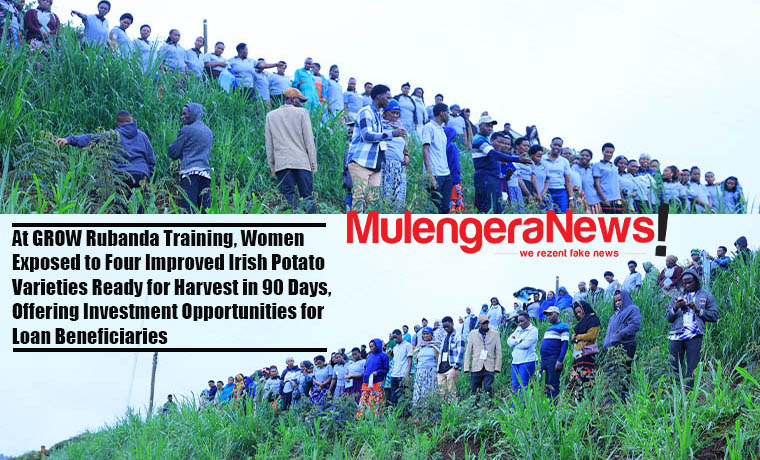
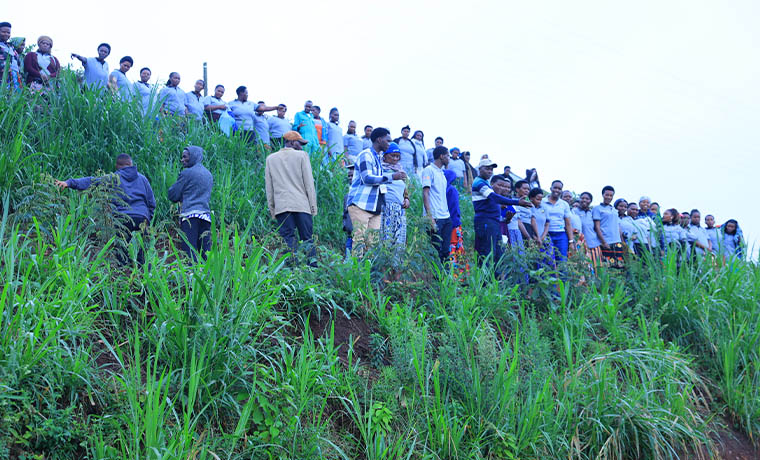
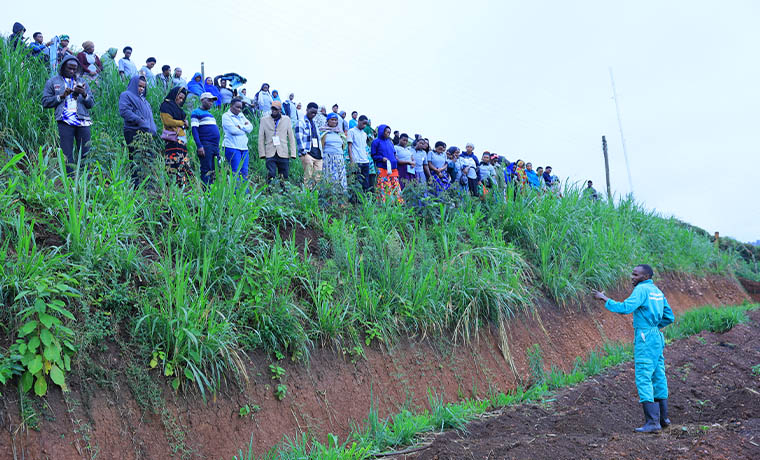
The women, who participated in a two-week Special Advanced Skills Training, visited the Kachwekano Zonal Agricultural Research and Development Institute (KaZARDI), under the National Agricultural Research Organisation (NARO), where they received hands-on training in modern farming practices, sustainable hillside agriculture and improved Irish potato production.

During the visit, the participants were introduced to four improved Irish potato varieties, identified in the training as NARO Pot 1, NARO Pot 2, NARO Pot 3 and NARO Pot 4. The training exposed them to opportunities within the potato value chain, including commercial potato production and seed multiplication, as potential pathways to grow their agricultural enterprises and generate income.

Speaking during the engagement, Sam Aijuka, a Research Assistant at KaZARDI, explained that the institute develops farmer-preferred potato varieties to address market demands, improve yields and support agro-industrialisation. He highlighted the importance of selecting varieties according to their intended use, whether for fresh consumption, processing or seed production.
Aijuka noted that some of the institute’s recently released varieties, including NARO Pot 7, NARO Pot 8 and NARO Pot 10, offer important advantages such as high yields, high dry matter content, suitability for processing and improved tolerance to common potato diseases. Under favourable growing conditions, these varieties can produce up to 40 tonnes per hectare.
He further encouraged women intending to invest in the potato value chain to carefully assess the opportunities available before committing their loan funds. According to him, seed potato production can offer an attractive business opportunity because demand for quality planting materials remains high, although profitability depends on production costs, market conditions and proper farm management.

“The women need to understand which component of the potato value chain they want to invest in, whether commercial potato production or seed production,” Aijuka advised, emphasising the importance of starting with quality seed and following recommended agronomic practices.
The training also addressed practical challenges affecting agricultural productivity in the Kigezi sub-region, including soil erosion, changing climatic conditions, poor seed selection and limited knowledge of modern farming techniques. Participants received guidance on proper spacing, fertiliser application, crop management and the selection of suitable varieties for their farms.
Yoweri Katushabe, a trainer from Katende Harambe Rural Urban Training Centre (KHRUTC), commended the GROW Project for providing women with practical agricultural knowledge to complement their existing farming experience.
He observed that although many of the women had been engaged in agriculture for years, some lacked the technical knowledge required to achieve better yields. Through demonstrations and practical sessions, the participants learned how to apply manure, select quality seeds, manage crops, mulch gardens and use appropriate crop protection methods.
Katushabe expressed confidence that the knowledge acquired would help the women make better use of financial support obtained through the GROW Project.
“Most of these women have been farming, but they have lacked the knowledge to improve their production. With the skills they have gained through practical training, they can now apply better farming methods and increase their yields,” he said.
For the participants, the training offered renewed confidence in agriculture as a viable business.
Proscovia Ahesibwe, a farmer engaged in Irish potato and cabbage production, said the training had equipped her with modern farming skills and introduced her to improved Irish potato varieties she had not previously known.
She explained that she had learned how to make fertilisers, establish nursery beds and adopt improved crop management practices. The experience also helped her understand where to obtain quality planting materials and how to prepare for future agricultural investments.
Ahesibwe said she was now more confident about applying for a GROW loan and investing in agriculture, with plans to return to KaZARDI to purchase improved potato varieties and other planting materials for her farm.
The visit also exposed the women to sustainable farming practices suitable for the hilly terrain of Rubanda District, including contour farming and terracing. These techniques are particularly important in reducing soil erosion, conserving soil moisture and protecting farmland in areas increasingly affected by climate variability.
The training forms part of the GROW Project’s broader efforts to equip women entrepreneurs with the skills, knowledge and confidence needed to expand their businesses and improve their economic participation.
By combining practical agricultural training with information on improved crop varieties and investment opportunities, the initiative is helping women make more informed decisions about how to use loans productively.
For the women of Rubanda, the lessons from KaZARDI represent more than an introduction to improved Irish potatoes. They offer a pathway towards better farming practices, increased productivity and stronger, more sustainable agricultural enterprises.
As the participants return to their communities, the ultimate goal is to translate the knowledge gained into practical action on their farms, enabling them to build profitable businesses, strengthen household incomes and make meaning. (For comments on this story, get back to us on 0705579994 [WhatsApp line], 0779411734 & 041 4674611 or email us at mulengeranews@gmail.com).