







By Aggrey Baba
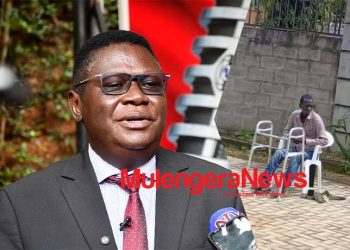
Hon Norbert Mao, the Justice and Constitutional Affairs Minister, also DP president, has warned security agencies and other state operatives against detaining Ugandans in undisclosed detention facilities, insisting that while recognized safe houses may be used for special detention arrangements, torture chambers popularly known as basements are illegal.
Mao said the existence of recognized safe houses does not give security agencies a blank cheque to arrest people and hold them at locations unknown to their families, lawyers or other responsible authorities, warning that such practices undermine the legal protections guaranteed to the people of Uganda.


The minister made the clarification on Wednesday, at the Uganda Media Centre, where he sought to explain the legal distinction between safe houses and alleged torture chambers amid growing controversy over secret detention facilities.
“Even the so-called safe houses known. They have to be known that this is a safe house,” Mao said.
To illustrate his argument, Mao cited the case of a prominent businessman suspected of criminal activity, explaining that authorities could make special arrangements to detain such an individual in a recognized safe house instead of taking them directly to Luzira Prison.
However, he was categorical that such arrangements could not be used to legitimize torture or detention outside the law.
“But the idea of torture chambers, those ones are all illegal under our laws,” he said.
Mao’s remarks come amid persistent allegations of abductions, torture and unlawful detention in basements, with some complaints linking the alleged operations to security agencies operating under the command of Chief of Defense Forces Gen Muhoozi Kainerugaba.
The minister insisted that every person arrested must be held within a legally recognized detention framework, meaning security operatives cannot simply pick up people and disappear them into locations that cannot be accounted for.
He also turned attention to habeas corpus, a legal remedy he described as one of the most important safeguards available to citizens when powerful institutions abuse their authority.
“Habeas corpus was instituted to defend the weak against the strong, the powerless against the powerful,” Mao said.
He explained that the remedy becomes particularly important where a person has been arrested or allegedly abducted but their whereabouts remain unknown, leaving relatives and lawyers unable to establish where they are being held.
Under such circumstances, Mao said, an affected person or their representatives can approach court and seek an order compelling those holding the detainee to produce them and explain the legal basis for their continued detention.
He explained that habeas corpus literally means “produce the body”, placing an obligation on authorities to account for a detained person instead of allowing them to remain missing without explanation.
“You file for habeas corpus, which is a Latin phrase which means produce the body. In other words, if you have arrested somebody on some probable cause that they have committed an offence, the court says bring that person before the court and tell us what offence he or she has committed,” Mao explained.
The minister, however, cautioned those who might interpret a habeas corpus order as an automatic declaration that the detained person is innocent or should never face prosecution, stressing that the remedy is not intended to shield suspects from criminal accountability but to compel authorities to justify their actions and establish that detention is lawful.
“Getting an order of habeas corpus in favour of a person who is missing or has been disappeared does not exonerate that person from any offence that person has committed,” he said.
Mao maintained that even where security agencies have legitimate grounds to suspect someone of committing an offence, they must follow the law rather than resort to detention arrangements that leave citizens unaccounted for.
He warned that allowing people to disappear into unofficial detention facilities would create a dangerous situation in which Ugandans could no longer rely on the law for protection.
His comments place renewed attention on the accountability of security agencies, particularly over the whereabouts of people reported missing after arrests and the legal authority under which different detention facilities operate.
The minister’s remarks also come as the Justice Law and Order Sector prepares to mark its 25th anniversary through the National Justice Week, scheduled to run from November 23 to December 4, 2026.
The programme is expected to feature public engagements on human rights, access to justice, accountability and the performance of Uganda’s justice institutions. (For comments on this story, get back to us on 0705579994 [WhatsApp line], 0779411734 & 041 4674611 or email us at mulengeranews@gmail.com).