







 67
By Mulengera Reporters
With 19 African countries competing for 13 seats, Uganda steps up lobbying efforts in Doha as it seeks to retain its influence in shaping global digital policy.
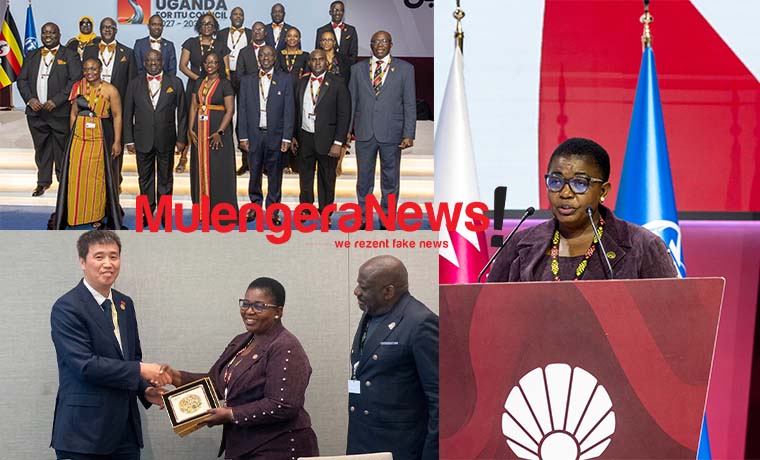
Uganda has intensified its diplomatic campaign to secure re-election to the International Telecommunication Union (ITU) Council, with its delegation engaging countries from across the world at the ongoing ITU Plenipotentiary Conference 2026 in Doha, Qatar.
Led by the Minister of ICT and National Guidance, Rt. Hon. Justine Kasule Lumumba, the Ugandan delegation is seeking to retain the country’s seat on the ITU Council for the 2027–2030 term, representing Africa’s Region D.

The contest is expected to be competitive, with 19 African countries vying for just 13 seats allocated to the region.

Uganda’s campaign comes as the country seeks to strengthen its position in international discussions on digital connectivity, inclusion and the future of telecommunications.
Presenting Uganda’s policy statement at the conference, Lumumba reaffirmed the government’s commitment to inclusive digital transformation, highlighting efforts to expand connectivity, improve the affordability of digital services and strengthen digital skills across the country.
She pointed to interventions supported through the Uganda Communications Universal Service and Access Fund (UCUSAF), including the establishment of ICT public access centres and the extension of connectivity to underserved communities and schools.
The Minister also highlighted the Uganda Communications Commission’s (UCC) e-Booster Programme, which supports the development of homegrown ICT innovations and solutions. The initiative recently received recognition from the Commonwealth Telecommunications Organisation.
Beyond presenting its digital transformation agenda, Uganda has embarked on an extensive diplomatic outreach to rally support for its re-election bid.
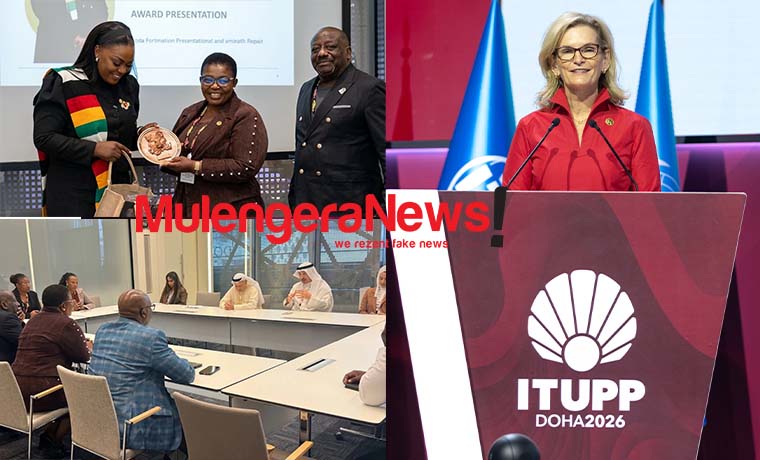
Over the past week, the delegation has held bilateral and informal engagements with representatives from Oman, Kuwait, Zimbabwe, Azerbaijan, Rwanda, Poland, Libya, Kenya, China, Romania, Algeria and France, among other countries.
The discussions have provided an opportunity to exchange experiences on digital transformation while seeking support for Uganda’s continued representation on the ITU Council.
The 48-member ITU Council serves as the Union’s governing body between Plenipotentiary Conferences, playing a central role in overseeing its activities and advancing international telecommunications cooperation.
As part of its diplomatic engagements, Uganda also hosted a reception in Doha, offering conference delegates a taste of the country’s cultural and culinary heritage.
The event, attended by Lumumba and ITU Secretary-General Doreen Bogdan-Martin, among other dignitaries, showcased Ugandan music and traditional cuisine, including matooke and groundnuts. Delegates also received packets of Ugandan coffee as souvenirs.
In her remarks, Lumumba recalled Uganda’s longstanding relationship with the ITU, dating back to the country’s membership in 1963, and reaffirmed its commitment to the organisation’s global ICT development agenda. She urged delegates to support Uganda’s bid for another term on the Council.
Uganda also congratulated Bogdan-Martin on her re-election as ITU Secretary-General, expressing optimism about continuing the collaboration established during her previous four-year term.
In a subsequent meeting, Lumumba called on the ITU to sustain its support for Uganda’s digital transformation priorities, particularly in e-waste management, ICT financing and the application of Artificial Intelligence to bridge the digital divide.
The Minister also congratulated newly elected ITU Deputy Secretary-General Adel Darwish and Director of the Telecommunication Development Bureau Dr Nele Leosk.
Uganda’s delegation includes UCC Executive Director Hon. Nyombi Thembo, Director of Corporate Affairs Fred Otunnu, and officials from UCC and the Ministry of Foreign Affairs.
With the African contest attracting more candidates than available seats, Uganda’s re-election campaign is shaping up as a significant diplomatic effort to preserve its voice in global telecommunications governance.
A renewed mandate would provide Uganda with another opportunity to contribute to international ICT policy discussions, strengthen partnerships and champion digital inclusion, particularly for developing countries and underserved communities. (For comments on this story, get back to us on 0705579994 [WhatsApp line], 0779411734 & 041 4674611 or email us at mulengeranews@gmail.com).