







By Mulengera Reporters
The Uganda Law Society (ULS) has called on the Director of Public Prosecutions (DPP) to direct police to investigate journalist and political commentator Andrew Mwenda over remarks in which he allegedly endorsed abductions, torture, corporal punishment and secret detention facilities as instruments of governance and political succession.
The lawyers’ body argues that Mwenda’s comments could amount to criminal offences under Ugandan law, particularly provisions relating to the prevention of torture, aiding and abetting criminal activities, conspiracy and support for unlawful acts.
The remarks were reportedly made during an interview with Terry Kahuma on the Simply Legal programme released on November 16, 2026, under the title Andrew Mwenda: Why Abductions, Torture & the Basement Are Necessary.

In a strongly worded statement issued on Tuesday, November 17, ULS said Mwenda appeared to justify the deployment of soldiers to enforce order through physical punishment, abductions, underground detention facilities and measures outside established judicial processes.
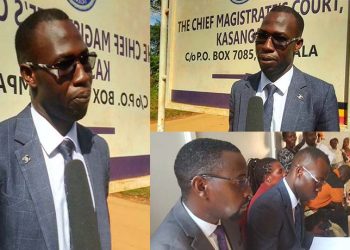
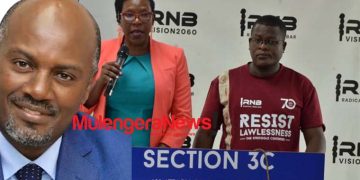
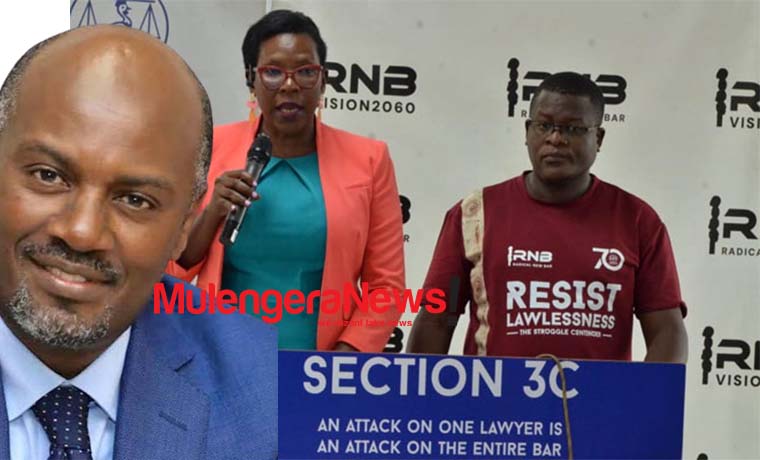
The statement, attributed to ULS President and Head of the Bar Isaac K. Ssemakadde, SC, was read by Counsel Lillian A. Drabo, Chairperson of the Society’s Section 3C Committee, during a press conference at ULS House in Kampala.
The Society cited remarks attributed to Mwenda in which he reportedly suggested that individuals considered to undermine the public interest could be taken to underground detention facilities, commonly referred to as basements, where some might never appear before courts.
It also pointed to his reported comments about deploying soldiers and local defence forces armed with sticks, rifles and other military equipment to enforce discipline, including whipping civilians.
According to ULS, the comments were made in the context of fighting corruption, promoting development and facilitating political succession under Gen. Muhoozi Kainerugaba and the Patriotic League of Uganda (PLU).
“These are not abstract ideas. They describe methods already in use and methods he presents as forthcoming,” the statement reads.
ULS argued that the remarks should not be dismissed as ordinary political commentary because publicly recommending torture, secret detention and punishment outside the judicial system could amount to encouraging or supporting criminal conduct.
The Society consequently wants police to investigate whether Mwenda’s statements fall within the offences provided for under the Prevention and Prohibition of Torture Act, the Penal Code Act, the Anti-Terrorism Act and the International Criminal Court Act.
Under Section 8 of the Prevention and Prohibition of Torture Act, a person who directly or indirectly procures, aids, abets, finances, solicits, incites, recommends, encourages or supports another person in committing torture, knowing or having reason to believe that the support will be used in connection with torture, commits an offence.
The Society also cited Section 10 of the same law, which provides for the liability of superior officers who know or consciously disregard information that subordinates are committing or are about to commit torture.
Under Sections 19 and 20 of the Penal Code Act, individuals who aid or abet offences or participate in a common unlawful purpose may also be held criminally responsible where the legal requirements are established.
ULS further referred to Sections 363 to 365 of the Penal Code Act, concerning conspiracy to prevent the enforcement of the law or achieve unlawful purposes.
The lawyers also invoked Sections 7, 8 and 12 of the Anti-Terrorism Act, arguing that investigators should examine whether the alleged conduct falls within the offences provided for under the legislation.
The Society additionally cited the International Criminal Court Act, which incorporates the Rome Statute provisions on individual responsibility for international crimes, including aiding, abetting, ordering or intentionally contributing to crimes against humanity where the relevant legal thresholds are met.
Calls for government action
Beyond calling for investigations into Mwenda’s remarks, the Society wants Gen. Muhoozi, the PLU leadership and associated figures to publicly disavow any endorsement of abductions, secret detention, corporal punishment by soldiers and other extrajudicial measures.
It also demands that the Uganda People’s Defence Forces (UPDF), Police and other security agencies immediately stop what it describes as abductions, secret or incommunicado detention and corporal punishment.
The Society wants authorities to disclose the whereabouts and condition of all individuals allegedly held in secret detention facilities, produce them before competent courts and unconditionally release those detained without lawful process.
It further wants the Director of Public Prosecutions to direct police to investigate whether Mwenda’s statements constitute criminal offences and institute prosecutions where evidence establishes the necessary legal elements.
The Judiciary, including the International Crimes Division, has also been asked to ensure that cases arising from alleged abductions, secret detention and torture are heard by independent and impartial courts.
ULS also wants the Uganda Human Rights Commission to conduct an independent investigation into the remarks and the alleged pattern of abductions and secret detention facilities.
The Society argues that individuals who continue associating with or supporting a political project after public endorsement of unlawful practices could become relevant to investigations into possible common-purpose or accessorial liability, provided the legal requirements are established.
ULS invokes constitutional and international obligations
The lawyers’ body said the reported remarks and the practices they allegedly promote threaten Uganda’s obligations under international human rights instruments, including the United Nations Convention Against Torture, the International Covenant on Civil and Political Rights, the Rome Statute and the African Charter on Human and Peoples’ Rights.
It specifically cited Articles 7, 9 and 14 of the International Covenant on Civil and Political Rights, which protect individuals against torture, arbitrary detention and violations of fair-trial rights.
The Society also referred to Articles 4, 5, 6 and 7 of the African Charter, which provide for the protection of life, human dignity, liberty and fair trial rights.
Domestically, ULS invoked Articles 24 and 44 of the Constitution, which protect human dignity and prohibit torture and other cruel, inhuman or degrading treatment or punishment.
It maintained that torture cannot be justified on grounds of national security, public interest, development, anti-corruption efforts or political succession.
“Let us be clear: Mwenda is wrong. No superior officer may invoke ‘public interest,’ ‘anti-corruption,’ ‘development’ or succession as a defence under the Prevention and Prohibition of Torture Act or the Constitution,” the statement said.
The Society said it would continue documenting alleged human rights violations and pursuing accountability through legal and institutional mechanisms.
“The rule of law does not survive the normalisation of the basement, the stick and the disappearance. The Society will continue to document, challenge and resist it,” the statement reads.
The statement concluded with the message: “Resist Lawlessness. Free All Political Prisoners.”
Andrew Mwenda’s comment on the allegations was not immediately available by the time of publication.