













By Mulengera Reporters
Government has injected UGX56.9 billion into the establishment of a modern fish feeds manufacturing factory in Mpigi District, in a major industrial investment aimed at reducing Uganda’s dependence on imported fish feeds and lowering production costs for local fish farmers.
The factory, being established by Masheda Feeds Limited in Buyala, along Mityana road, is expected to produce 33,600 tonnes of fish feeds every year, with capacity for expansion to 58,000 tonnes, providing a local alternative to expensive imported feeds that have constrained the growth of Uganda’s aquaculture industry.
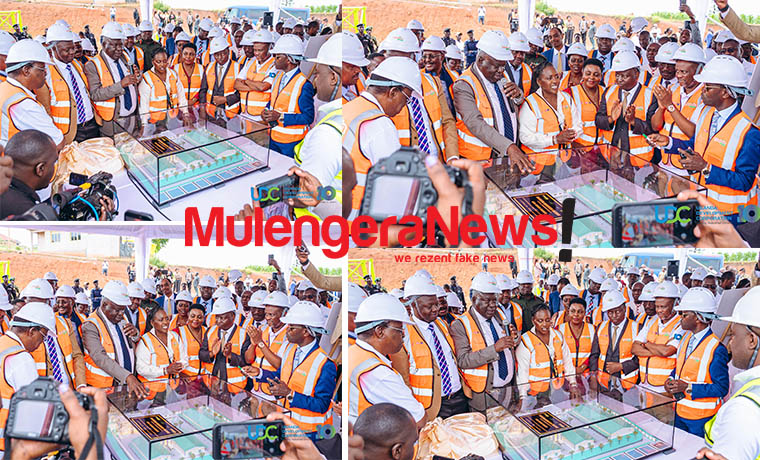
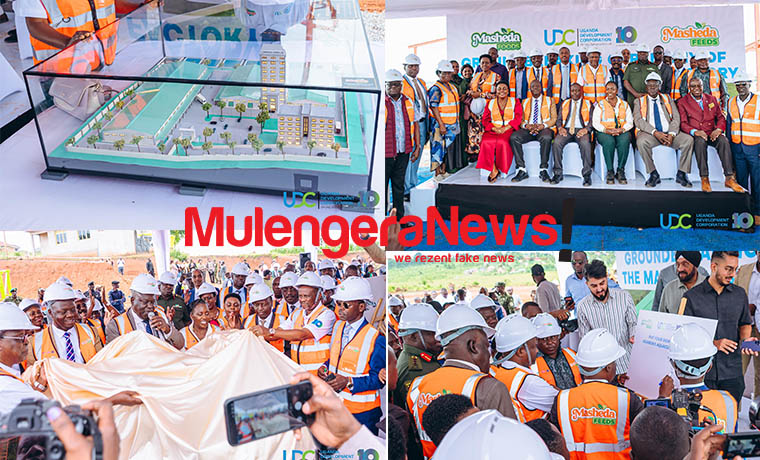
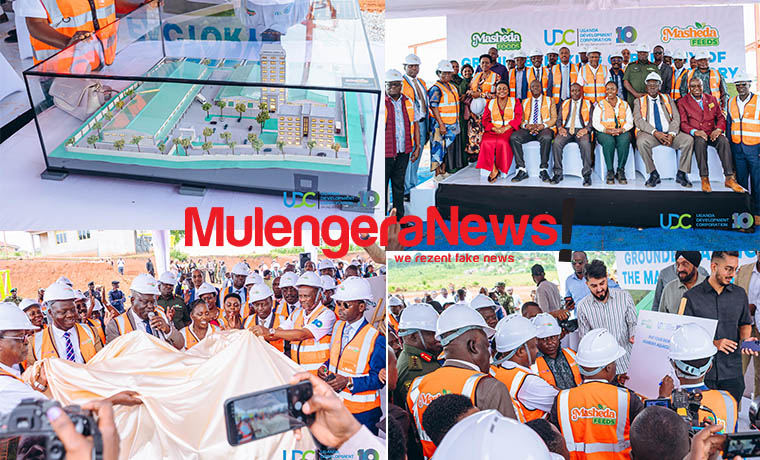
The groundbreaking ceremony was held on Thursday, with State Minister for Trade, Industry and Cooperatives David Bahati representing Gen Salim Saleh as chief guest.
Uganda Development Corporation (UDC), which is financing the project alongside Masheda, has so far invested UGX26 billion and plans to inject another UGX30 billion, bringing its contribution to UGX56 billion.
UDC Executive Director Patrick Birungi said the investment followed discussions with Masheda over the challenges facing its expanding fish processing business, particularly the shortage of adequate fish supplies to satisfy markets in Uganda and the Democratic Republic of Congo (DRC).
Dr Birungi said the initial assessment had focused on expanding fish processing capacity, but further consultations revealed that the biggest obstacle was the shortage of fish itself, largely caused by the high cost and limited availability of quality feeds.
He explained that Masheda had been importing fish feeds from Egypt, even supplying some of the agricultural raw materials used in manufacturing the feeds abroad before importing the finished products back into Uganda.
“We said no, that is not sustainable. We need to bring the equipment here so that we produce the feeds from here,” Birungi said.
He described fish feeds as one of the biggest constraints to the expansion of aquaculture, noting that poor-quality feeds have continued to undermine the productivity of local fish farmers.
The UDC boss said the investment was intended to benefit not only Masheda’s commercial fish farming operations but also independent small-scale farmers organized in fish farming associations across the country.
He said the associations would access quality feeds from the factory, helping farmers improve fish growth, increase production and supply processors with adequate quantities of fish.
Mr Marvin Lwasa, Masheda Managing Director said the factory was intended to address the economics of fish farming, where feeds account for approximately 75% t of production costs.
He said the price of fish feeds had increased from about UGX4,500 per kilogramme to UGX6,400, making commercial fish farming increasingly difficult for ordinary farmers.
A 25-kilogramme bag, which previously cost about UGX112,500, now costs approximately UGX160,000 at the prevailing kilogramme price.
The company expects to reduce its feed production costs by more than 40% through locally sourced agricultural raw materials and the use of protein produced at its accompanying black soldier fly facility.
The factory will be equipped by Buhler, an international processing technology company, and is designed to manufacture feeds for African catfish and tilapia.
The investment is also expected to create a market for Ugandan agricultural produce, with the factory projected to require approximately 17,000 tonnes of soybean, 26,000 tonnes of maize, 11,000 tonnes of wheat and 25,000 tonnes of rice annually.
According to the project details, these supplies will be sourced from more than 7,600 smallholder farmers, creating a substantial market for local agricultural producers.
The construction and installation works are expected to be completed in February 2027.
The feeds factory forms part of Masheda’s broader investment in the aquaculture value chain, which includes hatchery development, commercial fish farming and fish processing.
The company operates a hatchery with the capacity to produce more than two million fingerlings monthly and has developed an outgrower network involving hundreds of fish farmers.
Through its Kembogo Aquaculture Park in Kyankwanzi District, Masheda has also engaged more than 200 formerly homeless young people in commercial fish farming.
Birungi said UDC was attracted by the transformative nature of the investment and its potential to address a major production gap in the fisheries sector.
He explained that the factory would also support Government’s wider industrialization agenda by promoting local manufacturing, import substitution, employment creation and value addition.
The project is among the investments being showcased by UDC as it marks 10 years since its re-establishment in 2016.