









By Mulengera Reporters
The Uganda Communications Commission (UCC) is calling for a shift in Uganda’s film industry from dependence on public support to a commercially driven model capable of producing content for international markets.
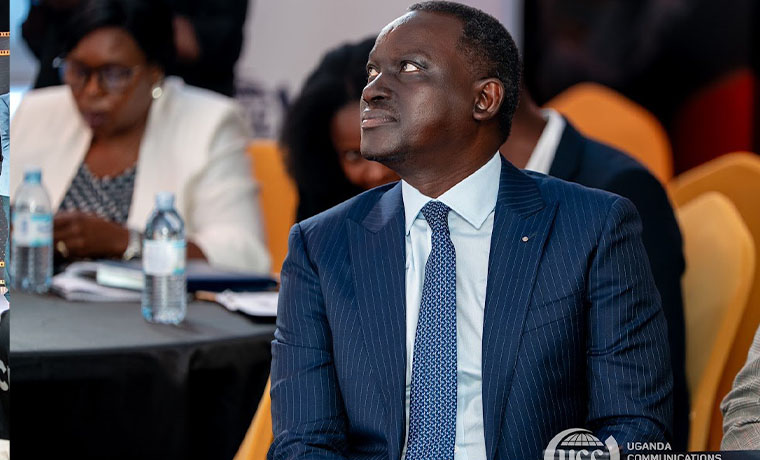
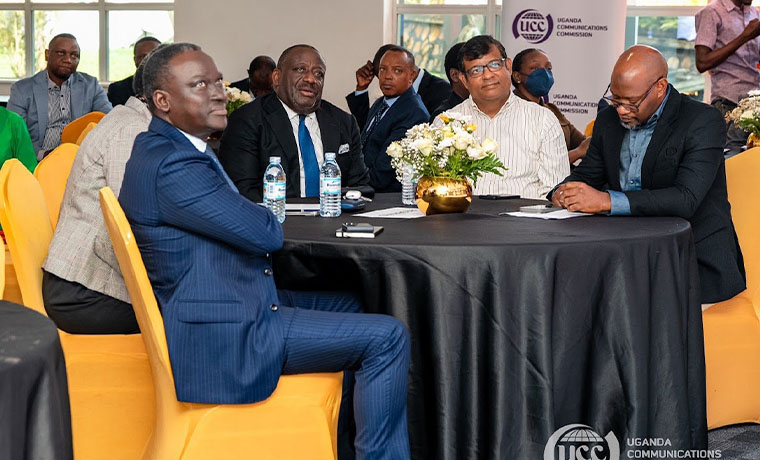
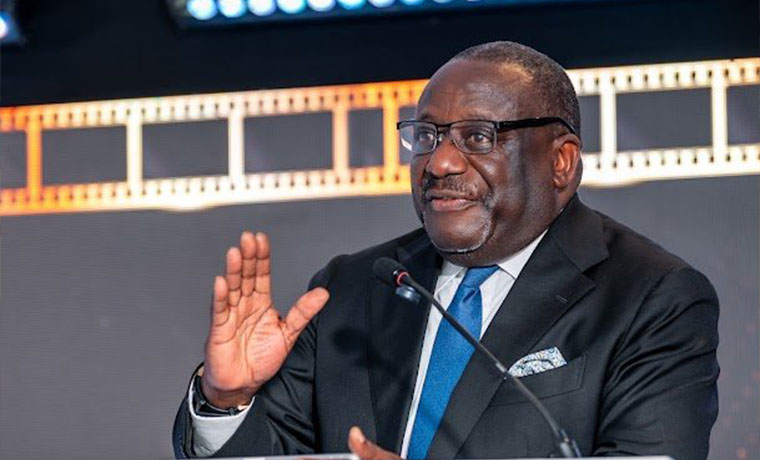
UCC Executive Director Nyombi Thembo made the call during the Post-Uganda Film Festival (UFF) 2026 CEO and Stakeholder Breakfast at the Commission’s headquarters in Bugoloobi on Wednesday, where he urged private-sector players to invest in Ugandan films as viable businesses rather than viewing them mainly as corporate social responsibility projects.
Thembo said Uganda has made progress over the years in developing its film industry, but the sector still faces challenges including limited financing, skills gaps, weak marketing and distribution systems, inadequate audience development and production-quality concerns.

He said the country now needs to focus on producing films that can compete beyond the local market.

“We must now target Netflix. We must target those global producers like Sony and others so that our films can be able to be sold internationally,” Thembo said.
He noted that Ugandan productions have already secured opportunities on local and regional platforms, including DStv, but said such achievements should be treated as part of a wider journey toward international competitiveness.
According to Thembo, achieving global market access will require greater investment because high-quality productions require adequate resources.

UCC increases film support
The remarks came as UCC announced 22 projects selected under the latest Content Development Support Programme (CDSP), the third round of government support for Ugandan film projects.
The programme supports different forms of audiovisual production, including feature films, short films, documentaries, animation and television drama.
Thembo said the 22 projects are projected to create more than 4,000 direct and indirect employment opportunities involving writers, directors, producers, actors, cinematographers, editors, sound engineers, costume designers, musicians, production assistants and marketers.
He said the support should therefore be viewed as an investment in an entire creative ecosystem rather than assistance to individual filmmakers.
The latest funding package stands at Shs1.2 billion, up from Shs500 million in the first cohort. Thembo said UCC hopes to increase the fund in the coming years to support more productions and improve the quality of Ugandan content.
Building an industry beyond Kampala
Thembo also highlighted UCC’s regional film competitions, saying they have helped broaden opportunities for filmmakers outside Kampala.
He said more than 400 stories have emerged from different parts of Uganda through the regional competitions, including Gulu, Arua, Soroti, Jinja, Mbarara, Kabale and Moroto.
“Uganda is not one story, it is thousands of stories that deserve to be told through our creative sector,” he said.
He said the Uganda Film Festival, regional competitions, CDSP and other UCC initiatives are intended to combine talent development, production support, exhibition, audience development and access to wider markets.
Private sector urged to build the market
Thembo said public funding alone cannot sustain the film industry, arguing that the private sector must become more deeply involved in financing, distribution, technology, exhibition and audience development.
He called on broadcasters to provide platforms, telecommunications companies to support connectivity and digital distribution, streaming services to acquire Ugandan content, financial institutions to develop suitable financing products, brands to invest in productions and cinemas to provide screens.
“A sustainable creative industry requires audiences who are willing to watch, subscribe and pay,” he said.
He also urged stakeholders to develop better marketing and distribution systems capable of connecting Ugandan productions with audiences locally and internationally.
UFF could become commercial
Thembo also floated the possibility of commercializing the Uganda Film Festival, noting its growing popularity as a social and cultural event.
He questioned whether the festival should continue operating entirely as a free event, suggesting that stakeholders should consider business models that could make UFF more financially sustainable.
He said UCC wants to develop partnerships that extend beyond individual sponsorships or a single festival and instead support filmmakers from story development and production through to marketing, distribution, exhibition and monetization.
Film as a tool for national storytelling
The UCC chief further said film should serve broader cultural and national purposes, including promoting Uganda’s identity, heritage and tourism.
He revealed that UCC is considering introducing a new competitive category in which filmmakers would work around selected themes, with adequate time provided for developing and producing the stories.
He argued that successful film industries do more than entertain audiences, saying film can shape how countries and cultures are understood.
For the beneficiaries of the latest CDSP funding, Thembo called for professionalism, proper financial management and high production standards.
He urged filmmakers to produce stories that preserve Uganda’s heritage, challenge audiences and demonstrate that Ugandan talent can compete internationally.
The Post-UFF engagement brought together government officials, filmmakers, private-sector leaders, broadcasters, exhibitors, training institutions and other stakeholders to discuss the next phase of Uganda’s creative-industry development.
UCC says it will continue working with players across the film value chain to strengthen skills, production, audiences, distribution and commercial opportunities for Ugandan audiovisual content. (For comments on this story, get back to us on 0705579994 [WhatsApp line], 0779411734 & 041 4674611 or email us at mulengeranews@gmail.com).