







By Jonard Asiimwe (princeasiimwe12@gmail.com)
There are moments in a nation’s life when history pauses not to admire what has been achieved, but to interrogate what must now be built. Uganda stands at such a moment. We have secured stability. We have expanded infrastructure. We are unlocking natural resources once dormant beneath our soil. Yet the defining question of this generation is not whether Uganda has potential. It is whether we possess the discipline, legal clarity, and moral courage to convert potential into permanent prosperity.
Transformation is not improvised. It is engineered.
As an engineer by training and a student of governance by conviction, I have come to appreciate that national development follows principles no less exacting than those governing structural design. A bridge collapses when calculations are careless. An economy falters when systems are weak. A nation stagnates when ideology is divorced from implementation. Uganda must now enter a phase where policy is precise, institutions are accountable, and patriotism is expressed through performance.

Uganda’s macroeconomic fundamentals reveal both promise and urgency. According to the World Bank, Uganda’s GDP growth rebounded to approximately 5.5% in 2023, with projections strengthened by oil-related investments and infrastructure expansion. The Uganda Bureau of Statistics reports a population exceeding 45 million, with nearly 75% below the age of 30. This demographic structure is not merely a statistic; it is a national test. A youthful nation can accelerate into productivity, or descend into frustration depending on whether governance is structured or sentimental.

The architecture of Uganda’s next economic phase rests upon three interlocking pillars: rule of law, disciplined resource governance, and productive citizenship.
The legal foundation already exists. Article 237(2)(a) of the 1995 Constitution of the Uganda vests minerals and petroleum in the Government on behalf of the people. This constitutional trusteeship is neither symbolic nor ceremonial; it imposes fiduciary responsibility. The Petroleum (Exploration, Development and Production) Act, 2013, together with the Petroleum (Refining, Conversion, Transmission and Midstream Storage) Act, 2013, establishes licensing regimes, local content obligations, and environmental safeguards. The Public Finance Management Act, 2015 (as amended) provides for the Petroleum Fund and the management of oil revenues under Sections 56–64, designed to prevent fiscal indiscipline and the infamous “resource curse” that has destabilized other economies.
These are not abstract statutes. They are instruments of intergenerational justice.

The lesson from comparative jurisprudence is unequivocal. Norway’s sovereign wealth framework often cited in the works of economist Paul Collier in The Bottom Billion (2007) demonstrates that resource wealth, governed transparently and invested prudently, can underwrite social stability for decades. Conversely, jurisdictions that ignored accountability mechanisms experienced volatility, corruption, and macroeconomic distortion. Uganda must choose the former path deliberately, legally, and without apology.
Our extractive sector is projected to attract investments exceeding USD 15 billion over the life cycle of upstream development, including projects linked to the East African Crude Oil Pipeline and associated infrastructure. Such capital inflows will influence fiscal balances, foreign exchange stability, and employment multipliers. Yet extraction alone does not transform an economy. Value addition does. Skills transfer does. Local enterprise participation does.
Section 125 of the Petroleum (Exploration, Development and Production) Act emphasizes Ugandan participation in petroleum activities. This provision must be operationalized beyond paperwork. True local content is measured not by attendance lists but by contracts awarded, technologies transferred, and industries incubated. The engineer understands that a supply chain is only as strong as its weakest link; likewise, national prosperity is only as durable as its inclusiveness.
But law without discipline is inert.
The philosopher Max Weber, in The Protestant Ethic and the Spirit of Capitalism (1905), observed that sustained economic progress is rooted not merely in capital accumulation but in a culture of rational organization and ethical commitment. Uganda’s transformation will depend as much on mindset as on minerals. Productivity must become patriotic. Integrity must become habitual. Excellence must become ordinary.
The Parish Development Model, designed to extend capital to the grassroots, reflects an acknowledgment that prosperity must be decentralized. Yet financing without financial literacy risks recycling poverty
Accountability mechanisms must accompany credit expansion. Cooperative structures must be insulated from political interference. Monitoring frameworks must be transparent. Development economics has consistently shown that microfinance succeeds where governance is tight and collapses where oversight is weak.
Uganda’s public debt, estimated at approximately 50% of GDP in recent fiscal reports from the International Monetary Fund, remains within sustainable thresholds by regional standards, but sustainability is not immunity. Every borrowed shilling must translate into productive infrastructure-roads that reduce logistics costs, energy systems that lower industrial tariffs, and digital networks that integrate markets. Debt that finances consumption erodes sovereignty; debt that finances production enhances it.
National planning frameworks already chart the direction. Vision 2040 articulates the aspiration of upper-middle-income status. The Third National Development Plan (NDP III) prioritizes agro-industrialization, tourism development, mineral-based industrialization, and science, technology, and innovation. The African Continental Free Trade Area (AfCFTA), under the auspices of the African Union, opens a market of 1.3 billion people. These instruments collectively provide a blueprint. The task before us is execution with precision.
Political stability remains Uganda’s strategic advantage. In a region where volatility has often discouraged long-term investment, our continuity has fostered investor confidence. Stability, however, must evolve into institutional sophistication. Transparent procurement under the Public Procurement and Disposal of Public Assets Act, 2003 (as amended), effective oversight by constitutional bodies, and digitized public financial management systems are not luxuries; they are safeguards of credibility.
Civic responsibility is equally indispensable. Article 17 of the Constitution outlines duties of a citizen, including payment of taxes and protection of public property. Patriotism is not an emotional outburst at ceremonial events; it is compliance with law, respect for institutions, and contribution to national productivity. A nation of 45 million cannot rely on government initiative alone. Private sector dynamism, research innovation, and ethical entrepreneurship must reinforce state policy.
Globally, economic transformation has followed a predictable chronology: agricultural modernization, industrial take-off, technological integration, and export diversification. Uganda has initiated each phase but must synchronize them. Agro-processing must absorb rural output. Industrial parks must be powered competitively. Universities must align curricula with market demand. Research institutions must commercialize innovation. This is systems thinking, not populism.
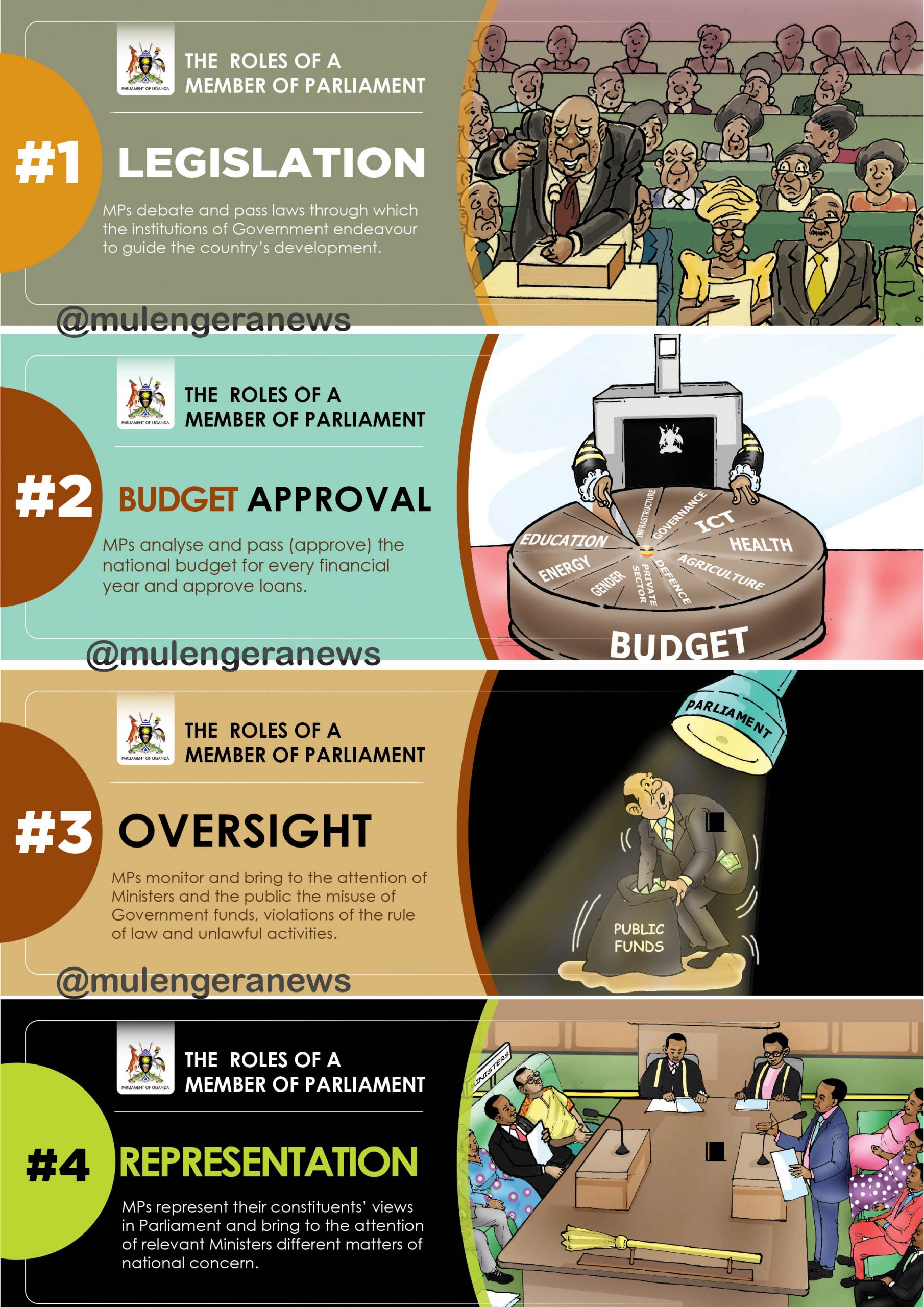
As Amartya Sen argued in Development as Freedom (1999), development is ultimately the expansion of capabilities. Infrastructure expands mobility. Education expands opportunity. Rule of law expands confidence. When citizens trust institutions, they invest effort. When investors trust policy, they deploy capital. Trust is built through consistency, and consistency is sustained through discipline.
Uganda’s destiny will not be determined by rhetoric but by resolve. We must insist on compliance with environmental standards under the National Environment Act, 2019. We must ensure transparency in revenue management. We must cultivate a culture where merit prevails over mediocrity. We must defend unity against divisive narratives that threaten social cohesion. And we must do so calmly, rationally, and confidently.
The global media often searches Africa for crisis. Let Uganda present a counter-narrative: a republic that governs its resources by law, manages its finances with prudence, empowers its youth with skill, and anchors its politics in stability. Let us demonstrate that patriotism and professionalism are not opposites but partners.
History will judge this generation not by the resources we discovered, but by the systems we built. If we align law with leadership, discipline with development, and ideology with implementation, Uganda will not merely grow; it will mature into a model of structured transformation.
Engineering destiny requires calculation, courage, and conviction. The blueprint is before us. The responsibility is ours. The writer is the Vice Chairperson NRM Western Region, and CEO Jonard Conglomerate Investments Ltd. (For comments on this story, get back to us on 0705579994 [WhatsApp line], 0779411734 & 041 4674611 or email us at mulengeranews@gmail.com).