







By Mulengera Reporters
For more than 300 women entrepreneurs undergoing advanced skills enhancement training in Kabale, building a successful enterprise is increasingly about more than mastering a trade. It is also about learning how to manage money, access financial services and position their businesses for growth.
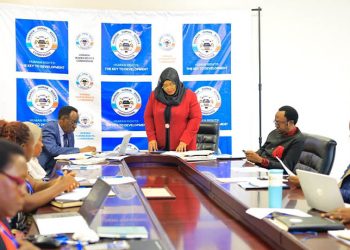
Through the Generating Growth Opportunities and Productivity for Women Enterprises (GROW) Project, women from Rubanda district in the Kigezi sub-region are gaining practical skills to improve productivity and profitability, while engaging directly with financial institutions on how to access formal banking services and affordable business financing.
The initiative forms part of the financial literacy efforts undertaken by participating financial institutions, including Pearl Bank, Centenary Bank, DFCU Bank and EBO SACCO among others, whose officials have interacted with the women during the training to explain banking services, savings, account opening and access to GROW loans.

Implemented by the Private Sector Foundation Uganda (PSFU) throw GROW Project, the training began on October 12, 2026, and is scheduled to conclude on October 23 at the Uganda National Institute of Teacher Education (UNITE) in Kabale, formerly Kabale National Teachers College.

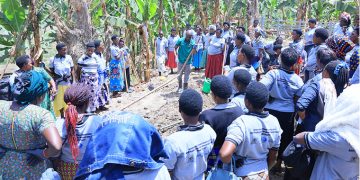
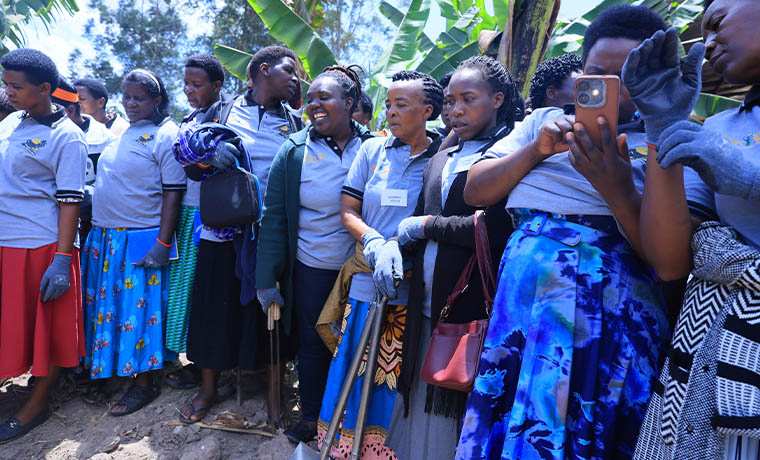
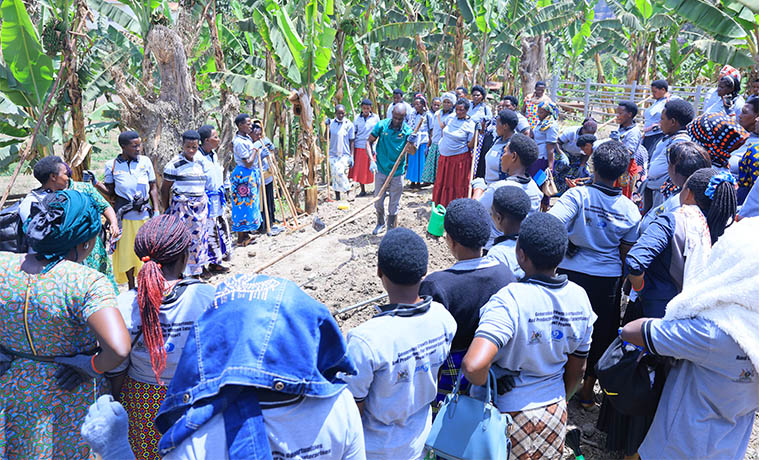
The programme targets women engaged in tailoring and garment making, hairdressing, cosmetology, beauty services, agribusiness and other income-generating activities. It follows concerns raised by Rubanda District Chief Administrative Officer Samuel Ahabwe about gaps in the technical and business skills of women entrepreneurs across several sectors.
Beyond the practical lessons, the involvement of financial institutions is helping bridge the gap between running a business and accessing the financial services needed to sustain and expand it. Participating banks have opened accounts for many of the women, creating a formal banking pathway through which they can prepare to access financing under the GROW Project, subject to the applicable eligibility requirements.
For women whose businesses have largely operated on limited capital, understanding how to save, transact securely and engage with banks can be an important step towards building more resilient enterprises.

Bringing banking closer to women entrepreneurs
Pearl Bank Kabale Branch Manager Gad Tumukuratire said the bank’s participation is part of its wider effort to promote financial inclusion by making financial services more accessible and convenient to Ugandans.
He encouraged women entrepreneurs to embrace digital banking, explaining that mobile banking allows customers to access their accounts and carry out transactions at convenient times without necessarily visiting a branch.
Tumukuratire acknowledged that some people in the Kigezi sub-region have yet to fully embrace formal banking, partly because they do not always carry the national identification documents required to open accounts.
He encouraged entrepreneurs to open bank accounts and develop a savings culture rather than keeping their money at home, where it may be more difficult to manage effectively or use to build a formal financial history.
According to Tumukuratire, Pearl Bank has sufficient funds available for lending under the GROW Project, although he did not disclose the specific amount allocated to the Kigezi sub-region. He added that the bank could request additional funds if the available allocation were exhausted.
The bank has reached women from the six districts of the Kigezi sub-region, including those operating agricultural enterprises, shops and other income-generating businesses.
Tumukuratire called on women entrepreneurs across the region to visit Pearl Bank and open accounts so they can explore opportunities available through the GROW Project. The bank’s Kabale branch is located opposite the Katuna Road roundabout, and it also has a branch in Kanungu serving customers in Kanungu and Rukungiri.
Turning training into business growth
The interaction between women entrepreneurs and financial institutions highlights a critical part of enterprise development: technical skills alone may not be enough to grow a business without sound financial management and access to appropriate financial services.
For a woman running a tailoring shop, a salon, a small retail business or an agricultural enterprise, better financial knowledge can support decisions on saving, managing cash flow, separating personal and business finances, and planning for expansion.
Through the GROW Project, the combination of specialised skills training and financial literacy is intended to help women strengthen their enterprises and improve their prospects of accessing financing.
As the training concludes, the focus will be on how participants translate the knowledge gained into stronger businesses, improved profitability and sustainable livelihoods.
For the women taking part, the opportunity is not simply to learn a new skill. It is to build businesses that can support their families, create employment and contribute to economic growth in their communities.
By connecting enterprise development with formal financial services, the GROW Project is helping create pathways for women entrepreneurs to move from small beginnings towards more sustainable and financially empowered businesses. (For comments on this story, get back to us on 0705579994 [WhatsApp line], 0779411734 & 041 4674611 or email us at mulengeranews@gmail.com).