







By Mulengera Reporters
When Beatrice Vuguziga fled the Democratic Republic of Congo in search of safety, she could hardly have imagined that years later she would be running a diversified business, employing workers and educating her eight children in Uganda.
At 49, Vuguziga’s journey has been defined by displacement, family separation and resilience, but access to business financing through the Government’s Generating Growth Opportunities and Productivity for Women Enterprises (GROW) Project has given her a fresh opportunity to rebuild her family’s future.
She initially fled Congo with her mother and sought refuge in Rwanda. However, life there proved difficult, prompting her mother to relocate to Uganda in search of better opportunities. Vuguziga remained in Rwanda, where she later met her husband, Enock Atukwasa.

In 2000, the couple moved to Uganda hoping to reunite with her mother. They eventually found her at Nakivale Refugee Settlement in Isingiro District, southwestern Uganda. Sadly, her mother has since passed away.

Like many refugees starting over in an unfamiliar environment, the couple initially struggled to establish a stable livelihood. They turned to agriculture, cultivating land and establishing a banana plantation that gradually became their main source of income.
Using proceeds from farming, they eventually saved enough money to open a small grocery shop, hoping to diversify their income and improve their family’s living conditions.
Their ambitions received a boost earlier this year when Vuguziga learned about the GROW Project through outreach activities by UGAFODE Microfinance Limited, one of the participating financial institutions delivering the programme.
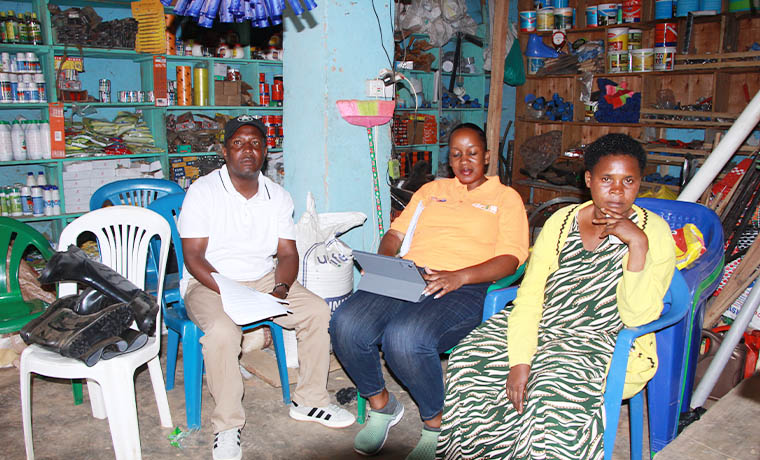
She joined other women in Nakivale to learn about the loan facility and was subsequently invited for a month-long business skills training in Bushenyi, where she acquired knowledge in business management and profit-making.
Armed with these skills, she opened an account with UGAFODE and applied for a Shs15 million GROW loan, using her banana plantation and existing shop as collateral, while her husband stood as guarantor.
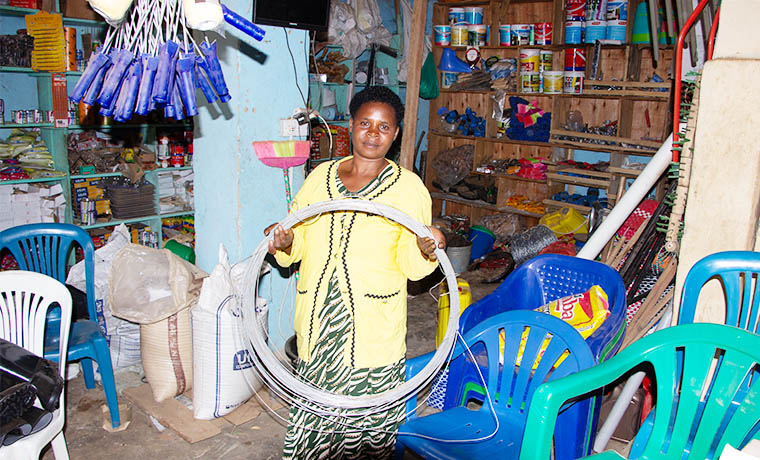
The financing enabled the couple to increase their stock and expand their business beyond grocery retailing. They eventually moved from rented premises and purchased their own house.
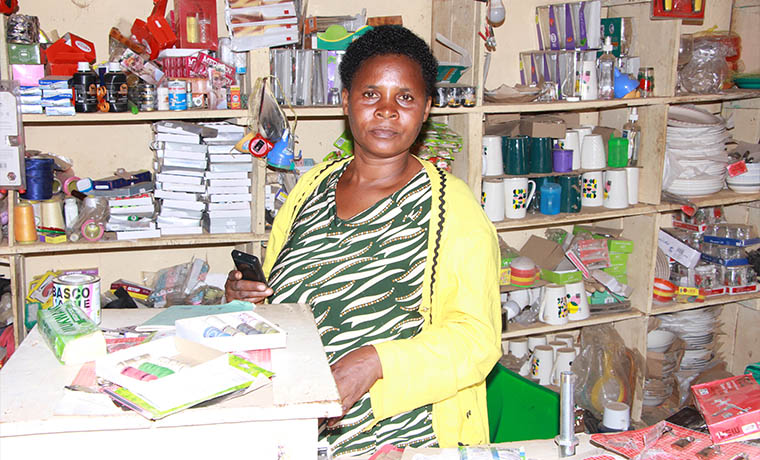
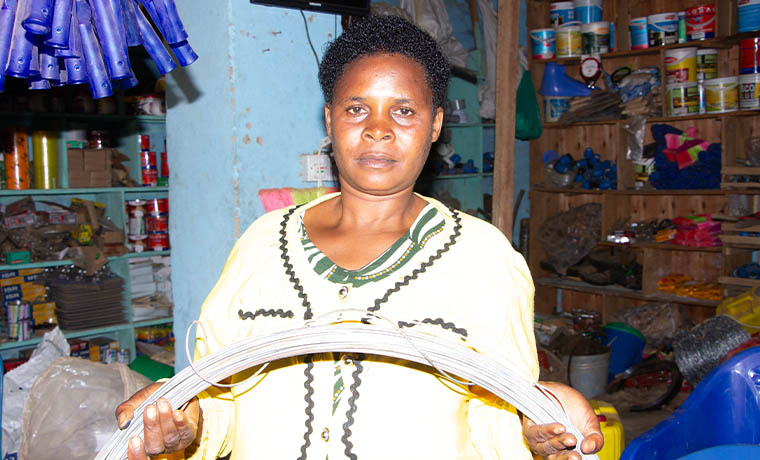
What started as a small grocery shop has since developed into a diversified enterprise dealing in stationery, hardware, groceries and agricultural inputs.
Registered as Atukwasa Enock & Sons, the business now employs three permanent workers, two women and one man, alongside five part-time employees. Its expanding customer base has also strengthened the family’s financial position.
For Vuguziga, the transformation goes beyond business growth. The couple’s eight children are all attending school, with one at university and the others pursuing secondary and primary education.
She considers their ability to provide education for their children among the most rewarding outcomes of the family’s entrepreneurial journey.
Loan Repayment and Performance Bonus Challenge
The family is repaying the Shs15 million loan within an agreed 12-month period, with monthly instalments of approximately Shs1.4 million.
At the time of the interview, they had successfully made repayments for five months.
However, Vuguziga says delays in receiving the physical loan funds affected their opportunity to access the GROW Performance Bonus, an incentive available to qualifying borrowers who demonstrate good repayment performance.
Despite this challenge, she remains grateful for the financing, saying it has helped the family move beyond subsistence farming and establish a growing enterprise.
GROW Opens Financial Doors for Women
Vuguziga’s experience reflects the economic opportunities the GROW Project is creating for women entrepreneurs, including refugees in Nakivale.
Implemented by the Government of Uganda with support from the World Bank and the Private Sector Foundation Uganda (PSFU), the programme seeks to improve women’s access to affordable credit and business development services to start, strengthen and expand enterprises.
Samuel Muhoozi, Sales and Marketing Officer at UGAFODE Nakivale, previously explained that the institution began extending financial services to the settlement in 2020, following efforts by the Office of the Prime Minister to promote refugee economic empowerment rather than dependence solely on humanitarian food assistance.
He noted that grocery businesses are among the most common economic activities in Nakivale, but increasing competition makes access to capital and business management skills essential for entrepreneurs seeking to grow.
According to Muhoozi, UGAFODE initially encountered hesitation among refugees unfamiliar with formal financial services. The institution responded with financial literacy and business skills training to build their confidence in managing finances and enterprises.
The introduction of GROW in 2025 created further opportunities for women to access affordable financing, inject capital into their businesses and improve profitability.
Building a Future Through Enterprise
Vuguziga credits Uganda for providing her family with an opportunity to rebuild their lives after displacement. She is particularly grateful to the government for allowing refugees to pursue economic activities and work towards self-reliance.
Her journey from a displaced Congolese woman seeking family reunification to a businesswoman employing workers and educating eight children demonstrates how access to finance and business knowledge can transform livelihoods.
Through the GROW loan, a modest grocery shop has grown into a diversified family enterprise, creating employment and offering the next generation better opportunities.
For women still struggling to establish or expand businesses in Nakivale, her experience offers a powerful reminder that displacement need not determine one’s economic future. (For comments on this story, get back to us on 0705579994 [WhatsApp line], 0779411734 & 041 4674611 or email us at mulengeranews@gmail.com).