







By Obed K. Katureebe
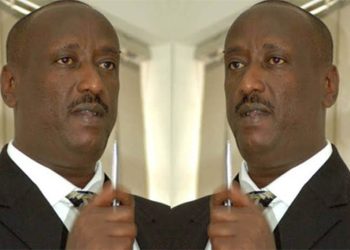
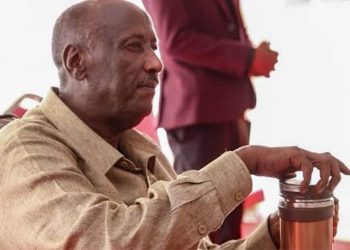
Hon. Balaam Barugahara has become a household name in Uganda. After President Yoweri Museveni, he is now one of the country’s most popular politicians, largely due to his unconventional approach to tackling corruption. As Minister for Local Government, Balaam has spent little time behind a ministry desk.
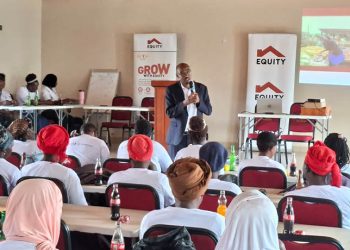
Since assuming office six months ago, he has hit the ground running on two fronts: engaging local government administrations to understand their operational environments, and holding public Barazas to listen to service-delivery grievances and offer instant solutions.


President Museveni appointed Hon. Barugahara following long-standing complaints about grand corruption in local government. Although the central government spent heavily to improve lives, citizens saw minimal results. Minister Barugahara has exposed widespread local government corruption, leading to public shaming and numerous arrests pending prosecution.
While most Ugandans applaud his work, some sections, largely the elite, feel uncomfortable with his methods, labelling him a populist playing to the gallery for public approval. This is untrue. Hon. Barugahara’s major achievement has been compelling the government to undertake physical monitoring and evaluation, moving beyond the comfort of air-conditioned offices in Kampala and district headquarters.
Government officials have routinely failed to supervise ongoing projects out of corruption or sheer laziness. Barugahara’s intervention is forcing a wake-up call. Indeed, he has become a positive “troublemaker” for corrupt and lazy local administrators nationwide.
Traditionally, a troublemaker causes stress, conflict, or disruption. However, modern workplace culture recontextualises the term as a force for positive change. A professional troublemaker or change agent challenges the status quo, questions unfair systems, and speaks hard truths without malicious intent. Hon. Balaam has perfected this role.
In organisational settings, constructive troublemakers highlight operational gaps, challenge silent conformity, and introduce better practices. This requires unconventional methods that deliberately bypass standard logic to deliver breakthroughs.
When traditional root-cause analysis stalls, shifting perspectives or introducing artificial constraints forces new cognitive connections. Successful leaders routinely bypass conventional rulebooks, ignore background noise, and focus on the ultimate objective. Once they deliver results, even critics praise the winning formula.
Challenging deep-seated habits reveals that many operational limits exist only by tradition. Eradicating corruption and malfeasance demand bare-knuckle tactics if Uganda is serious about curbing these vices.
Critics argue that formal anti-corruption bodies, including the Uganda Police, the Judiciary, the Inspectorate of Government, and the Auditor General, should be left to do their work. However, this argument ignores the fact that these institutions have existed for decades without successfully curbing corruption or its social fallout.
Fighting graft strictly through formal institutions (such as ombudsmen, inspectorates, anti-corruption courts, and specialised commissions) faces deep structural, political, and operational hurdles. Formal agencies frequently lack operational independence. When political elites protect allies or politicise inquiries, conviction rates drop, reinforcing a culture of impunity.
Furthermore, many anti-corruption bodies complain of chronic underfunding, a shortage of skilled forensic investigators, and technological gaps that leave them outpaced by sophisticated networks. While these challenges are real, underfunding is no excuse for inaction. Hon. Balaam achieves tangible results despite working with a small, equally underfunded team.
Convoluted judicial processes present another major bottleneck. Prosecuting corruption requires substantial time and resources, and suspects frequently compromise trials to walk free. Slow court timelines, alongside absent legal tools (such as comprehensive unexplained wealth laws or whistleblower protections), allow cases to stall indefinitely. When formal systems appear toothless or selective, citizens lose trust in state remedies and turn to informal survival strategies, civic pressure, or public outrage.
Against this backdrop, Hon. Barugahara’s abrupt, preventive inspection tours provide a vital intervention. By keeping contractors and project managers on their toes, his approach helps ensure public resources reach the ordinary citizen as intended. The writer works with the Uganda Media Centre. (For comments on this story, get back to us on 0705579994 [WhatsApp line], 0779411734 & 041 4674611 or email us at mulengeranews@gmail.com).