






By Ben Musanje
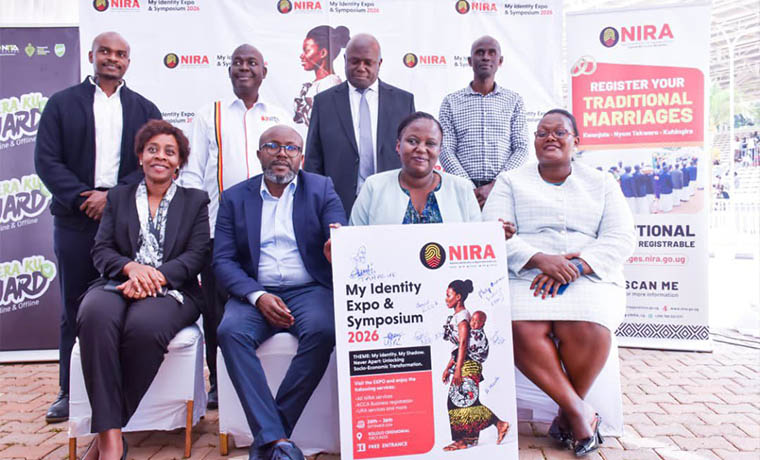
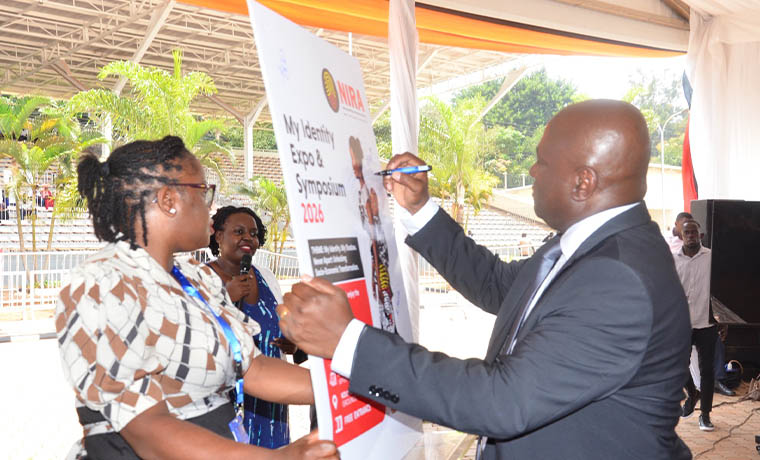
The National Identification and Registration Authority (NIRA) is set to use a three-day identity expo to show Ugandans why legal identification matters and how it can determine access to essential government and private-sector services.
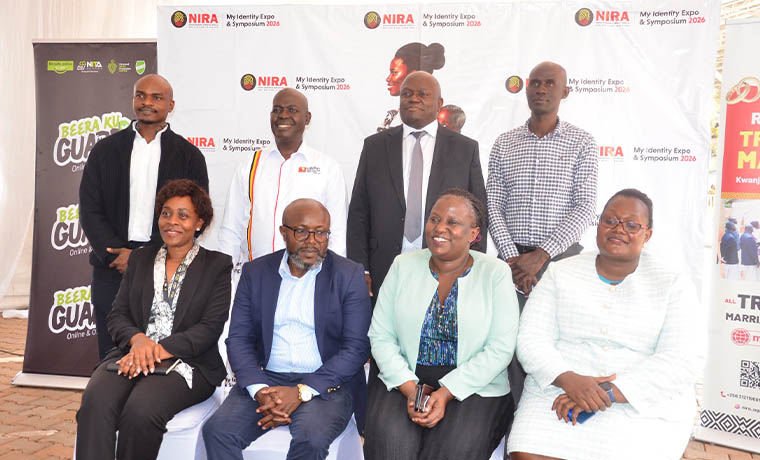
The My Identity Expo and Symposium 2026, scheduled for September 24 to 26 at Kololo Independence Grounds, will bring together government agencies, private-sector players, development partners and citizens to explore the growing role of legal identity in everyday life.
According to NIRA, the expo will give Ugandans an opportunity to understand why identification matters, who needs to be identified, how registration works and how a legal identity can facilitate access to services ranging from healthcare and education to financial services, employment, travel and social protection.

The drive comes as NIRA seeks to close a registration gap of about 10 million people, with millions of Ugandans still outside the national identification register.

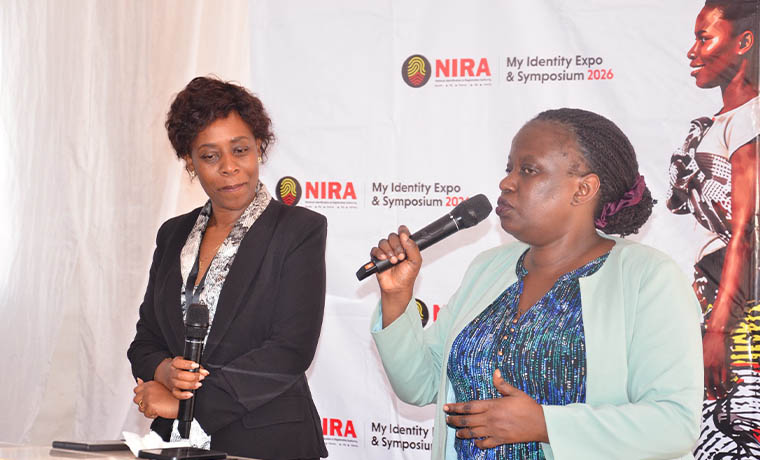
Speaking at the launch of the expo, NIRA Executive Director Rosemary Kisembo said the authority currently has 35.58 million Ugandans on the national register, representing 74.9 percent of the population.
“Today on the register, we have 35.58 million Ugandans, which accounts for 74.9 percent of our population. We are at about 75 percent, but the clock is ticking and we need everybody on the register,” Kisembo said.
She said the expo was organised partly because information about identification is often scattered across different sectors, leaving many citizens with limited understanding of how legal identity affects their ability to access services and opportunities.

“We wanted to have a platform where our stakeholders are able to meet face-to-face and have a discussion on why identity is important. We are inviting citizens and everybody to understand what identification is, why identification matters, when identification should happen, who should be identified and how they are identified,” she said.
Kisembo said Uganda must accelerate registration as the global target of ensuring that everyone has a legal identity by 2030 approaches.
“Uganda, in our journey, we are at 75 percent, but the clock is ticking and we need everybody on the register. Our objective is to reach 100 percent because every person should be recognised and able to access the services and opportunities that come with having a legal identity,” she said.
New Vision Group Chief Executive Officer Don Wanyama, whose organisation is among the partners supporting the expo, said Ugandans should view identification as more than simply possessing a national ID card.
“A legal identity is not just simply a card, a certificate or a number. It can be the key that opens doors to services like education, healthcare, financial services, employment, travel and social protection. That is why every Ugandan should understand what identity means and how it affects their everyday lives,” Wanyama said.
Wanyama encouraged Ugandans to attend the expo, ask questions and engage with institutions responsible for identification to better understand how legal identity affects their daily lives.
He said the event would help bridge the information gap between institutions and citizens.
The importance of identification is also being highlighted in Uganda’s financial sector.
Representing the Governor Bank of Uganda, the Commercial Bank Executive Director in charge of Risk and Strategy, Philip Wabulya, said harmonised identification systems could help reduce fraud, money laundering and multiple borrowing while improving financial inclusion.
He said financial institutions need reliable mechanisms to establish that customers are who they claim to be, particularly when opening accounts, accessing credit, making investments and conducting other financial transactions.
“If we have no way of identifying you, we have a problem. Financial institutions need to know that they are dealing with the right person, particularly when it comes to opening accounts, accessing credit, making investments and carrying out other financial transactions,” Wabulya said.
He said a single identifier would also help distinguish people with similar names and enable financial institutions to develop more accurate credit histories.
“If one person appears under different names or identities across different systems, it becomes difficult to know whether you are dealing with the same individual or different people. A unique identifier allows institutions to establish that identity more accurately, which is important for credit histories, fraud prevention and financial inclusion,” he said.
Wabulya also noted that linking identification to financial services could make it easier for people to open accounts, access investments and establish ownership of assets left behind by deceased relatives.
Identification is also emerging as a key foundation for Uganda’s digital government ambitions.
The National Information Technology Authority – Uganda (NITA–U) Director of E-Government Services Julian Rweju, said digital government services depend on the ability to establish and authenticate the identity of citizens accessing them.
“Without the digital ID, without the ID, there’s no e-government. As government services increasingly move online, we need to be able to establish who is accessing a service and ensure that the person on the other side of the system is properly authenticated,” Rweju said.
She said stronger digital identification would allow government institutions to integrate their systems and provide services more seamlessly.
“We are integrating government systems so that citizens can access services more seamlessly. For that to work, we need reliable identity information and secure digital authentication. The national ID is therefore becoming one of the foundations of e-government and digital service delivery,” she said.
The Uganda Revenue Authority is also looking to identification systems to improve the accuracy of government records and service delivery.
Christine Mirembe, URA Assistant Commissioner of Client Services, said integrating identification systems would help government distinguish genuine taxpayers from individuals who may hold Tax Identification Numbers for other administrative purposes.
Mirembe urged Ugandans to provide accurate information during registration, saying reliable identity data is essential for effective government planning.
“Ugandans, please learn to provide government with accurate information. The government needs to plan for its people, and that planning can only be effective when the information available to government is accurate and reliable,” she said.
The My Identity Expo and Symposium 2026 will be supported by New Vision, KCCA, UCC, URA, NITA-U and NSSF, among other partners.
The event will also contribute to Uganda’s observance of World Identity Day on September 16, a global campaign promoting universal legal identity by 2030. (For comments on this story, get back to us on 0705579994 [WhatsApp line], 0779411734 & 041 4674611 or email us at mulengeranews@gmail.com).