









By Mulengera Reporters
The Bank of Uganda-managed Agricultural Credit Facility (ACF) lacks formal legal status despite its critical role in Uganda’s agricultural financing, an evaluation by the National Planning Authority (NPA) has found.
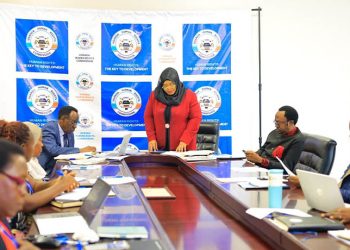
The evaluation reveals that the ACF which his headed by the Senior Principal Banking Officer Dr. Rosette Bamwine has not been established under an Act of Parliament or a statutory instrument, nor is it registered under the Companies Act. Instead, the facility operates solely under a Memorandum of Understanding (MoU), with the Bank of Uganda (BoU) responsible for its management and the Ministry of Finance, Planning and Economic Development (MoFPED) providing supervision.
The finding raises questions about the legal and institutional foundation of a facility that was established to address critical financing gaps in one of the country’s most important economic sectors.

The ACF was established in 2009 by the Government of Uganda through an MoU signed by MoFPED, BoU and a range of Participating Financial Institutions (PFIs), including commercial banks, institutions such as the Uganda Development Bank (UDB), Credit Institutions and Micro Deposit-Taking Institutions (MDIs).

Under the arrangement, the ACF was intended to enhance access to affordable, long-term credit for agriculture, targeting strategic segments of the agricultural value chain including primary production, mechanization, agro-processing and grain trade.
However, according to the NPA evaluation, the facility has continued to operate without a distinct legal personality.
The evaluation notes that without a formal legal identity, the ACF is unable to independently enter into contracts, own assets or engage in legal recourse.

The NPA says this creates complications in the formation and execution of essential partnerships and significantly constrains the ACF’s institutional integration.
The absence of a defined legal identity also limits the facility’s capacity for effective coordination within Uganda’s broader development finance ecosystem, according to the evaluation.
The issue is particularly significant given the ACF’s intended role in addressing the financing challenges that have historically affected Uganda’s agricultural sector.
The facility was specifically designed to address a critical financing gap in agriculture, where private financial institutions had been reluctant to lend because of perceived high risks, weak collateral structures, weather dependency, price volatility and inadequate insurance coverage.
Through concessional financing and risk-sharing mechanisms, the ACF was intended to de-risk agricultural lending and incentivize PFIs to participate in financing a sector central to Uganda’s socio-economic transformation.
Agriculture employs over 70% of the population and significantly contributes to GDP, making the institutional weakness identified by the NPA particularly important.
The evaluation further warns that the ACF’s informal legal structure could make it more difficult to attract substantial investment from development partners and multilateral agencies such as the World Bank.
According to the NPA, such institutions prioritize legal status and robust governance structures when considering major financing commitments.
An MoU-based arrangement may therefore not provide sufficient assurance regarding the ACF’s long-term sustainability, accountability and operational independence.
The NPA says this could potentially hinder the willingness of development partners and multilateral agencies to commit substantial funds required to expand the ACF’s impact and ensure its sustainability.
The finding therefore exposes a fundamental institutional weakness in a facility that has been positioned as an important government intervention in agricultural finance.
While the ACF was created in 2009 through an agreement involving government, BoU and participating financial institutions, its continued operation without establishment under legislation or a statutory instrument leaves the facility without the formal legal identity that the NPA considers important for its institutional integration and long-term sustainability. (For comments on this story, get back to us on 0705579994 [WhatsApp line], 0779411734 & 041 4674611 or email us at mulengeranews@gmail.com).