







By Aggrey Baba
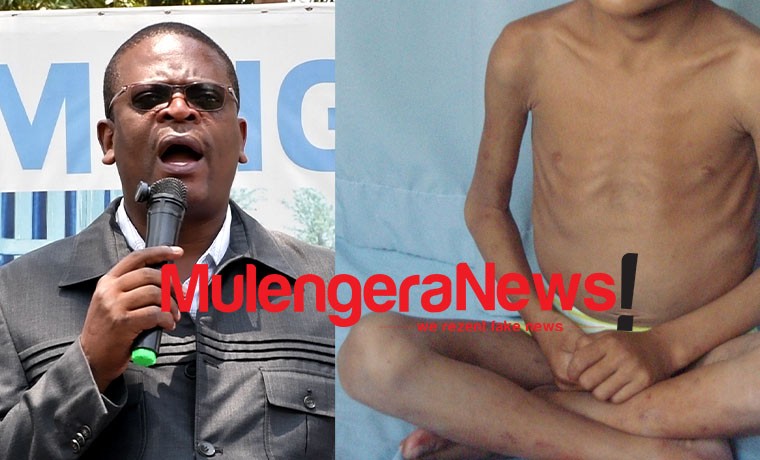
Barely a week after UPC president Jimmy Akena warned that about two million children under five are already suffering from stunting, another opposition political party has also sounded the alarm, with People’s Front for Freedom (PFF) acting chairman Dr Michael Lulume Bayiga, linking the worsening nutrition crisis to the prolonged drought that has destroyed crops, killed livestock and left vulnerable families struggling to find what to eat.
Lulume told journalists on Monday at PFF’s weekly press conference that the situation was becoming particularly serious in refugee-hosting communities, where he said acute malnutrition was rising alongside the prolonged dry spell.
He claimed that child malnutrition had increased by 25% in just three months in the 25 districts hosting refugees, adding that communities in Karamoja, West Nile, Buganda and parts of Ankole were also facing severe food shortages.
His warning comes only five days after Akena used his own press conference to raise concern over Uganda’s child nutrition crisis, saying 26% of about 2.8 million children under five are stunted. Akena, speaking at the UPC headquarters in Kampala last Wednesday, warned that the consequences of poor nutrition go beyond hunger, pointing to its impact on children’s development and future opportunities.
The two warnings come against a broader deterioration in Uganda’s food and nutrition situation.
The latest Integrated Food Security Phase Classification (IPC) analysis estimates that about 465,900 children aged between six and 59 months and 246,300 pregnant and breastfeeding women are suffering or expected to suffer acute malnutrition between April 2026 and March 2027.
Karamoja remains at the centre of the crisis. IPC has classified Kotido and Kaabong in Critical acute malnutrition conditions, while several other districts in the region are in the Serious category. The agency projects that acute malnutrition will worsen in Karamoja and refugee-hosting areas as food insecurity deepens.
Save the Children separately warned earlier this month that the number of children under five expected to experience acute malnutrition in Karamoja could rise to 154,200 between November 2026 and February 2027, up from 122,100 in the preceding period. It is this wider picture that Lulume sought to connect to the current drought.
He said the failure of crops and loss of livestock are removing the main sources of food and income for rural households, leaving families with fewer options as the dry spell continues. Lulume particularly questioned why government’s agricultural and irrigation interventions had not done more to protect small-scale farmers from the effects of the drought.
He called for an emergency response involving fast-growing food crop seeds, expanded irrigation and stronger community participation in the distribution of agricultural support.
For PFF, he said, the immediate concern is no longer simply whether farmers will have a poor harvest, but whether continued crop failure will translate into deeper hunger and malnutrition among children and other vulnerable Ugandans.
The sequence of warnings from Akena and now Lulume also places nutrition back at the centre of the political debate, with both opposition leaders raising concerns about children from different but increasingly connected angles, with Akena focusing on the long-term consequences of stunting and Lulume linking the immediate deterioration to drought, food shortages and failed agricultural production. (For comments on this story, get back to us on 0705579994 [WhatsApp line], 0779411734 & 041 4674611 or email us at mulengeranews@gmail.com).