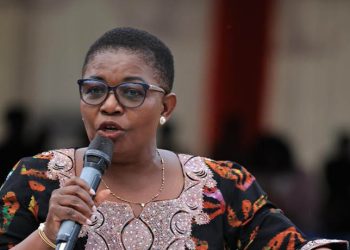






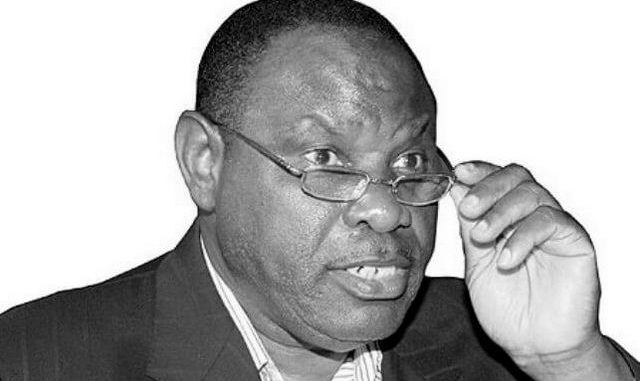




Hajji Latif Ssebagala Ssengendo, the younger brother of late former Kampala mayor and political firebrand Nasser Ntege Ssebagala, popularly known as Seya, has defended his family’s contribution to Uganda’s political history, insisting that no one should diminish the role his late brother played in building confidence in Opposition politics.
Latif was responding to a question on The Morning Briefing, the daily podcast on the Mulengera Media platform, about whether the Ssebagala family has received sufficient recognition for its contribution to Uganda’s politics, particularly the Opposition struggle.
The question came against the background of Seya’s long and often turbulent political career, during which he emerged as one of the most prominent Opposition figures in Kampala and beyond.
Latif’s own political experiences, including his clashes with security agencies during his earlier political activism, were also cited as part of the price members of the family had paid for engaging in politics.
For Latif, however, the Ssebagala story is much bigger than Opposition politics. He said the family has never operated under a political agreement requiring all its members to belong to one party or ideological camp, arguing that their political differences have never been allowed to destroy their family bond.
“Many people think that our family has only been involved in Opposition politics, but our family is broad. We may differ in political affiliation but remain united as a family. We respect each other’s opinions,” Latif explained.
He pointed to Syda Namirembe Bbumba, the widow of his late elder brother Hajji Amir Bumba, as one of the clearest examples of the family’s links with the ruling establishment.
Hajjat Syda Bbumba served in several ministerial positions under President Yoweri Museveni, including Minister of Energy and Mineral Development between 2002 and 2006. The Ministry of Energy credits her with helping secure Islamic Development Bank support for Uganda’s energy sector and playing a key role in the start of the Rural Electrification Programme.
The late Seya, meanwhile, represented a very different side of the family’s political history.
A longstanding Democratic Party (DP) figure, Seya became Kampala mayor in 1998 and went on to establish himself as one of the city’s most recognizable Opposition politicians. His political influence was particularly significant around the early multiparty period, when he mobilized support for Opposition politics and became an important figure in the wider struggle against the Museveni government.
Latif insisted that the contribution should not be forgotten simply because his elder brother’s political journey later changed direction.
Seya eventually moved closer to President Museveni and the NRM, campaigning for Museveni in the 2011 presidential election. Museveni subsequently appointed him to government, first as minister without portfolio and later, in 2012, as Senior Presidential Adviser on Special Duties. In 2015, Seya resigned and announced that he was divorcing himself from the NRM, saying he wanted to return to active politics.
Yet, by the time of his death in September 2020, Seya’s political journey had already taken him across the major political divides of Uganda, from DP Opposition politics to an alliance with the NRM and later back towards the political movement associated with Bobi Wine. Shortly before his death, he had expressed interest in contesting for Kampala Lord Mayor under the People Power/NUP camp.
For Latif, that history itself demonstrates why the Ssebagala family should not be permanently labelled as either Opposition or NRM.
He said the family has had members associated with the DP, FDC and UPC, while others have worked with government or concentrated on business.
Latif himself began his political journey in the DP before later joining NUP. After failing to secure the NUP ticket in the Kawempe North parliamentary race in 2021, he contested as an Independent. He later sought the NUP ticket for the Kampala mayoral race but again went the Independent route after the party backed another candidate.
His argument was that political parties should not be treated as permanent family identities.
Latif compared political parties to vehicles used to reach particular destinations, arguing that politicians can change political homes as circumstances and objectives change.
He used Museveni’s own political history to illustrate the point, noting that the President’s political journey passed through different formations before he eventually established the NRA/M as the vehicle through which he captured state power in 1986.
Against that background, Latif said there was therefore nothing contradictory about members of the Ssebagala family supporting different political formations.
He also refused to speak on behalf of former Kampala Woman MP Nabilah Naggayi Ssempala, who is married to his younger brother Isaac Ssempala, when asked whether she remains aligned to the Opposition or has moved towards the NRM/PLU side.
Latif said Nabilah should speak for herself, adding that her decision to contest the 2026 Kampala Lord Mayor election as an Independent made it difficult for him to place her in any particular political camp. Nabilah ultimately finished the race as an Independent candidate.
But while defending the family’s political diversity, Latif remained firm that Seya’s historical contribution should not be erased.
He argued that many of the young people who today feel confident enough to participate in Opposition politics are beneficiaries of the political space and courage that Seya helped create.
According to him, Seya’s importance was not merely in the offices he occupied but in the confidence he gave ordinary Ugandans, particularly young people, that they too could participate in politics and challenge established political forces.
His advice to politicians was that, play your part and leave the rest to God. Latif said politicians should not spend their lives seeking appreciation from the public because people are difficult to impress and political fortunes change. What matters, he argued, is contributing to the wellbeing of Uganda and allowing history to judge the contribution. (For comments on this story, get back to us on 0705579994 [WhatsApp line], 0779411734 & 041 4674611 or email us at mulengeranews@gmail.com).