






By Aggrey Baba
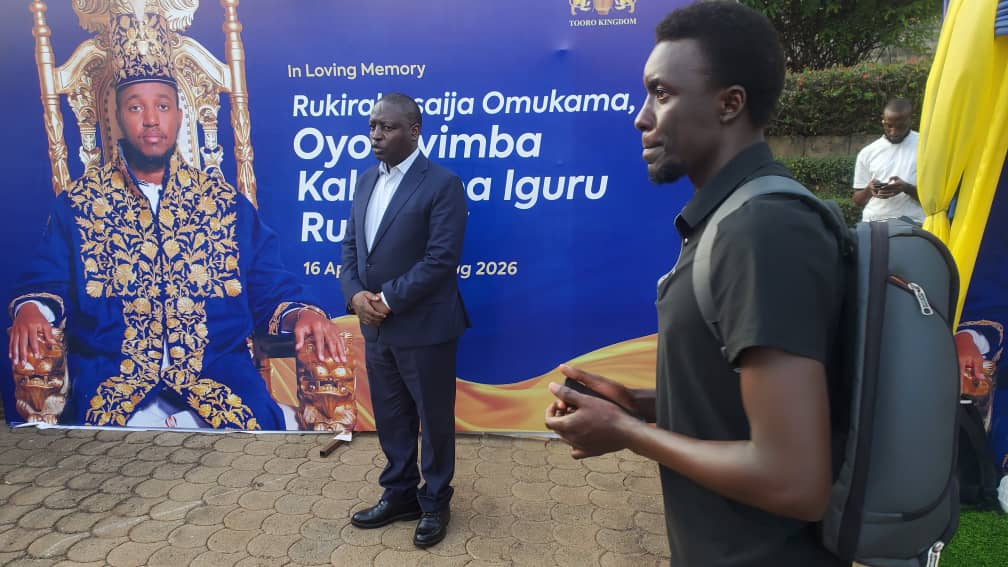
The home of the late Omukama of Tooro in Buziga has become a place of mourning as politicians, friends and other mourners continue to pour in to pay tribute to a King whose death at just 34 has left Tooro Kingdom and the country in shock.
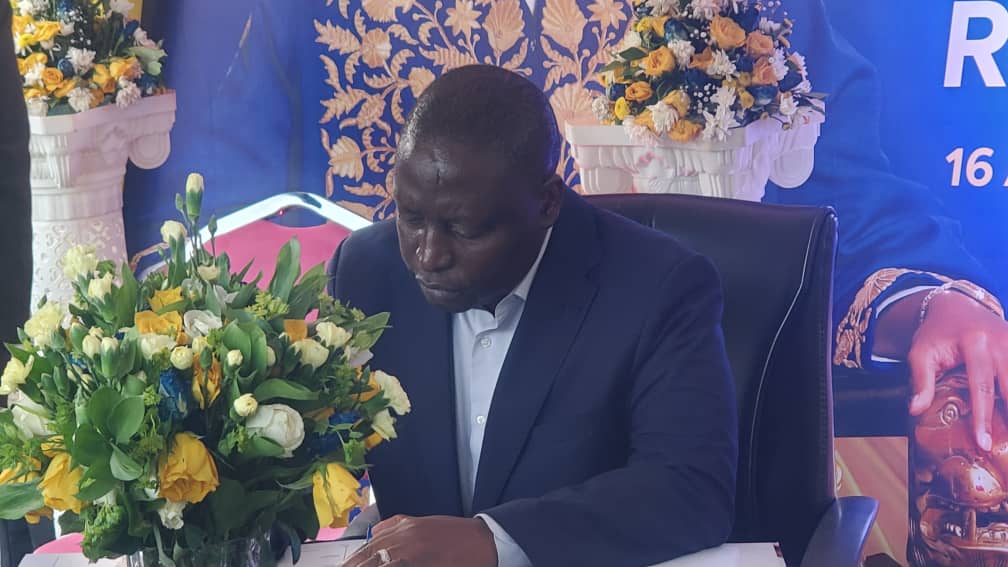
On Sunday, Minister of Trade, Industry and Cooperatives David Bahati joined the mourners at the residence, where he first signed the condolence book before speaking to journalists and later proceeding inside the house to meet the bereaved family.
Bahati described the late Omukama Oyo Nyimba Kabamba Iguru Rukidi IV as a King who dedicated his life to the development of his people and to building bridges between communities.
“Our sympathies and condolences to the family of His Majesty, the King of Toro,” Bahati said.
The minister said Oyo will particularly be remembered for his efforts to promote unity, recalling the late King’s visit to Kigezi to strengthen the relationship between the Batooro and the Bakiga.

“I vividly remember him visiting Kigezi to strengthen the relationship between the Bakiga and the Batooro,” Bahati said, further recalling that Oyo visited the family of Morogoza, whom he said was the first person to open doors for the Bakiga in Tooro, before leading a delegation of Batooro to Kabale and the wider Kigezi region.

“I was part of the team that received him,” Bahati said.
It is such memories that have left many mourners struggling to reconcile the energetic young and handsome King they knew with the reality that he is gone forever.
“He was a man for unity. He wanted his people to develop, and we are very sorry that we lose him at this time,” Bahati said.

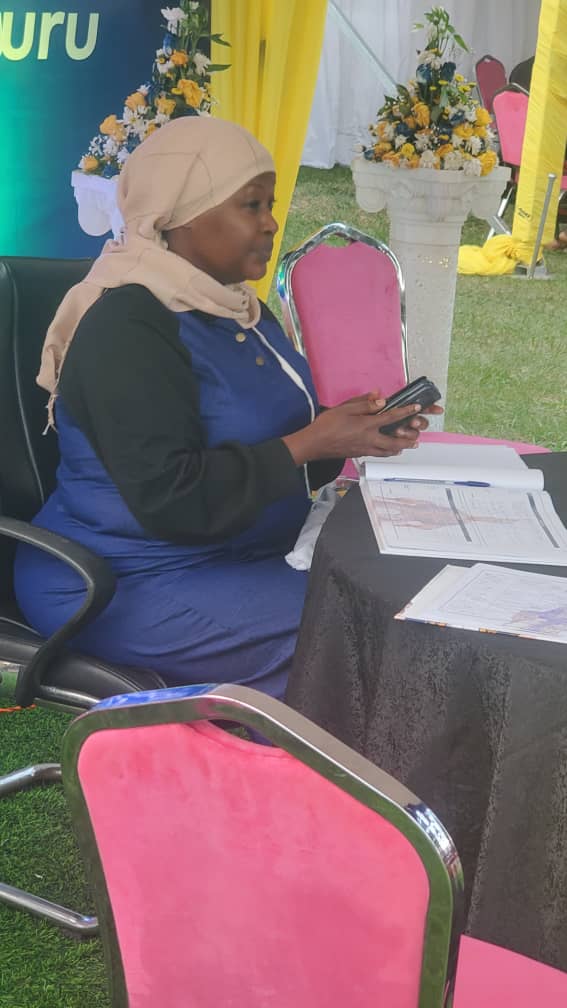
Also mourning at Buziga was former Kawempe North MP candidate (NRM) Hajjat Faridah Nambi, who spoke of Oyo not merely as the Omukama of Tooro but as a young brother she had known personally, since childhood.
“We are saddened to lose King Oyo, at such a young age,” Nambi said, adding that her relationship with the royal family became closer after the death of Oyo’s father, when the young King and his family came to live in the same vicinity with her father Haji Moses Kigongo.
“I call him my young brother because at a certain point in his life, when his father had passed on, they came to live at Musa courts, and that is the time I grew close to them,” she said.
Nambi said the loss had created a painful void, particularly for the royal family and the Queen Mother [Best Kemigisha], calling upon God to give them strength during the difficult period.
“On behalf of my family, I would want to say that may the Almighty God, the one who takes life, fill the void and give the family, especially the Queen Mother, better fill her void and help her through this very difficult time,” she said.
Her tribute came as mourners continued arriving at the Buziga residence on the evening of Sunday, each carrying their own memories of a monarch whose life had been intertwined with Tooro’s modern history from childhood.
Oyo became King in 1995 at only three years old following the death of his father, Omukama Patrick Matthew Kaboyo Olimi III. His accession at such a tender age attracted international attention, but over the years he grew into the responsibilities of the throne and became a prominent face of Tooro.
His death on August 27, 2026, at the age of 34 has consequently been received as more than the loss of a cultural institution but a deeply personal loss for people who watched him grow from a child King into an adult monarch.
Bahati said the tragedy should nevertheless be viewed against the contribution the youthful king made during the years he was given.
“It is important to note that what is important in life, what saddened us is not the act of death, but living while you are still alive. I think that the King lived while he was still alive.”
According to Bahati, Oyo used his relatively short life to influence the development of Tooro and Uganda.
“The little time he had, he used it to impact the people of Toro Kingdom and the people of Uganda, and we shall forever miss him,” he said.
Bahati also highlighted Oyo’s interest in economic development, particularly production, value addition and industrialization.
“The King stood for improving production in Tooro” he said, noting that the late monarch supported the development of small-scale industries and processing initiatives, citing Hass avocado processing and other value-addition activities as examples of the economic direction that Oyo supported.
He urged that the late King’s development agenda was consistent with the national push to increase production and take advantage of markets available for Ugandan products.
“He was a man whose heart was after the kingdom and its development,” Bahati said adding: “He was a man whose heart was after God,” he said. (For comments on this story, get back to us on 0705579994 [WhatsApp line], 0779411734 & 041 4674611 or email us at mulengeranews@gmail.com).