






By Ben Musanje
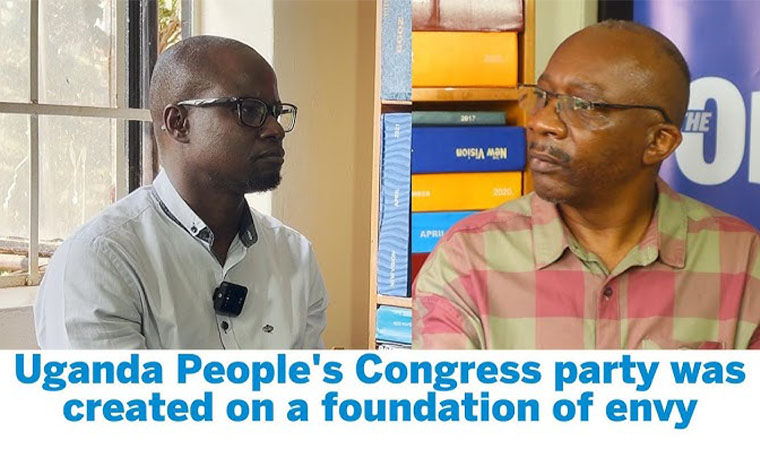
A wide-ranging political conversation between veteran journalist and political commentator Kalundi Sserumaga and academic Yusuf Serunkuma has reignited debate over Uganda’s political history, with Sserumaga arguing that the country has not experienced a genuine parliamentary democracy since the constitutional crisis of 1966.
The discussion, published on YouTube and hosted by Serunkuma, a columnist with The Observer, explored the historical evolution of Parliament, colonial governance, post-independence politics, the 1995 Constitution and what Sserumaga described as the long-term separation of grassroots politics from state institutions.
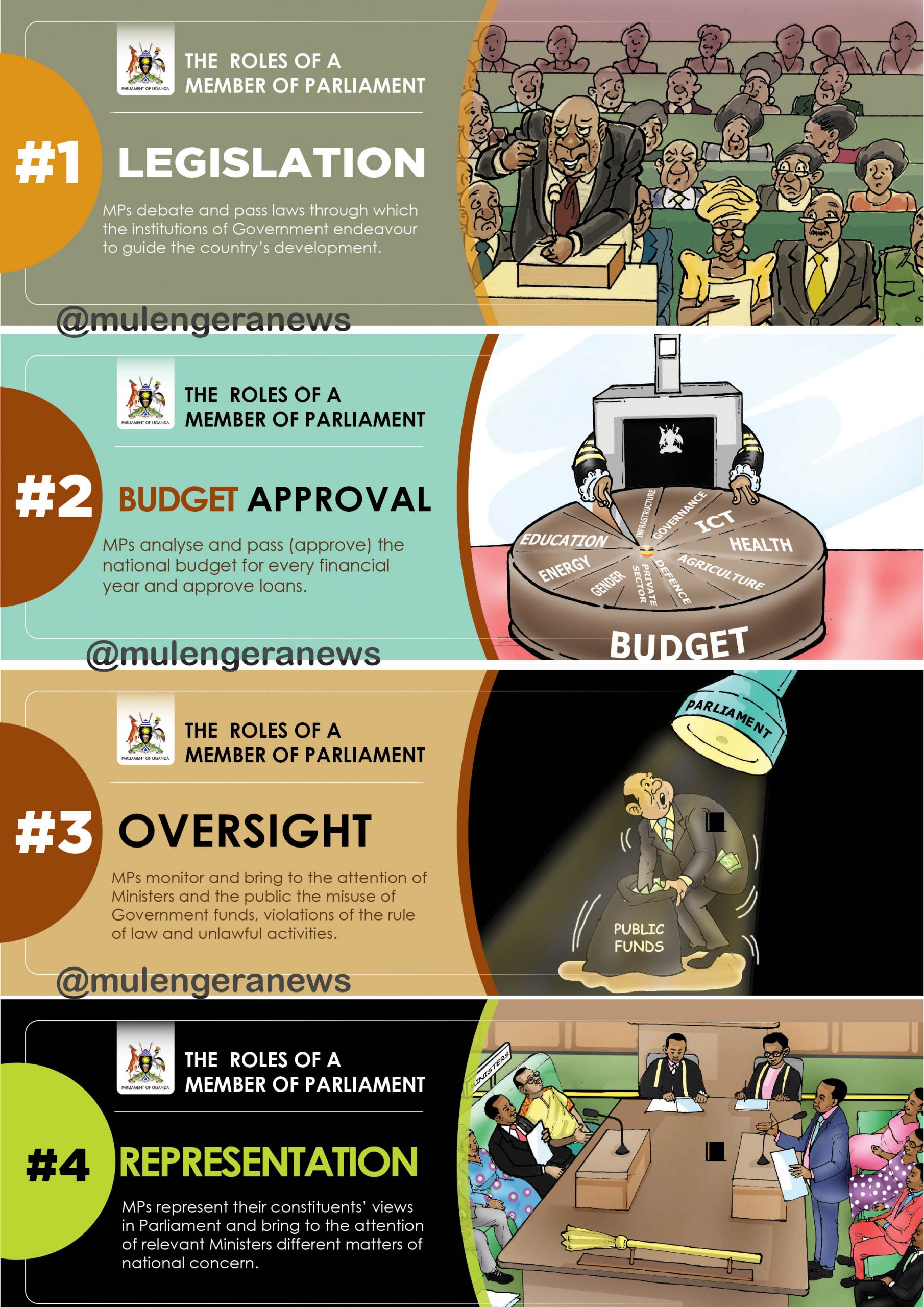
Throughout the interview, Sserumaga challenged conventional narratives about Uganda’s democratic development, contending that Parliament has historically functioned more as an institution of political accommodation than an authentic representative body capable of expressing the will of ordinary citizens.

Questioning Uganda’s parliamentary tradition

The discussion opened with Sserumaga rejecting the common description of Uganda as a parliamentary democracy.
“I don’t think we have a parliamentary democracy,” he argued, adding that, in his view, the country’s last legitimate parliamentary period effectively ended when the first post-independence Parliament completed its constitutional term before the 1966 political crisis.
According to Sserumaga, the events of 1966—which saw then Prime Minister Milton Obote suspend the Constitution, remove President Edward Mutesa II and later promulgate the 1967 Constitution—marked a decisive break in Uganda’s parliamentary evolution.

He argued that although Parliament continued to exist institutionally, its democratic legitimacy had fundamentally changed because the constitutional order under which the original Parliament had been elected had already expired.
His remarks revisited one of Uganda’s most contested historical episodes, one that scholars continue to debate as either a constitutional crisis, a political revolution or an outright coup.
The colonial roots of Parliament
A significant portion of the conversation focused on the Legislative Council (LegCo), established during British colonial rule.
While Serunkuma suggested LegCo could be viewed as Uganda’s first Parliament, Sserumaga described it instead as an “internship parliament” that served as preparation for eventual independence.
However, he acknowledged its lasting institutional significance.
According to Sserumaga, the British colonial administration created LegCo after anti-colonial riots in the late 1940s convinced authorities that direct colonial rule required reform.
Rather than governing solely through executive authority, the colonial government established a legislative forum where selected political actors could debate limited matters while ultimate power remained firmly in the hands of the colonial administration.
He singled out Governor Sir Andrew Cohen as the architect of this strategy.
Sserumaga argued that Cohen understood that not every critic of colonial rule necessarily opposed Britain itself. Instead, Cohen sought to create political space capable of accommodating emerging African elites whose interests could eventually align with those of the colonial administration.
The result, he suggested, was a system that encouraged participation without fundamentally altering colonial power relations.
The “iron fist” behind representative institutions
Sserumaga repeatedly returned to what he described as a recurring historical pattern.
Uganda, he argued, has consistently maintained institutions resembling representative government while real political authority has remained elsewhere.
During colonial rule, he said, the “iron fist” belonged to the British administration.
Following independence, he contended, similar concentrations of executive power continued under successive governments despite the continued existence of Parliament.
For Sserumaga, this continuity raises deeper questions about whether Uganda’s constitutional structures have ever been sufficient to resolve underlying political tensions.
Parliament versus deeper structural questions
At one point, Serunkuma pressed Sserumaga on whether the issue lay with Parliament itself or with broader questions surrounding the Ugandan state.
Sserumaga responded by suggesting that his concerns extend beyond institutional reform.
“My personal political problem,” he said, “is the existence of Uganda as a concept.”
Using Kampala’s transport challenges as an analogy, he argued that political reforms often address symptoms rather than underlying structural causes.
In his view, simply redesigning political institutions cannot resolve foundational historical questions inherited from colonial state formation.
The 1995 Constitution and unfinished political settlements
The discussion also examined Uganda’s transition following the National Resistance Army’s victory in 1986.
Sserumaga described the 1995 Constitution not merely as a legal document but as part of a broader political settlement intended to conclude years of armed conflict.
He noted that the bush war involved multiple armed organisations rather than only the National Resistance Army, arguing that later official narratives have tended to simplify that history.
The Constituent Assembly, which drafted the Constitution, represented what Sserumaga considered one of Uganda’s rare opportunities for broad political dialogue.
He likened it to the 1979 Moshi Unity Conference held in Tanzania, where various Ugandan political groups gathered following the fall of Idi Amin.
According to Sserumaga, both moments demonstrated the possibility of competing political actors negotiating national consensus.
However, he argued that the Constituent Assembly ultimately failed to fulfil that promise because political interests increasingly shaped its outcomes.
The Odoki Commission and constitutional expectations
Central to Sserumaga’s critique was the work of the Uganda Constitutional Commission chaired by Justice Benjamin Odoki.
The commission collected public views across the country before constitutional drafting began.
According to Sserumaga, the commission found substantial public support for multiparty politics and varying degrees of federalism.
He argued that when the eventual constitutional arrangements differed significantly from those popular preferences, it suggested that political negotiations had overridden public consultation.
For Sserumaga, this illustrated how representative institutions can diverge from the interests they are expected to reflect.
Delegates versus representatives
Another major theme concerned the distinction between delegates and representatives.
Drawing on arguments associated with political thinker Dani Wadada Nabudere, Sserumaga argued that members of the Constituent Assembly were intended to function as delegates carrying clearly defined mandates from their communities rather than representatives authorised to negotiate entirely new political arrangements.
This distinction, he suggested, remains important when evaluating constitution-making processes and broader democratic legitimacy.
Colonial reforms and the birth of a political class
Sserumaga also revisited Nabudere’s writings on British colonial reforms, particularly Cohen’s decision to legalise trade unions and political parties while simultaneously preventing political leaders from occupying leadership positions within trade unions.
According to Sserumaga, this institutional separation fundamentally transformed Uganda’s politics.
He argued that anti-colonial mobilisation had originally emerged from farmers, traders, transport workers and grassroots organisations.
By separating organised labour from formal political leadership while expanding representative institutions such as LegCo, colonial reforms gradually elevated an educated middle class whose political incentives became increasingly detached from popular movements.
“The educated middle class,” Sserumaga argued, “became centred and privileged in politics in a way that is disconnected from the mass of the people.”
Why grassroots politicians change
Serunkuma challenged Sserumaga by asking why politicians elected directly from ordinary communities often appear to lose touch with their constituencies after entering Parliament.
Sserumaga attributed this less to individual morality than to institutional incentives.
He cited politicians from modest social backgrounds who, after entering national politics, became associated with privilege, public controversy or allegations of corruption.
For him, these cases reflected broader structural pressures rather than isolated personal failures.
He argued that politics increasingly becomes viewed as a career path offering upward social mobility rather than collective public service.
Lessons for opposition politics
The conversation also turned to Uganda’s contemporary opposition.
Using the emergence of the People Power movement and its evolution into the National Unity Platform as an illustration, Sserumaga argued that grassroots political energy can dissipate if movements fail to develop coherent ideological foundations.
He suggested that discussions about ideology within the movement were sidelined in favour of immediate electoral mobilisation.
According to Sserumaga, movements that prioritise parliamentary participation before developing enduring grassroots institutions risk becoming absorbed into the very political structures they originally sought to transform.
Beyond Parliament
As the interview concluded, Serunkuma repeatedly asked how Uganda could cultivate leaders capable of resisting institutional corruption once elected.
Sserumaga maintained that sustainable political renewal requires continuous grassroots political education and independent knowledge production outside Parliament.
Rather than treating Parliament as the ultimate destination of political activism, he argued, citizens should first build autonomous civic institutions capable of holding elected leaders accountable.
“Parliament,” he said, “is designed to sedate people.”
Whether one agrees with Sserumaga’s historical interpretation or not, the interview offered a sweeping reassessment of Uganda’s constitutional journey—from colonial reforms and independence through the crises of 1966, the Moshi Conference, the Constituent Assembly and contemporary party politics.
The conversation reflects continuing debates among Ugandan intellectuals over whether meaningful democratic reform lies primarily in strengthening existing institutions or in fundamentally rethinking the historical foundations upon which those institutions were built. (For comments on this story, get back to us on 0705579994 [WhatsApp line], 0779411734 & 041 4674611 or email us at mulengeranews@gmail.com).