







By Mulengera Reporters
After surviving sexual violence, losing her husband to the conflict in the Democratic Republic of Congo (DRC) and enduring years of economic hardship while raising her children in Kampala, Winnie Mopepe is gradually rebuilding her life in Nakivale Refugee Settlement with the help of a Shs1.5 million GROW Loan accessed through UGAFODE Microfinance Limited.
For Winnie Mopepe, a Congolese refugee living in New Kigali Village, Rugaaga Parish, Rugaaga Sub-county in Nakivale Refugee Settlement, Isingiro District, fleeing her country in 2016 was a desperate attempt to escape death and the brutality of armed conflict.
Her life in Goma, eastern Democratic Republic of Congo, had been shattered by repeated rebel attacks that subjected her and her family to physical and psychological suffering.

During one of the attacks in 2016, armed rebels subjected her to severe sexual violence in front of her husband, whom they had also brutally tortured before taking him away. Her children were also caught up in the violence and trauma of the attack.

With her husband missing and the family facing continued danger, Mopepe made the painful decision to flee, taking her four children and leaving behind everything they had known.
She initially hid in different places before eventually making her way to Kampala in search of safety.
However, escaping the violence in Congo did not immediately translate into a better life.
Struggling to survive on Kampala streets
Upon reaching Kampala, Mopepe had no reliable source of income to support her children. She took up different casual jobs, including serving food in local eating places, as she struggled to provide for her family.
After saving some money, she started a small local bar in Nateete, Rubaga Division, near Tamale and Sons, where she also rented a single room for accommodation.
The small business gradually started picking up. She had even managed to acquire a refrigerator to support its operations, giving her hope that she could eventually become financially independent.
However, her progress was interrupted when Kampala Capital City Authority (KCCA) enforcement officers began monitoring her business.
According to Mopepe, the officers repeatedly demanded money and threatened to close the establishment if she failed to pay. Eventually, the bar was sealed, forcing her to abandon the business.
Two days after the closure, she approached her landlord and requested that the seals be removed so she could collect her belongings. After retrieving her property, she left the premises.
She subsequently turned to hawking clothes in Kampala’s city centre, hoping to raise money for her children. However, she continued encountering difficulties with enforcement officers, who frequently arrested her, making it increasingly difficult to sustain the business.
Her situation deteriorated to the extent that she was referred to KCCA City Hall in search of assistance.
With no reliable income or accommodation, Mopepe depended on neighbours who occasionally provided food and shelter. However, as time passed, their support also became difficult to sustain.
At one point, she had to appeal to a longtime friend to temporarily look after her children as she struggled to find a way to support them.
A brief encounter that brought another responsibility
While struggling to survive on the streets of Kampala, Mopepe, who had been sitting by the roadside crying over her situation, was approached by a Congolese man who noticed her distress.
When she realised that he was from the Democratic Republic of Congo, she felt comfortable opening up to him and narrated the difficulties she had experienced since fleeing her country, including the loss of her husband, the collapse of her businesses and the struggle to raise her four children.
The man comforted her, took her to a nearby restaurant in Kampala’s city centre and bought food and drinks for them.
He promised to help her and her four children escape the difficult life they were experiencing.
He appeared to be a businessman who frequently travelled between Kampala and Congo, buying goods in Uganda to sell in his home country.
After gaining her trust, the two became intimate. Before leaving, the man gave her some dollars, which she exchanged at a forex bureau the following morning.
She used the money to purchase food and other necessities for her children. For the first time in a long while, she experienced the joy of seeing her children eat and enjoy a decent meal.
The assistance also gave her an opportunity to resume small-scale business activities. She started preparing and selling mandazi and fried cassava, gradually restoring some hope of supporting her family.
Her children also returned to school, with one of them later earning a scholarship because of good academic performance.
However, the man’s promise of continued support did not last. After returning to Congo, he stopped communicating with her, leaving her without the assistance he had promised.
Mopepe later discovered that she was pregnant. The pregnancy brought additional difficulties, as she frequently fell sick, disrupting the small food business she had started rebuilding.
A friend advised her to terminate the pregnancy, but she decided against it.
Fortunately, a medical worker she had befriended in the neighbourhood and who operated a nearby clinic in Nateete continued supporting her, including during childbirth that was by caesarian.
Following the birth, her financial difficulties persisted. With the responsibility of caring for her children and the new baby, she eventually sought assistance through the Office of the Prime Minister’s Department of Refugees, a decision that later led to her relocation to Nakivale Refugee Settlement.
A difficult journey to Nakivale
Mopepe eventually learnt about an opportunity to seek assistance through the Office of the Prime Minister’s Department of Refugees.
Her circumstances were assessed, and she was advised to take her children with her for assistance.
She was subsequently transported alongside other Congolese nationals in a bus organised through the United Nations to Nakivale Refugee Settlement.
However, arriving at Nakivale presented another challenge.
She was initially placed in an area largely occupied by Rwandan refugees whose language she could not understand. Mopepe mainly communicated in Lingala and Swahili, with only some broken Luganda, making it difficult for her to settle and interact with the surrounding community.
She also later discovered that the person who had been assigned to guide her during the relocation process had misused the money allocated to her by the Office of the Prime Minister as start-up assistance. She further realised that the accommodation she had initially been given was not the intended one.
After contacting the person who had facilitated their relocation and involving settlement leaders, she and her children were eventually transferred to New Kigali Village, where they found a more suitable place to settle.
She has now spent approximately one year and four months in Nakivale.
GROW Loan gives her business a new lease of life
Despite the difficult circumstances surrounding her arrival, Mopepe did not abandon her determination to become economically independent.
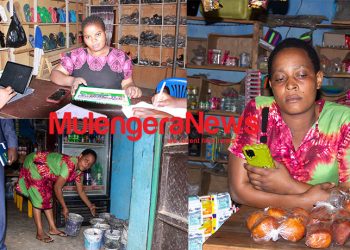
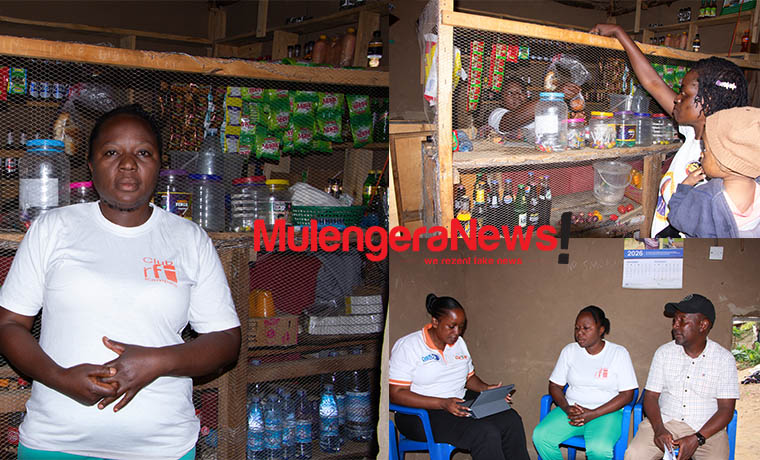
In 2025, she established a small business combining grocery retailing with a drinking place, which became her main source of income.
Her efforts to grow the enterprise attracted the attention of UGAFODE Microfinance Limited, which introduced her to the GROW financing opportunity.
Through the programme, she was connected to officials from the Ministry of Gender, Labour and Social Development (MoGLSD), who provided essential business skills training.
The Private Sector Foundation Uganda (PSFU) subsequently conducted financial literacy training, equipping her with skills in bookkeeping, maintaining bankable financial records and opening bank accounts, among other financial management practices.
The training helped her understand how to manage business finances, maintain proper records and prepare her enterprise for formal financing.
Following the training, Mopepe successfully accessed a Shs1.5 million GROW Loan through UGAFODE Microfinance Limited.
She was given a repayment period of 10 months, with monthly instalments of Shs162,500.
The financing has helped her increase the stock in her grocery business and strengthen the operations of her drinking place.
For a woman who previously struggled to find even the most basic means of supporting her children, access to formal business financing represents an important step towards rebuilding her livelihood.
Dreams of expanding into a bigger business
Mopepe is not satisfied with the progress she has made so far. She has ambitions of transforming her small establishment into a more established food and hospitality business.
Her immediate plans include purchasing a refrigerator to improve the storage of drinks and other products, as well as expanding the building from which she operates.
She also dreams of introducing a wider menu of foods and refreshments similar to those commonly sold in Kampala.
These include egg rolls, passion fruit juice, chapatis, fried fish and fried chicken.
She believes diversifying into food preparation and sales will attract more customers and provide additional income for her household.
Beyond her business progress, Mopepe has also managed to acquire a plot of land worth Shs1.1 million, an investment that reflects her determination to establish a more secure future for herself and her children.
As the sole provider for her family, she describes herself as both the father and mother to her children, carrying the responsibility of meeting their needs and securing their future.
No plans of returning to Congo
Although Mopepe has gradually rebuilt her life in Uganda, the memories of what happened in Congo remain deeply painful.
She says she has no desire to return to her country because of the loss and devastation her family experienced during the conflict.
According to her, all her family members died during the war, while her husband, who was taken away by armed rebels in 2016, has never been found.
For her, Nakivale has become a place where she can begin again, raise her children and pursue the economic opportunities that were taken away by conflict.
Her story illustrates the difficulties refugee women can face beyond displacement, particularly those who arrive with children, limited resources and the psychological burden of violence.
However, her progress also demonstrates the potential of entrepreneurship and access to affordable financing in helping displaced women rebuild their livelihoods.
About the GROW Project
Through UGAFODE Microfinance Limited, the GROW Project is extending financing opportunities to women entrepreneurs, including those living in refugee-hosting communities such as Nakivale Refugee Settlement.
The Generating Growth Opportunities and Productivity for Women Enterprises (GROW) Project is implemented by the Private Sector Foundation Uganda (PSFU) in partnership with the Ministry of Gender, Labour and Social Development, with financing from the World Bank.
The project seeks to expand women’s access to affordable finance and business development support services to enable them to establish, grow and sustain their enterprises.
UGAFODE is among the participating financial institutions implementing the GROW Loan facility to improve women’s access to affordable business financing.
The facility targets micro and small enterprises in which women own at least 51 per cent of the shareholding. Eligible businesses operate across various sectors, including agriculture, agro-processing, manufacturing, construction, science and technology, services, creative arts, and information and communication technology.
By combining access to financing with business development support and financial literacy training, the project seeks to strengthen women-owned enterprises, promote job creation and improve household incomes.
For Mopepe, the Shs1.5 million GROW Loan is more than just business financing. It has given her an opportunity to strengthen the small enterprise she started after years of displacement, uncertainty and economic hardship.
From fleeing armed rebels in Congo to struggling on the streets of Kampala, facing an unexpected pregnancy and eventually establishing a business in Nakivale, she is gradually building the life she once thought had been taken away from her.
Her ambition is now to expand her business, acquire more equipment and establish a food enterprise that can provide a more dependable livelihood for her children. (For comments on this story, get back to us on 0705579994 [WhatsApp line], 0779411734 & 041 4674611 or email us at mulengeranews@gmail.com).