







By Mulengera Reporters
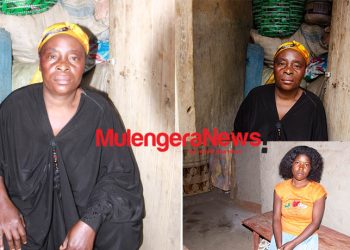
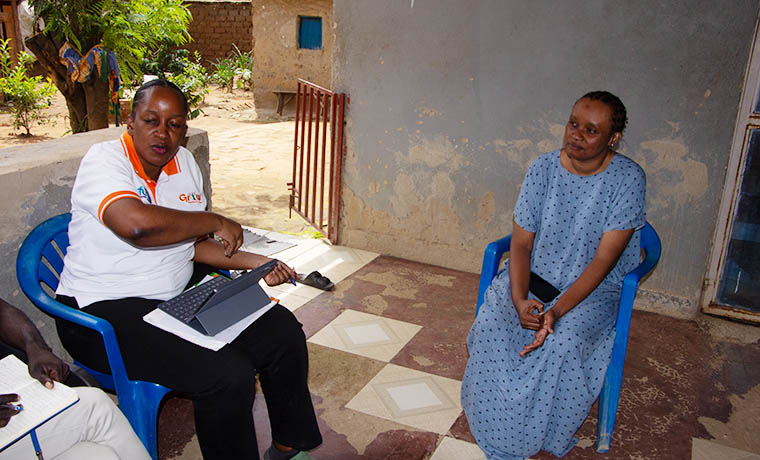
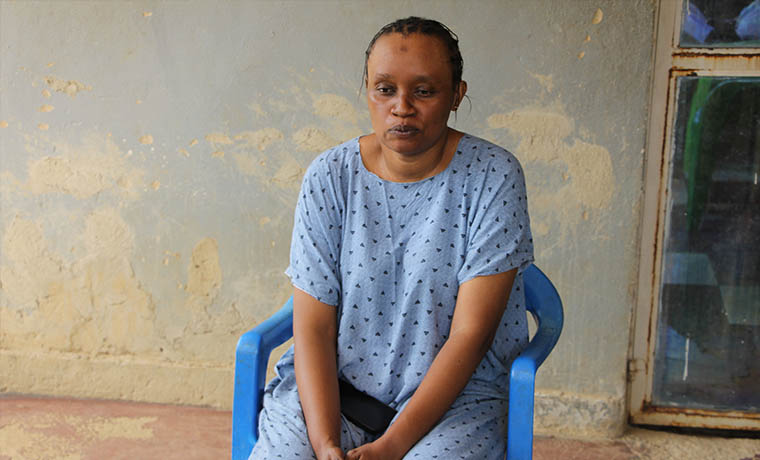
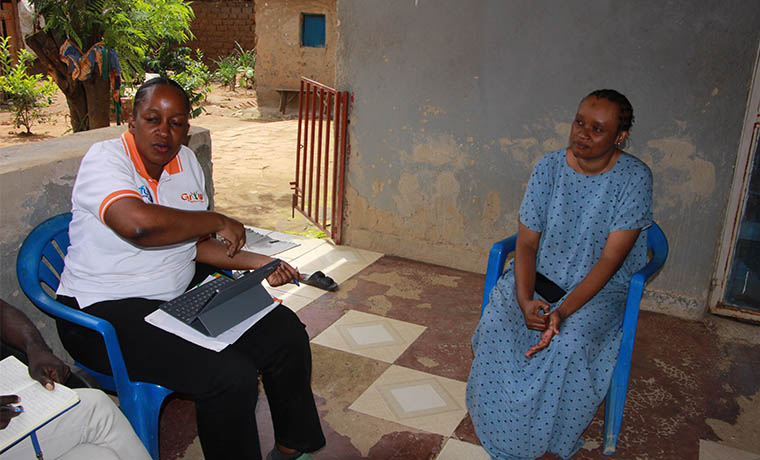
Eleven years after fleeing Burundi following the kidnapping and killing of her child and a family 26-year-old worker, Digne Ange Sebigo has rebuilt her life in Nakivale Refugee Settlement, where she has established multiple businesses, accessed a Shs4 million GROW Loan through UGAFODE Microfinance Limited and risen to become a village chairperson.
For Digne Ange Sebigo, a Burundian refugee living in Kashojwa C Village commonly known as New Bujumbura in Nakivale Refugee Settlement, Isingiro District, the memories of what forced her to flee her country remain too painful to revisit.
Even after 11 years in Uganda, narrating the events that disrupted her life is difficult, sometimes forcing her to pause for extended periods as she struggles to put the experience into words.

Before the insecurity that forced her into exile, Sebigo enjoyed a comfortable life in Mutakura, a residential suburb in northern Bujumbura, Burundi. She was pursuing a Bachelor’s degree in Law at one of the universities in Burundi, while her husband was an established businessman.

However, escalating insecurity and civil conflicts created an environment in which some politicians allegedly took advantage of the situation to grab people’s land.
Sebigo and her family became victims of the alleged land grabbing. When they attempted to resist, their lives took a devastating turn.
In 2015, their child and a male domestic worker were kidnapped and killed. The family continued receiving threats, leaving them with little choice but to flee for their safety.
They abandoned the life they had built in Burundi and sought refuge in Uganda, marking the beginning of a difficult journey of rebuilding their lives.
Starting afresh in Nakivale
Her husband was the first to arrive in Nakivale Refugee Settlement, where he settled in an area that had very few residents.
He named the area New Bujumbura, which later became part of what is now Kashojwa C Village.
As one of the earliest settlers, he became the first Refugee Welfare Council One (RWC I), a position equivalent to village chairperson, through which he participated in community leadership.
Sebigo later joined him after leaving her parents behind in Burundi. Together, they began establishing businesses to generate income and support their livelihood in their new home.
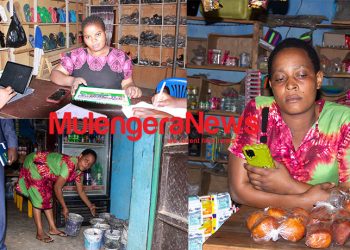
Their investments included a salon, duck rearing, breeding exotic rats for export, rabbit and chicken rearing, as well as a clean water-selling business that was initially established by her husband.
The different enterprises provided the family with several sources of income and helped them gradually establish themselves economically within the settlement.
From entrepreneur to village chairperson
As the family settled into its new environment, Sebigo became increasingly involved in community activities.
When her husband recently retired from his community leadership position, she succeeded him as the village chairperson, taking responsibility for leading the community where they had started rebuilding their lives.
Her transition from a refugee fleeing insecurity to a community leader reflects her determination to contribute to the welfare and development of other refugees.
However, maintaining multiple businesses has required resilience and the ability to adapt when some investments fail.
One of the setbacks the family experienced was the death of their exotic rats, which they had been breeding for export. Rather than abandon entrepreneurship, Sebigo explored other opportunities to diversify her income.
She ventured into selling fuel to motorcycle operators, commonly known as boda boda riders, increasing the range of products and services offered by the family.
She also maintained the clean water business started by her husband, which she has been involved in for approximately four years.
The business sells water at Shs1,000 per jerrycan and generates approximately Shs60,000 in monthly income, providing an additional source of earnings for the family.
Shs4 million GROW Loan strengthens business investments
Before learning about the Generating Growth Opportunities and Productivity for Women Enterprises (GROW) Project, Sebigo had already established a borrowing relationship with UGAFODE Microfinance Limited.
She had previously accessed two loans of Shs3 million each from the institution and maintained a good repayment record.
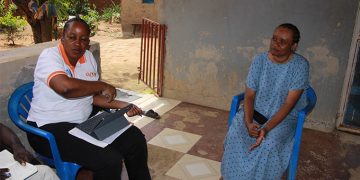
When the GROW Project was extended to Nakivale Refugee Settlement, she participated in training organised for women entrepreneurs, where she gained additional knowledge in financial management and business record-keeping.
The training involved officers from the Private Sector Foundation Uganda (PSFU) and the Ministry of Gender, Labour and Social Development.
Through the sessions, women refugees received training in bankable financial record-keeping facilitated by PSFU, equipping them with skills to maintain proper business records and improve their readiness to access formal financing.
Having previously borrowed from UGAFODE and successfully repaid her loans, Sebigo was motivated to take advantage of the GROW financing opportunity.
She subsequently accessed a Shs4 million GROW Loan through UGAFODE Microfinance Limited, which she successfully repaid within nine months.
The financing enabled her to strengthen several of the family’s income-generating activities.
She invested part of the money in putting up a bigger water storage tank to improve the clean water business. She also bought more birds for rearing, improved the family salon and increased the volume of fuel procured for sale to boda boda riders.
These investments enabled her to diversify her business operations and strengthen enterprises serving different customer needs within the settlement.
Her successful repayment of the Shs4 million facility within nine months further demonstrates her experience in managing credit and meeting financial obligations.
Building a better future through entrepreneurship
Beyond expanding her businesses and taking on community leadership responsibilities, Sebigo’s entrepreneurial journey is also contributing to her family’s welfare.
One of her children is currently attending school in Mbarara City, reflecting the family’s continued efforts to pursue better opportunities despite the circumstances that forced them to leave Burundi.
For Sebigo, maintaining multiple income-generating activities provides an opportunity to support her household while continuing to serve the community.
Her experience demonstrates how access to formal financing, combined with business knowledge and determination, can help refugee women rebuild their livelihoods, diversify their investments and take up leadership responsibilities.
About the GROW Project
Through UGAFODE Microfinance Limited, the GROW Project is extending financing opportunities to women entrepreneurs, including those living in refugee-hosting communities such as Nakivale Refugee Settlement.
The Generating Growth Opportunities and Productivity for Women Enterprises (GROW) Project is implemented by the Private Sector Foundation Uganda (PSFU) in partnership with the Ministry of Gender, Labour and Social Development, with financing from the World Bank.
The project seeks to expand women’s access to affordable finance and business development support services to enable them to establish, grow and sustain their enterprises.
UGAFODE is among the participating financial institutions implementing the GROW Loan facility to improve women’s access to affordable business financing.
The facility targets micro and small enterprises in which women own at least 51 per cent of the shareholding. Eligible businesses operate across various sectors, including agriculture, agro-processing, manufacturing, construction, science and technology, services, creative arts, and information and communication technology.
By combining access to finance with business development support, the project seeks to strengthen women-owned enterprises, promote job creation and improve household incomes.
For Sebigo, the journey from a law student in Burundi to an entrepreneur and village chairperson in Nakivale has been marked by profound loss, resilience and reinvention.
Eleven years after fleeing her country, she has established multiple businesses, successfully accessed and repaid formal loans and assumed a leadership role in her community.
Her story demonstrates that even after displacement and devastating personal loss, opportunities for economic recovery, entrepreneurship and community leadership can emerge when women have access to the right support and financing. (For comments on this story, get back to us on 0705579994 [WhatsApp line], 0779411734 & 041 4674611 or email us at mulengeranews@gmail.com).