







By Mulengera Reporters
From grocery retailing and shoe selling to agricultural produce trading, refugee women in Nakivale are using GROW financing to strengthen their businesses, increase stock and improve their livelihoods. While some have successfully accessed loans through UGAFODE Microfinance Limited, others who completed the required training are still struggling to meet the conditions for formal credit.
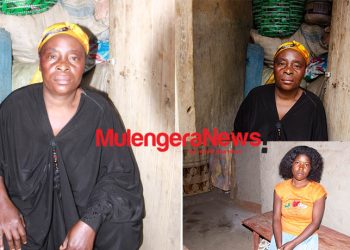
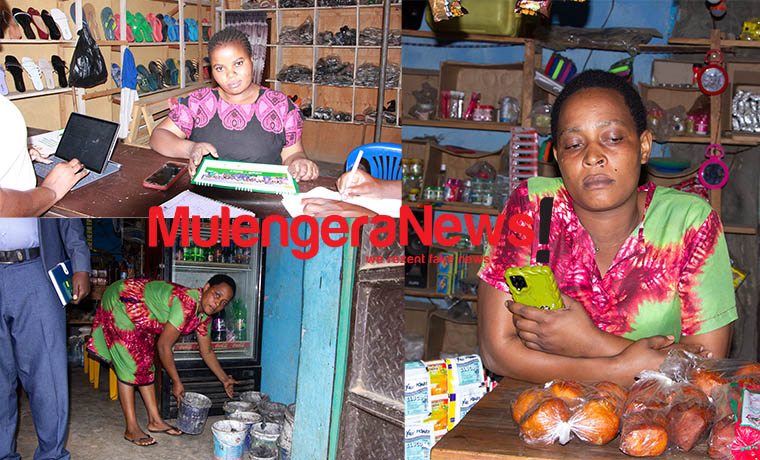
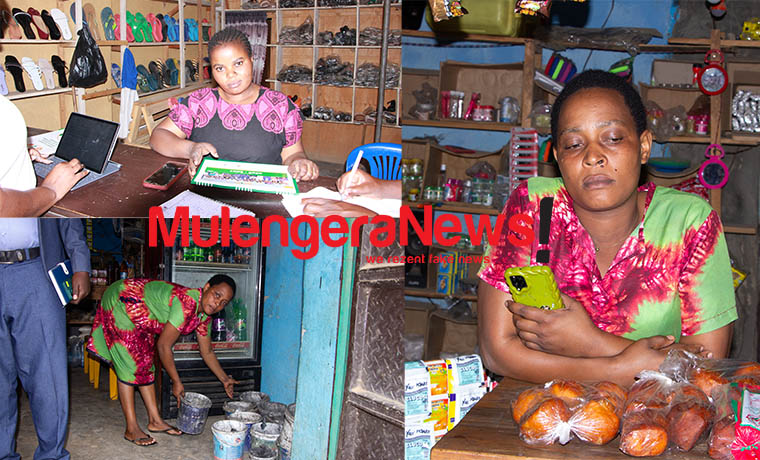
For Annet Mbabazi, a Rwandan refugee living in Kigali-New Congo in Nakivale Refugee Settlement, Isingiro District, life had become increasingly difficult as she struggled to grow her grocery business.
Despite her efforts to earn a living through retail trade, limited capital made it difficult to expand the business and improve her family’s livelihood.

Her circumstances began changing after she learnt about the Generating Growth Opportunities and Productivity for Women Enterprises (GROW) Project, which opened an opportunity for her to access formal business financing.

Mbabazi, who prefers not to disclose the circumstances surrounding her journey to Uganda as a refugee, says her life was not adding up until she accessed financial support through the programme.
Through UGAFODE Microfinance Limited, she secured a Shs2 million GROW Loan, which she is expected to repay over 12 months at a monthly instalment of Shs178,000. She has so far completed three months of repayment.
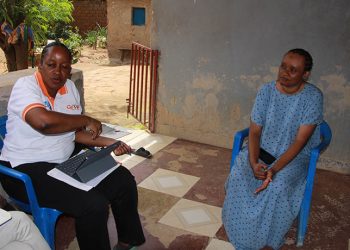
Before accessing the financing, she participated in GROW-related business development training, including bankable financial record-keeping facilitated by the Private Sector Foundation Uganda (PSFU) and essential business training conducted by the Ministry of Gender, Labour and Social Development.
The training equipped her with knowledge and skills to manage her business finances and improve her ability to access formal credit.
Her parents stood as guarantors for the loan, helping her fulfil the security requirements.
For Mbabazi, the financing represents an opportunity to strengthen her grocery business and move towards greater financial stability.
Training alone does not guarantee access to financing
While Mbabazi successfully secured financing, other women who participated in the GROW training in Nakivale are yet to benefit from the loan facility.
Emride Mugwaneza, who also lives in Kigali-New Congo, says she underwent the GROW financial literacy and business training and developed an interest in accessing financing after learning about the opportunities available to women entrepreneurs.
However, her application for a GROW Loan through UGAFODE Microfinance Limited was unsuccessful because she could not fulfil the institution’s lending requirements.
Her experience highlights the gap that can exist between preparing women entrepreneurs through financial literacy and business training and enabling them to meet the conditions required by financial institutions.
For women living in refugee settlements, finding acceptable guarantors, meeting collateral requirements and demonstrating the financial capacity to repay loans can present additional challenges.
Nevertheless, the training has given Mugwaneza an opportunity to understand formal financing and what she needs to work towards before making another application.
Peninah expands shoe business into a bigger shop with Shs3 million GROW Loan
In New Hope Village, Kashojwa Parish, Kashumba Sub-county, another refugee entrepreneur, Peninah Ainembabazi, is already experiencing the benefits of accessing formal business financing.
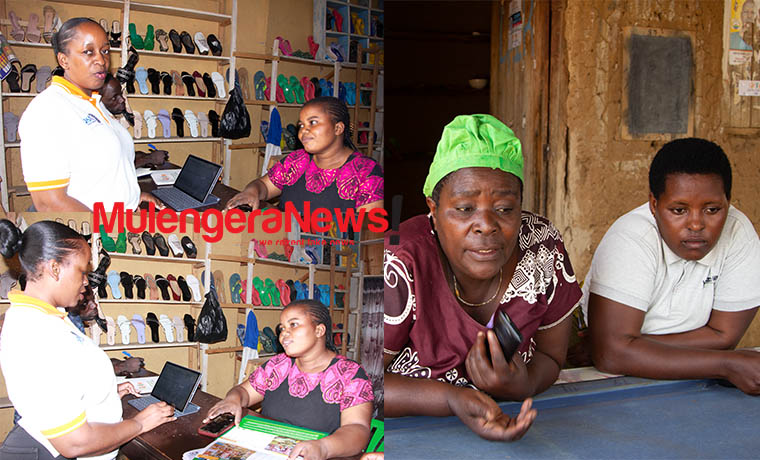
Ainembabazi operates a shoe-selling business which has grown from a smaller enterprise into a bigger shoe shop following her access to a Shs3 million GROW Loan through UGAFODE Microfinance Limited.
She says the financing enabled her to increase her shoe stock and expand her business, giving her an opportunity to serve more customers and strengthen her income.
Before accessing the GROW facility, Ainembabazi largely depended on local women’s savings groups to raise capital for her business. However, the opportunity to access formal financing provided her with additional capital to accelerate its growth.
Her husband and a neighbour stood as guarantors for the loan, helping her meet the financing requirements.
She was given a repayment period of 12 months and has so far completed seven months of repayment, making monthly instalments of Shs270,000.
Beyond her shoe business, Ainembabazi also cultivates beans, maize and sorghum, providing her with additional livelihood activities.
Her experience demonstrates how access to formal financing can help refugee women entrepreneurs move beyond small-scale operations and invest in more established businesses.
Collateral requirements remain a challenge for other women
Despite the opportunities presented by GROW, some women entrepreneurs in Nakivale are still struggling to access formal financing from other institutions.
Sharon Nakasita, a resident of Kashojwa C Village, says she applied for a Shs1 million loan through Centenary Bank to inject additional capital into her business dealing in Irish potatoes, cabbage and chips.
However, her application was unsuccessful because she could not secure the required guarantors.
For Nakasita, the inability to find people willing or eligible to guarantee her loan became a major obstacle to accessing the capital she needed to expand her business.
Another refugee entrepreneur, Chance Muhooza, who is originally from Rwanda, also encountered difficulties while seeking formal financing.
Muhooza had applied for a Shs4 million loan through Centenary Bank to support her business dealing in Irish potatoes and sweet potatoes.
However, before the loan could be finalised, she was attacked by unknown thieves and lost most of her property, some of which had been registered as collateral security for the loan.
The loss disrupted her plans to access financing, leaving her unable to proceed with the application.
Despite the setback, Muhooza says she is continuing to work hard to rebuild her assets and strengthen her business so that she can eventually qualify for formal credit.
Her experience highlights the vulnerability of small-scale entrepreneurs whose ability to access financing can be affected by unexpected losses, particularly when their personal property also serves as loan security.
Expanding financing opportunities for refugee women
The experiences of Mbabazi, Mugwaneza, Ainembabazi, Nakasita and Muhooza demonstrate the different realities facing women entrepreneurs in refugee-hosting communities.
While some have successfully accessed formal loans and expanded their businesses, others are still working to overcome requirements that stand between them and the financing they need.
Through UGAFODE Microfinance Limited, the GROW Project is extending financing opportunities to women entrepreneurs, including those living in refugee-hosting communities such as Nakivale Refugee Settlement in Isingiro District.
The Generating Growth Opportunities and Productivity for Women Enterprises (GROW) Project is implemented by the Private Sector Foundation Uganda (PSFU) in partnership with the Ministry of Gender, Labour and Social Development, with financing from the World Bank.
The project seeks to expand women’s access to affordable finance and business development support services to enable them to establish, grow and sustain their enterprises.
UGAFODE is among the participating financial institutions implementing the GROW Loan facility to improve women’s access to affordable business financing.
The facility targets micro and small enterprises in which women own at least 51 per cent of the shareholding. Eligible businesses operate across various sectors, including agriculture, agro-processing, manufacturing, construction, science and technology, services, creative arts, and information and communication technology.
By combining access to financing with financial literacy and business development support, the project seeks to strengthen women-owned enterprises, promote job creation and improve household incomes.
For women such as Mbabazi and Ainembabazi, access to financing has provided an opportunity to strengthen existing businesses and pursue greater economic independence. For Mugwaneza, Nakasita and Muhooza, their experiences point to the continued importance of financial preparedness and the ability to meet lending requirements.
Their stories collectively demonstrate that refugee women are not merely seeking assistance but are actively building enterprises, creating livelihoods and contributing to the economic activities of their host communities. (For comments on this story, get back to us on 0705579994 [WhatsApp line], 0779411734 & 041 4674611 or email us at mulengeranews@gmail.com).