







By Guest Writer
ISINGIRO — The fight against corruption received praise at the Isingiro District Women’s Day celebrations on Friday, but one of the speakers said the country should also give greater attention to another problem that affects almost every community; poverty.
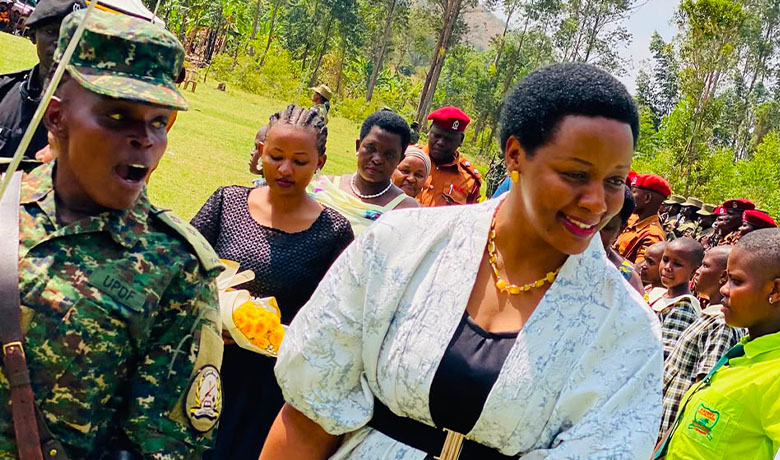
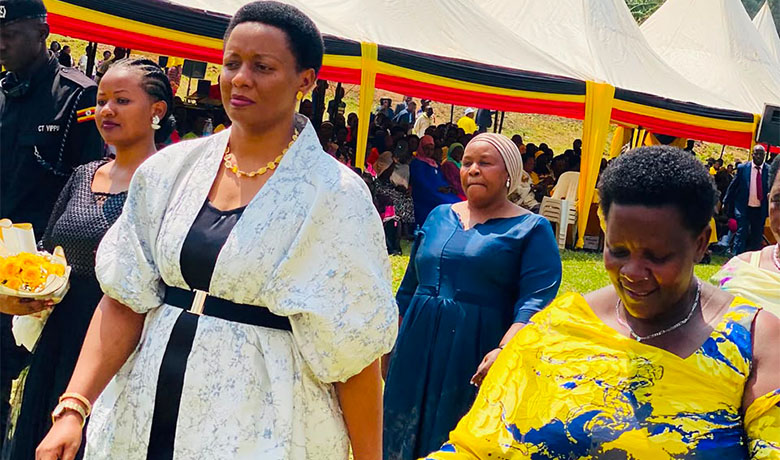
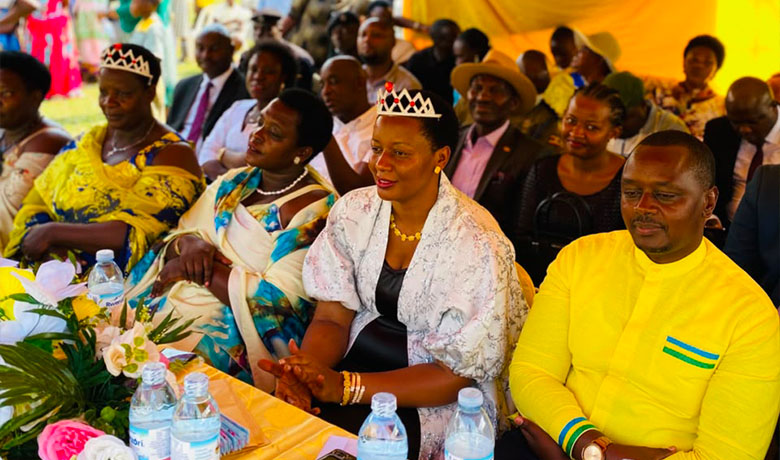
The remarks came from Mrs. Loice Natukunda Otafiire, Executive Director of Elevate Her Uganda, who was the Chief Guest at the celebrations held at Kishaye Primary School. She represented Hon. Lydia Wanyoto Mutende, Minister of State for Public Service.
The event was hosted by Hon. Lilian Ruteraho, Woman Member of Parliament for Isingiro District, and was attended by leaders, Members of Parliament and residents from Isingiro and neighbouring districts.

Loice applauded Hon. Balaam Barugahara and others involved in the fight against corruption, saying such efforts are important if the country is to protect public resources and ensure accountability.

But as she spoke about the country’s challenges, she turned the attention of the gathering to the situation of ordinary families.
Ugandans, she said, have many things to fight, and poverty should be one of the biggest.
She asked why people who can work together on national issues should spend their energy fighting one another when many families are still struggling to afford food, educate their children and find reliable sources of income.

Speaking to journalists, she put the question simply:
“What is wrong if everyone can afford food, educate their children and live a good life?”
For Loice, that is what development should eventually achieve. A family should be able to meet its basic needs, a parent should be able to educate children without being overwhelmed, and young people should have opportunities to work and build their future.
She also spoke about the way Ugandans view people who are trying to make a difference in their communities. Someone supporting women, helping young people or creating opportunities, she said, should not automatically be assumed to have political ambitions.
“Not everyone who does good wants to replace you politically,” she said.
The point was particularly relevant during a Women’s Day celebration, where the contribution of women to household incomes and community development was part of the wider discussion.
Loice, whose organisation works around women’s empowerment, argued that Uganda needs more people involved in productive activities. If women can earn incomes, if young people can find work and if families can improve their livelihoods, the benefits go beyond the individual household.
She also brought the discussion back to the country’s national motto, “For God and My Country.”
For Loice, the reference to God should also remind Ugandans about love. People may have different opinions and may disagree on many issues, but that should not prevent them from working together where they have a common interest.
And poverty is one such interest.
It affects people regardless of their political views or where they come from. A family struggling to feed its children is not necessarily interested in political arguments; it needs an opportunity to earn and improve its circumstances.
This is where Loice sees a role for different parts of society.
Government has its responsibilities, but businesses, organisations, religious institutions, community groups and individual Ugandans can also contribute. The more these efforts are connected to the needs of communities, the greater the possibility of reaching people who need support.
None of this removes the need for accountability. Loice’s appreciation of the anti-corruption efforts was clear. Her argument was that the country can continue protecting public resources while also paying attention to what happens to the people those resources are meant to serve.
The two concerns meet at the level of development.
If corruption takes away resources meant for citizens, it must be addressed. If poverty keeps citizens from meeting their basic needs, it must also be addressed. One should not prevent the country from dealing with the other.
For Loice, there is therefore a reason for Ugandans to find more things they can agree on.
They may disagree politically. They may have different approaches to development. They may even compete for leadership.
But everyone can understand the desire to have enough food, educate children and live a decent life.
That is why she believes poverty can become a common enemy.
The message from Isingiro was not that Uganda has no disagreements or that accountability is unnecessary. It was that the country has enough genuine problems to deal with without making every difference between people another battle.
For a country seeking economic transformation, the question is increasingly about how many people can move into productive work and build better lives.
And perhaps that is a fight in which more Ugandans can stand on the same side. (For comments on this story, get back to us on 0705579994 [WhatsApp line], 0779411734 & 041 4674611 or email us at mulengeranews@gmail.com).