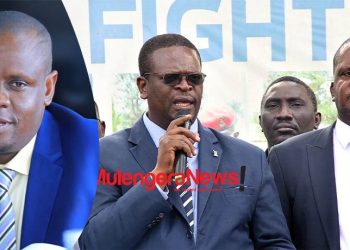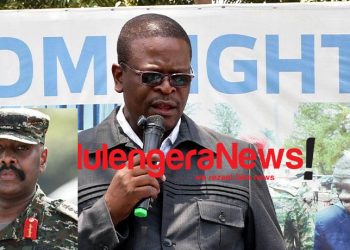








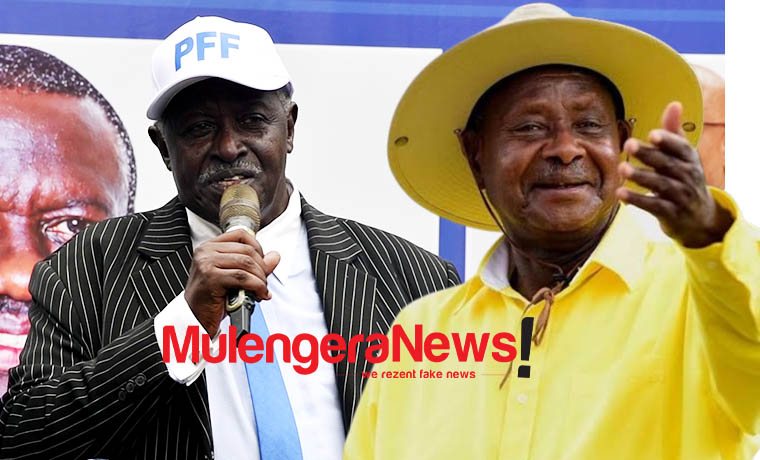
More than forty years after President Museveni launched the guerrilla war that brought him to power, Ambassador Wasswa Birigwa has challenged Ugandans to revisit the reasons behind the armed struggle, questioning whether the sacrifices made during the war have delivered the freedom its supporters fought for.
Birigwa, Deputy Leader of the People’s Front for Freedom (PFF) Council of Eminent Persons (CEPs), argued that the country has moved far from the aspirations that inspired many Ugandans to support the NRA struggle, pointing to what he referred to as the growing fear among opposition supporters, political arrests and restrictions on freedom.
Speaking at PFF’s first National Assembly at the party headquarters in Kampala on Friday, Birigwa drew on his personal experience of living in Uganda before Museveni entered politics to question the circumstances that led to the Luwero bush war.
He challenged the President to explain why he chose armed rebellion and why the struggle took the course it did, particularly given the heavy human cost suffered by communities in different parts of the country.
“I am among the very few who lived here prior to Museveni coming into politics. And I’m reminded of someone who asked a question. Mr Museveni, what really took you to the bush? Why did you go to the bush? And why didn’t you go to Mbale or Ankole instead of coming to Buganda? What was it? That’s a question that everybody should ask,” Birigwa said.
His questions were framed against the thousands of lives lost during the war, particularly in Buganda and northern Uganda. Birigwa said the people who died, including members of his own family, had made sacrifices in the hope that Uganda would emerge from a period of persecution and become a country where citizens could live freely, yet the same continues after 40 years of Museveni in power.
He recalled that the promise of liberation had been central to the sacrifices made by ordinary people, but argued that the conditions facing some Ugandans today raise questions about how far the country has moved towards that original objective.
“Thousands of people lost their lives, mostly here in Buganda and the north. So sacrifices were made. But the reason why sacrifices were made by many, including my relatives, was to see that Uganda is free from persecution, and that people have their freedom,” he said.
Birigwa said that, instead of enjoying the freedoms expected after the war, opposition politicians and their supporters now live with uncertainty over whether speaking out against the government could expose them to arrest or abduction.
He described the situation as particularly troubling for people who continue to challenge the government, saying some have become afraid even of moving freely or expressing their political views.
“But we have reached a stage where it’s very dangerous, for all of us who are in so-called opposition to speak out, or even to walk around. We don’t know when we are going to be taken to the dungeon or the basement,” he said.
The PFF elder also drew attention to opposition figures who remain in detention, invoking the biblical question in Genesis 4:9, when Cain asked whether he was his brother’s keeper.
He used the passage to remind party members of those who are not able to participate in the gathering because they are incarcerated, saying the responsibility to stand with them should not be abandoned.
“Where are your brothers? Most of us now know that our brothers are incarcerated for the last two years,” he said.
Birigwa nevertheless praised party members who had travelled from different parts of Uganda, often at their own expense, to attend the assembly. He described their presence as evidence that the opposition cause had not lost its supporters despite the challenges facing the party.
He urged them to renew their commitment to the struggle and continue pressing for the release of detained opposition leaders, including Dr Kizza Besigye, Erias Lukwago, among others.
“We shall continue to speak out. We shall continue to work hard. We shall continue to see that our leaders are out of jail. And they shall come out of jail, inshallah,” he said.
Beyond the national political message, Birigwa used his address to push for stronger organization within PFF, telling delegates that the party intended to take its activities beyond national meetings and engage its structures directly in their respective regions.
He said the party was working towards beginning regional visits in December, during which its leaders would meet local executives and discuss political and other issues affecting their communities.
However, he cautioned that such visits would only be productive if members returned to their areas and put functioning party structures in place.
“Whoever is here who has not as of yet organized to the executive level, I ask you, please go back and organize yourselves,” he said.
Birigwa explained that the national assembly was intended to address the party’s broader direction, while the planned regional engagements would provide an opportunity to discuss local concerns in greater detail and strengthen the party’s presence across the country. (For comments on this story, get back to us on 0705579994 [WhatsApp line], 0779411734 & 041 4674611 or email us at mulengeranews@gmail.com).