












By Ben Musanje
Uganda’s legal profession has been challenged to embrace artificial intelligence (AI) and other emerging technologies while putting in place strong ethical, cybersecurity and accountability safeguards to protect public trust.
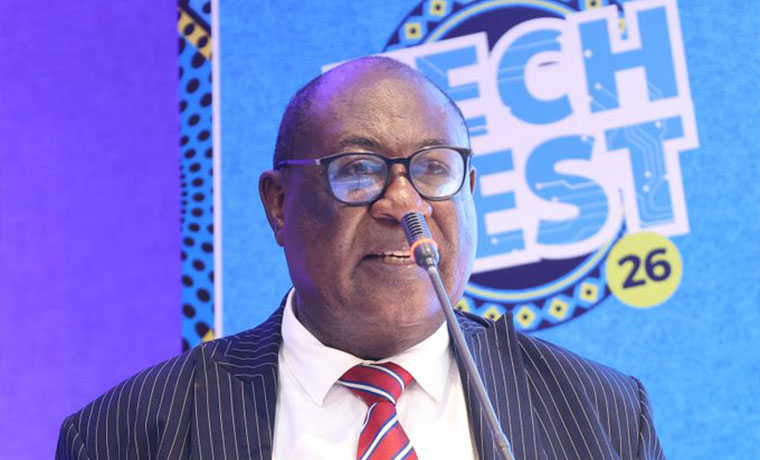
Attorney General Dr. Sam Mayanja, SC, made the call as he opened the second Digital Transformation Festival 2026, organised by the Uganda Law Society (ULS) under the theme, “Digital Democracy: Advancing Access to Justice, Innovation and Ethical Governance through Technology.”
The week-long festival, held at Speke Resort Munyonyo, has brought together lawyers, judges, government officials, technology innovators and other justice-sector stakeholders to explore how technology can improve access to justice and transform the delivery of legal services.

Mayanja said the rapid development of technology presents both opportunities and responsibilities for the legal profession, urging lawyers to ensure that emerging digital tools are used productively and ethically rather than for personal gain.

“We must ensure the technology is used productively, not for personal gain. Use the new technologies to create new changes,” Mayanja told delegates.
He said technology has become part of virtually every aspect of modern life, including agriculture and financial management, making it increasingly important for professionals and institutions to adapt while maintaining responsible practices.
AI use requires clear professional safeguards

Mayanja identified responsible use of artificial intelligence, cybersecurity and inclusive digital justice as key areas requiring urgent attention.
He called for clear professional guidance on the use of AI, particularly regarding verification of information, confidentiality and accountability.
The Attorney General also urged law firms and justice institutions to strengthen cybersecurity standards and provide regular training to professionals using emerging technologies.
At the same time, he cautioned that digital justice initiatives should not leave behind people outside major urban centres, stressing the need for technology-driven justice services to remain accessible and inclusive.
Mayanja further asked the Uganda Law Society to consolidate recommendations arising from the festival and submit them to the Ministry of Justice and Constitutional Affairs for consideration.
“My Chambers will receive and consider proposals concerning legislative, procedural and ethical reforms and engage the appropriate institutions where further action is required,” he said.
He also called for closer cooperation between lawyers and judges, saying differences between the bar and the bench should not interfere with effective justice delivery.
Legal profession moves deeper into digital era
Tonny Kiire Galandi, Managing Partner at Diamond Advocates and inaugural chairperson of the second TechFest, said the organisers deliberately took the festival beyond Kampala to expose lawyers across the country to emerging technologies.
Regional activities were held in Mbarara, Mbale and Gulu earlier in the week.
Galandi said the rapid adoption of AI requires the legal profession to understand not only its potential benefits but also the risks that come with its use.
“Since AI tools are being used everywhere, we now have to mitigate the dangers that will come with them, and this is only done by lawyers, innovators, clients and judges,” he said.
He also highlighted gaps in the integration of the Electronic Court Case Management Information System (ECCMIS) with institutions including NIRA, prisons and the judiciary.
According to Galandi, greater interoperability between these systems could further improve the efficiency of justice administration.
AI tools begin entering legal practice
The festival also showcased locally developed technologies aimed at making legal work faster and more efficient.
Austin Ekesa of LexTech Uganda demonstrated JuriAssist, an artificial-intelligence-powered tool designed to assist magistrates and lawyers in preparing legal documents and rulings.
Ekesa said the platform has incorporated a substantial body of Ugandan case law and could significantly reduce the time lawyers spend on routine drafting.
“This tool helps lawyers ease their workload. For example, an affidavit which used to take days can now take seconds to be done,” he said.
The demonstration illustrated how AI can support legal professionals by handling time-consuming tasks while leaving lawyers responsible for professional judgment, accuracy and accountability.
Digitalisation reshapes government services
Beyond the courts and law firms, digital transformation is already changing the way government services are delivered.
Baker Mugaino, Commissioner for Land Registration at the Ministry of Lands, Housing and Urban Development, said digitalisation has significantly transformed the processing and management of land titles.
He said manual systems previously caused delays and other administrative challenges, while digital systems have enabled land titles to be linked to individual identities and processed electronically.
“E-title has been enabled and work is made easy,” Mugaino said.
He added that similar digital reforms are being implemented across other government institutions.
Lawyers urged to keep public interest at the centre
The Vice President of the Uganda Law Society said digital transformation should enable lawyers to work more efficiently while preserving their responsibility to the public.
He pointed to digital and AI-supported systems already being used by institutions such as NIRA, the driving-licence system and the Ministry of Lands, arguing that the legal profession must adapt to the changing environment.
“The world is no longer analogue,” he said, while emphasising that lawyers must continue holding justice institutions accountable and advocating for ordinary citizens.
Technology must serve justice and human rights
Retired Justice Fredrick Egonda-Ntende placed the debate on digital transformation within the broader context of human rights, justice and human dignity.
He observed that technological changes over the past three decades have been among the most significant transformations in human history, but cautioned that technological advancement should not come at the expense of fundamental human values.
Justice Egonda-Ntende reminded the Uganda Law Society of its statutory responsibility to protect and assist the public in matters concerning the law.
He challenged lawyers to use digital tools to research historical records, preserve evidence and pursue accountability for alleged human-rights violations.
He cited allegations surrounding torture at Nalufenya Police Station and other historical episodes as examples of cases where technology could help locate records, document evidence and communicate with international institutions.
“I implore you to use technology as a tool in defence of our people. If you do so, you will have advanced access to justice and ethical governance through technology in our nation,” he said.
Justice Egonda-Ntende subsequently declared the 2026 Digital Transformation Festival officially open.
The festival will continue discussions on artificial intelligence, digital justice, cybersecurity, innovation, electronic government services and ethical governance, with participants examining how Uganda can modernise its justice system while ensuring that technology remains accessible, accountable and centred on the public interest.