







By Obed K. Katureebe
Sometime in 2015, while travelling with my former boss and now the Member of Parliament representing Older Persons of Eastern Uganda, Hon. Ofwono Opondo, he read my mind in a way that was so revealing.
We were on a trip to Arua City, as we traversed the plains and valleys of Nwoya District, en route to Packwach and beyond, I momentarily went silent, as I admired the green pastures that form the vast lands that define literally the whole of northern Uganda. Nwoya features an expansive, sweeping landscape defined by wide-open savanna plains and a dramatic, boundless horizon.
The flat and gently rolling plain lands stretch as far as the eye can see, offering uninterrupted views of vast African skies. Hon. Opondo looked at me and said that he knew what was going on in my mind. “You must be enviously looking at these abundant pastures and wishing you could bring your cows to graze in these beautiful vast lands.” He was dead right. That is exactly what was going on in my mind.


Now let me say this, a typical cattle farmer will do all it takes to have his cows feed on the best pastures in the land. Exactly the reason why the Balaalo keep returning to northern Uganda every time they are chased. The temptation of the good grazing lands in these areas is beyond control.
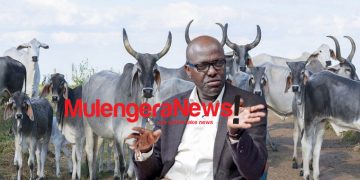
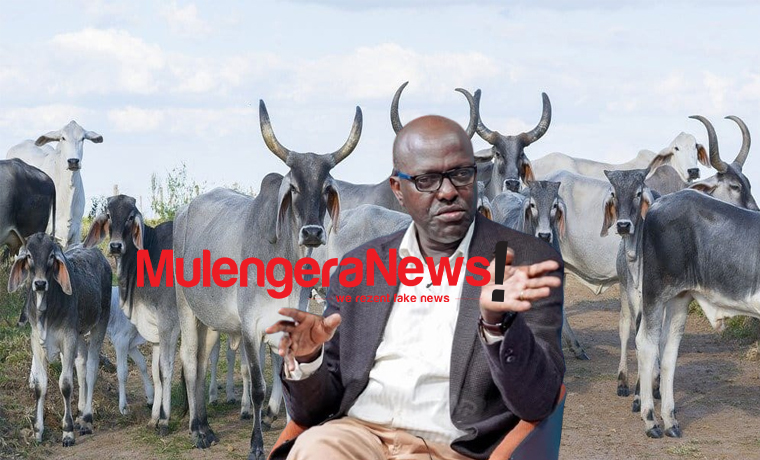
Therefore, the only way to curtail the Balaalo invasion again is to occupy these beautiful grazing lands with the great Zebu cows.

Northern Uganda is traditionally a cattle keeping corridor and it used to have many cows before the civil war collapsed that type of farming in 1990s. The good news is that government has begun cattle restocking in northern Uganda. The restocking is taking place in the three subregions of Acholi, Lango and Teso. According to the Permanent Secretary, Office of the Prime Minister, Mr. Alex Kakooza, so far 80% of the Shs80 billion earmarked for this programme has been given to the various beneficiaries. This is a very good move, if indeed the beneficiaries restock their cattle and do not divert the money into consumptive behavioural patterns. Yes, the Ugandan government intends to continue and even expand the cattle restocking exercise in the northern and eastern regions.
More comforting is the fact that the government extended the programme from the originally planned five years to ten years to ensure that every eligible household in war-affected communities eventually receives livestock.
Therefore, political actors in the greater north must closely monitor the restocking programmes, such that farmers are fully occupying their vast lands. Unutilised chunks of land will always attract the appetite of the marauding Balaalo from wherever. Remember, Uganda has another group of marauding cattle keepers from northeastern Uganda—the Karimojong. These can’t stop moving into the greater north, as long as they keep seeing those rich, green pastures unutilised.
Make no mistake, northern Uganda is the most ideal place for cattle ranching. The expansive grasslands roll toward the horizon, dotted with Acacia trees and sparse shrubs. Rising sharply from the flat plains, the beautiful mountains and rolling valleys makes all pastoralists wish to be part of this rich ranching land.
The region falls primarily under the savanna grassland zone, which produces an abundance of high-quality biomass that requires zero irrigation, or fertilizer to thrive. It also has a type of grass, known as Hood Grass. This is one of the dominant native species across the Acholi, Lango and West Nile sub-regions. It grows tall, is highly palatable to calves, and provides critical protein required for quick fattening.
Due to these grasses that grow so aggressively in the wild, an exciting economic shift is happening. Agricultural entrepreneurs in northern Uganda are moving away from treating grass as ‘wild bush’ and are instead harvesting and exporting it as hay. Regions like West Nile have also seen massive success introducing commercial varieties like, Super Napier Grass to boost local dairy and beef yields. Therefore, most farmers across the country are beginning to look for these northern grasses for livestock farming and are purchasing for the commercial hay and silage business.
Finally, mixed framing is what will offer an economic, paradigm shift for the people of northern Uganda. Seasonal harvestable cash crops can only bring in good sums of cash but can only be once or twice in a year. Livestock farming on the other hand provides direct income, food security, and valuable raw materials that drive local and national economies.
Farmers earn steady revenue by selling daily products like milk and eggs. Selling live animals, wool, or hides yields large sums of cash when needed. Without a doubt, the greater north will drive the much-needed agricultural revolution, if we remain steadfast in driving Uganda towards the higher middle-income status in the next five years, as promised during the 2025/2026 general elections. The writer works with Uganda Media Centre. (For comments on this story, get back to us on 0705579994 [WhatsApp line], 0779411734 & 041 4674611 or email us at mulengeranews@gmail.com).