







By Mulengera Reporters
Zimbabwean Pan-African Thinker Bishop Joshua Maponga has challenged Africans to drop the political and economic systems he says were designed by colonizers to exploit the continent, warning that Africa can’t create a different future while continuing to protect the structures inherited from the whites.
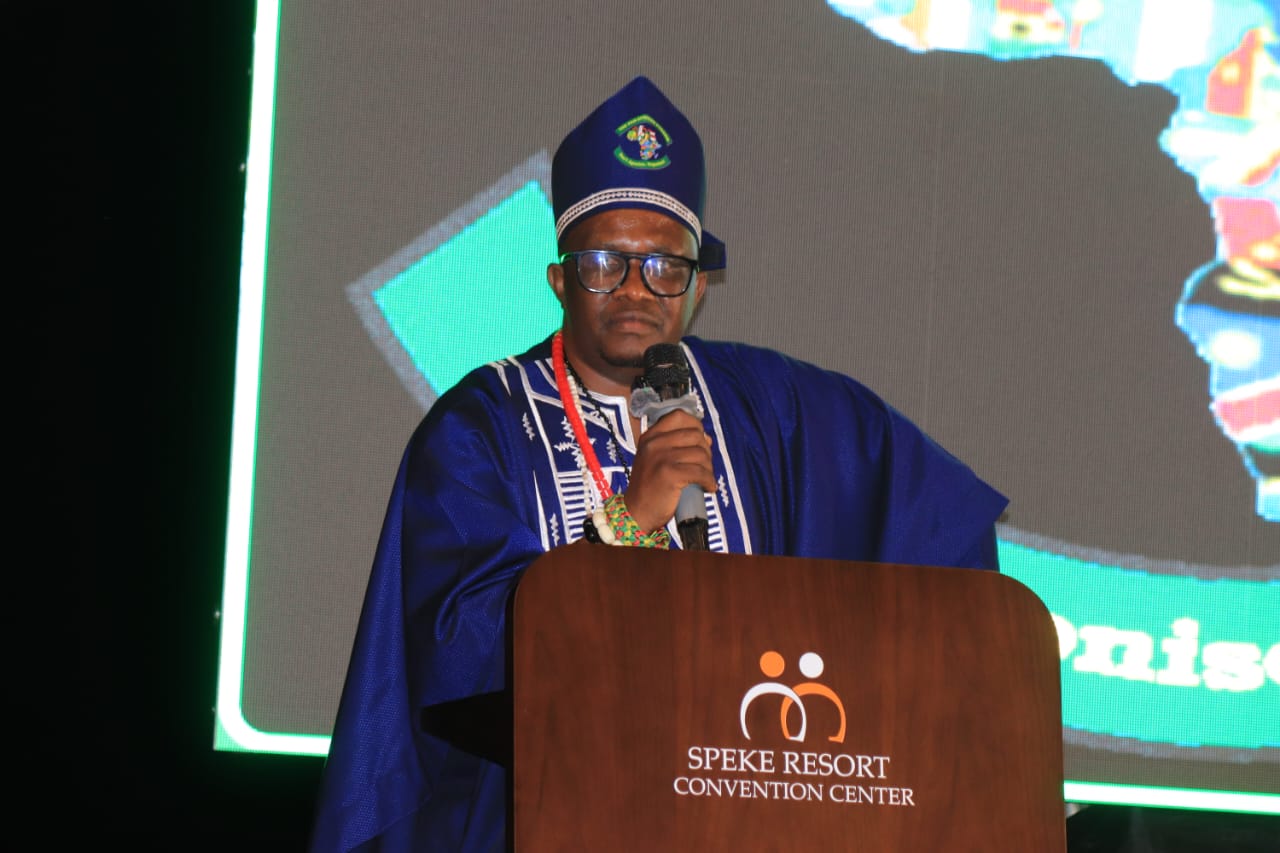
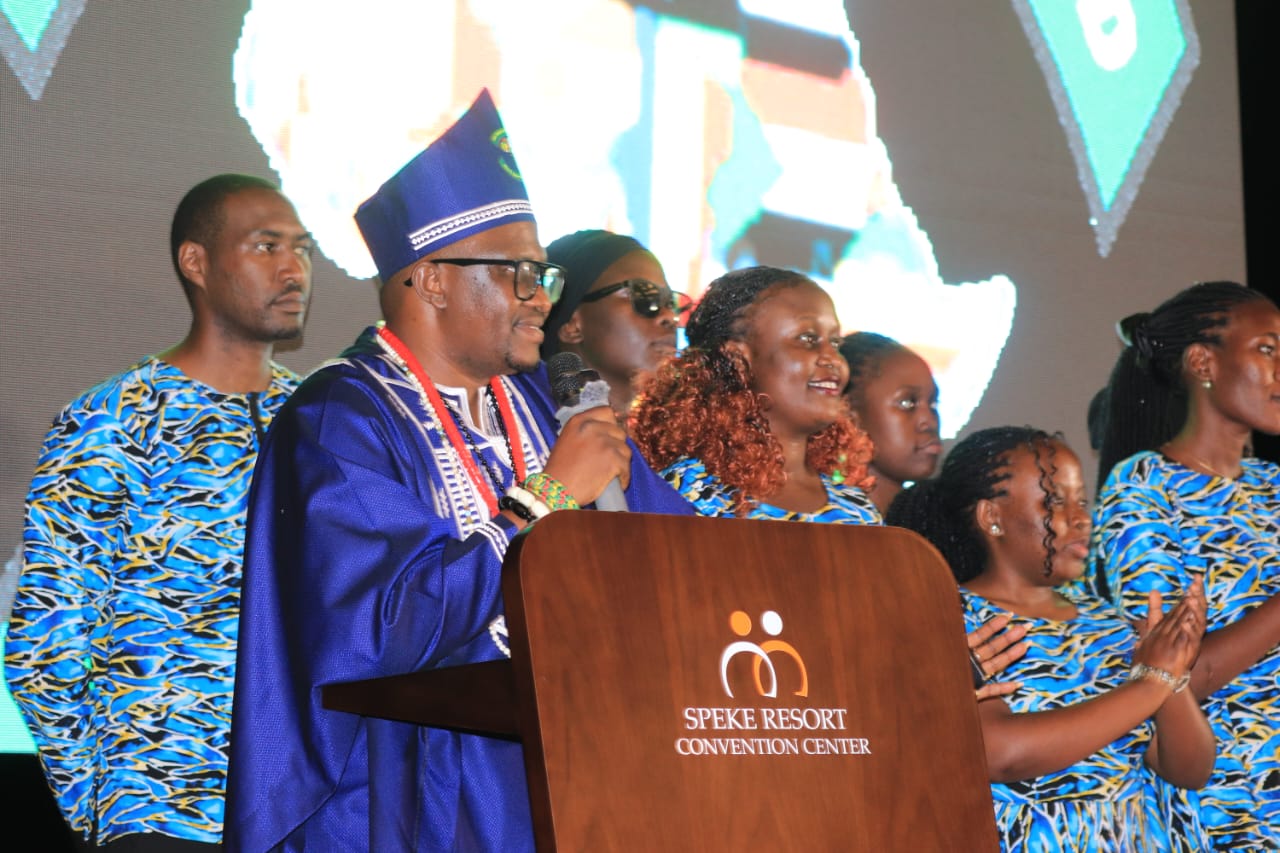
Maponga made the remarks on Saturday, August 29, 2026, while delivering the keynote address at the 9th edition of the Pan-African Pyramid Global Awards organized by Ugandan journalist Andrew Irumba.


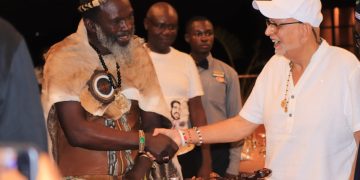
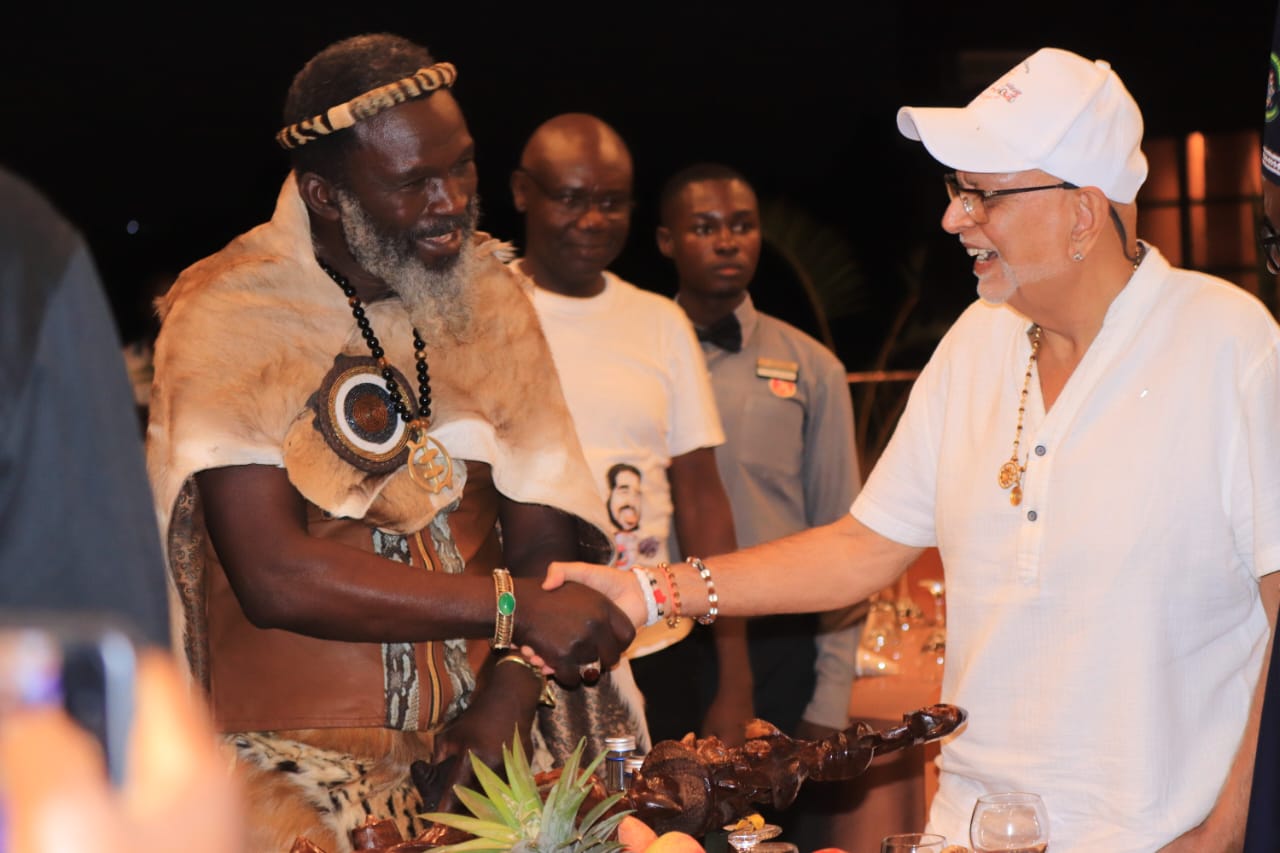
He arrived on stage barefoot and dressed in animal skins, using his appearance to challenge (according to him) the growing disconnect between the propel of Africa and their culture, identity and indigenous knowledge.
The intelligent barefooted man said he had deliberately chosen to dress like that to demonstrate that African culture should not be treated as backward or inferior to the bazungu civilization.

He told the gathering that he intends to continue dressing that way for at least the next two years, because Africans should rediscover the value of materials, traditions and knowledge that existed before colonialism.
He criticized Africans who, in his view, have become overly preoccupied with Western fashion, education and lifestyles while losing touch with their cultural identity.
Maponga said the problem was particularly pronounced among educated Africans, who he accused of sometimes dismissing ancient knowledge as primitive simply because it does not conform to bazungu standards.
He instead described indigenous Africans as “prime natives” who possessed deep knowledge of their environment, medicine, weather patterns, animals and agriculture.
“The Africa we are resisting is our DNA, the knowledge of who we are,” he said.
The Pan-African argued that African development shouldn’t simply mean copying Western cities and lifestyles, but should be based on African priorities, resources, culture and knowledge.
Maponga also questioned whether the future being promoted to Africans is actually the future Africans want or need.
He further warned that the continent risks becoming a participant in a global economic system in which others determine what we produce, consume and ultimately become.
“The question is, where are we going as Africa?” he asked, challenging Pan-Africanists to establish whether Africa’s development agenda is genuinely African or is being dictated by global economic interests.
He went on to criticise African political leaders, accusing some of turning governments into private family enterprises after attaining the so-called independence.
According to Joshua Maponga, changing Presidents without changing the underlying system amounts to little more than replacing one set of rulers with another while leaving the machinery of exploitation intact.
“Seventy years later, democracy is not working in Africa,” he said, before sarcastically offering another 140 or 200 years if Africans wanted to continue “changing hyenas with foxes and wondering why chickens are disappearing.”
He added that “The system was never built with you in mind. The system was built with itself in mind to protect itself and extract from you.”
The Bishop challenged educated Africans holding government offices and other institutions, saying their positions and benefits could make it difficult for them to objectively question the system from which they benefit, further calling for the people of Africa to drop the system and examine it objectively, including questioning the ownership of land, the management of minerals and policies governing the development of Africa.
He said Pan-Africanism should move beyond rhetoric and develop a clear vision of the Africa it wants to build.
“We need to alter and redevelop a vision for the future,” he said, adding that Africans must develop the human capacity needed to process and benefit from their own minerals rather than exporting raw resources.
Maponga also urged Africans to reconsider what they regard as development, warning against pursuing material wealth at the expense of peace, relationships and a meaningful life. He said many people spend their lives pursuing money, houses, degrees and luxury only to eventually realize that what they really wanted was peace of mind.
“Invest your time in life and time in things that are important,” Maponga said.
His presentation repeatedly returned to the importance of relationships, human interaction and community, which he said are increasingly being eroded by modern lifestyles and technology.
He challenged the audience to spend more time connecting with people around them instead of becoming consumed by phones and social media.
Maponga also used his own childhood experience to question conventional definitions of education and development, arguing that indigenous knowledge should not be dismissed simply because it is not contained in formal textbooks. Instead, he said Africans should be able to combine modern education with indigenous knowledge rather than allowing one to completely displace the other.
Throughout the presentation, Maponga’s words were repeatedly met with claps from the audience, which followed his arguments with visible enthusiasm. Chief guest Dr. Sudhir Ruparelia was also seen repeatedly nodding his head in agreement as Maponga delivered his lessons on African identity, culture, development and the need for the continent to rethink its future.
His address became one of the major highlights of the ninth Pan-African Pyramid Global Awards, which brought together Pan-Africanists, business leaders, politicians, humanitarians and other guests from Uganda, across Africa and beyond.
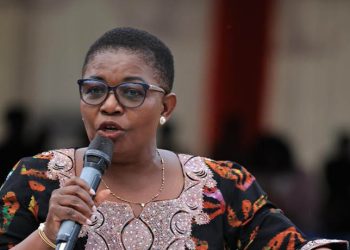
The event was graced by South Africa’s former Member of Parliament, Hon. Dr. Khanyisile Litchfield Tshabalala, who revealed that she had ceased being an MP only two days earlier.
Tshabalala said her entry into politics had been driven by the desire to liberate African people and restore their dignity.
She said she does not define African people only by South Africans, but by people across the African continent.
The awards also brought together international guests including Ghanaian businessman and humanitarian Clinton Arko Agyemang, who serves as the SWIM Global Ambassador.
SWIM, an American humanitarian organization, supports disadvantaged people around the world and is expected to be launched in Uganda really soon.
The gathering also included Mr. Ayo Kimath from the United States, while a Jamaican delegation was led by Ms. Blossom Thomas.
Ugandan companies including Movit, Victoria Sugar and Next Media also supported or participated in the event.
The chief guest was Ugandan business mogul Dr. Sudhir Ruparelia, who was also presented with a certificate of appreciation. (For comments on this story, get back to us on 0705579994 [WhatsApp line], 0779411734 & 041 4674611 or email us at mulengeranews@gmail.com).