







By Guest Writer
dfcu Bank has reaffirmed its commitment to accelerating Uganda’s industrialization through strategic financing partnerships, stronger investment readiness and tailored financial solutions that enable businesses to grow sustainably.
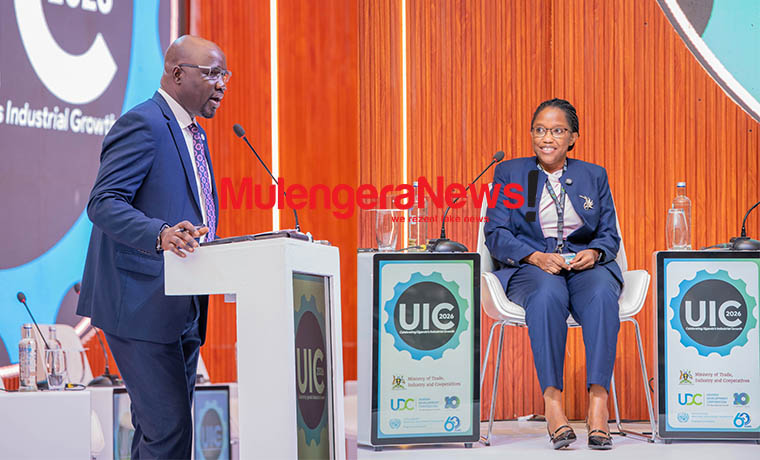
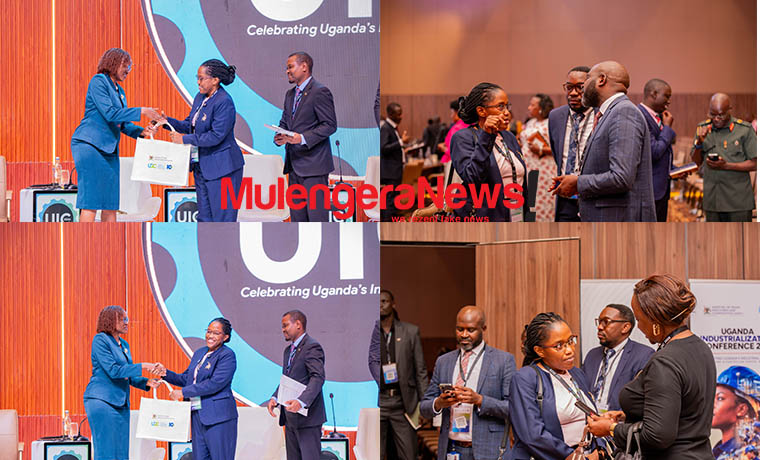
Speaking during a panel discussion at the Uganda Industrialization Conference 2026 and Uganda Development Corporation’s 10th Anniversary celebrations at Speke Resort Munyonyo and Convention Centre on Thursday under the topic “Financing Africa’s Industrialization Agenda,” Kate Kiiza, Executive Director and Chief Corporate and Institutional Banking Officer at dfcu Bank, emphasized the critical role of financial institutions in transforming promising business ideas into viable and sustainable industrial investments, highlighting the need for innovative financing solutions, stronger institutional collaboration and increased access to long-term capital to accelerate Uganda’s industrial transformation.


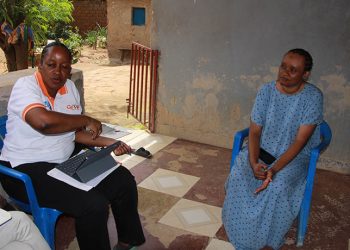
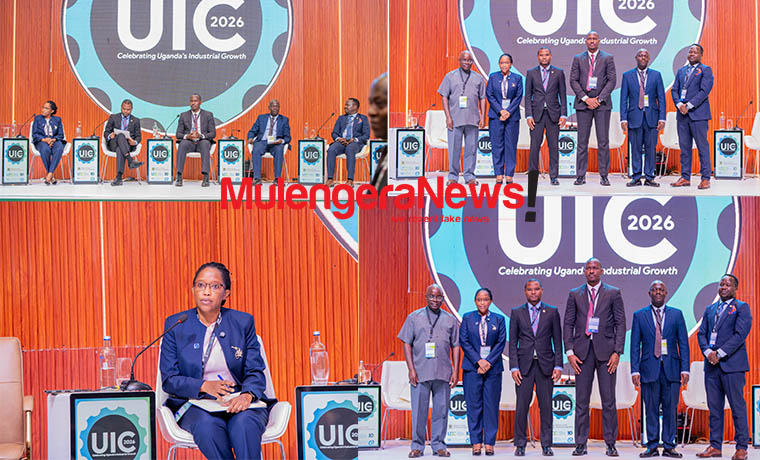
The discussion, moderated by Dr. Fred Muhumuza, Senior Lecturer at Makerere University Business School, brought together Kate Kiiza, Executive Director and Chief Corporate and Institutional Banking Officer at dfcu Bank, Yassin Sadeq Mayanja, Country Economist at the Islamic Development Bank (IsDB), Kampala Regional Hub, Kenneth Owera, Chief Investment Officer at the National Social Security Fund (NSSF) Uganda, Dixon Sembuya, CFA, Director of Research and Market Development at the Capital Markets Authority (CMA), Uganda, and Francis Ogwang, Country Manager for Uganda at the East African Development Bank.
Drawing on perspectives from commercial banking, development finance, pension fund management, and capital markets, the panel examined practical approaches to mobilizing the patient, long-term capital needed to finance industrial expansion, strengthen enterprise competitiveness, and unlock Uganda’s industrial potential. The discussion also highlighted the importance of bridging financing gaps, developing investment-ready businesses, and fostering strategic partnerships that translate industrial ambitions into commercially viable investments contributing to sustainable economic growth.
The discussion reinforced dfcu’s commitment to supporting industrialization through an approach that extends beyond traditional lending to include enterprise development, financial advisory support, and strategic partnerships.
Kate Kiiza emphasized that unlocking industrial financing begins with preparing businesses to attract and effectively utilize investment.
She explained that while Uganda presents significant opportunities for industrial expansion, successful financing depends on the ability of investors to demonstrate commercial viability, manage operational risks, and assemble competent teams capable of delivering projects.
She highlighted three fundamental considerations that guide financing decisions, including project feasibility, effective risk identification and mitigation, and the experience and technical capacity of the project team.
Recognizing that industrial transformation requires significant and sustained investment, dfcu Bank continues to leverage strategic partnerships to connect businesses with appropriate financing solutions.
Kiiza highlighted the Bank’s collaboration with Uganda Development Corporation and other development finance institutions in supporting projects that require complementary financing arrangements.
Additionally, agriculture remains a critical pathway to Uganda’s industrial transformation, particularly through value addition, agro-processing and the development of stronger local value chains. Kiiza highlighted dfcu Bank’s role in supporting agricultural enterprises through the dfcu Foundation, which works with businesses at different stages of their growth journeys.
Through these initiatives, dfcu supports enterprises from primary agricultural production through business development, certification and preparation for value addition and processing.
Kiiza further reaffirmed dfcu Bank’s commitment to advancing inclusive economic participation by supporting women entrepreneurs through targeted financial solutions and business development initiatives. She highlighted the Bank’s involvement in initiatives such as GROW and green financing, alongside other programmes designed to support women in business.
The panel discussion also explored opportunities to mobilize institutional capital, expand alternative financing instruments and strengthen cooperation among financial sector players.
The conference comes at an opportune moment as Uganda pursues its ambitious vision of building a USD 500 billion economy by 2040, underpinned by the Tenfold Growth Strategy.
Central to this transformation is the ATMS framework, prioritizing Agro-industrialization, Tourism, Mineral-based Development, and Science, Technology, and Innovation as key engines of economic growth. Achieving this ambition will require substantial private sector investment, infrastructure development, value addition, technological advancement, and stronger public-private partnerships. (For comments on this story, get back to us on 0705579994 [WhatsApp line], 0779411734 & 041 4674611 or email us at mulengeranews@gmail.com).