








By Aggrey Baba
For years, government agencies have repeatedly found themselves working against one another, sometimes undoing projects already completed by fellow institutions, with the recurring clashes between Kampala Capital City Authority (KCCA) and the National Water and Sewerage Corporation (NWSC) over roadworks providing one of the clearest examples of the problem.
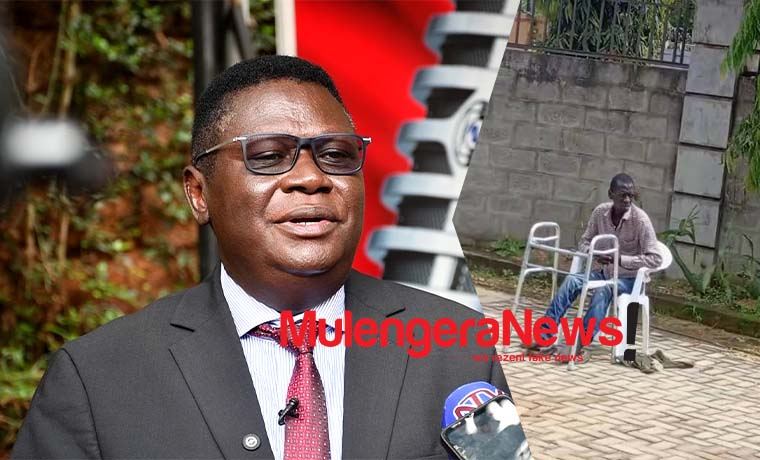
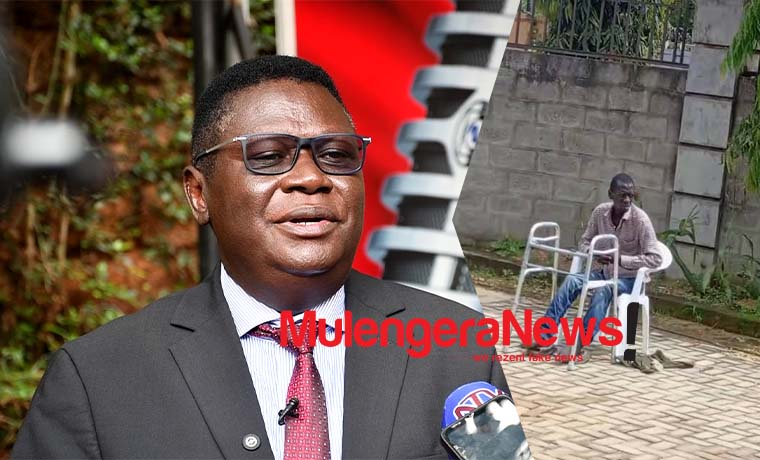
According to Justice Minister Norbert Mao, such institutional contradictions can be avoided if government agencies borrow a leaf from the Justice Law and Order Sector (JLOS), which he credits with demonstrating how cooperation and coordination can improve public service delivery over its 25-year existence.
Speaking at the Uganda Media Centre on Wednesday, Mao questioned why KCCA would spend public money constructing and tarmacking roads only for NWSC to excavate the same roads shortly afterwards to install water pipes.
He argued that such situations expose the cost of government institutions planning and implementing projects without adequately consulting one another.
“Before KCCA starts any major project, they should call National Water and SewerageCorporation. They need to learn from JLOS,” Mao said.
The minister also pointed to instances where government agencies issue conflicting public statements, saying institutions should be able to harmonize their positions and communicate without publicly contradicting one another.
He said the experience of JLOS demonstrated that institutions with different mandates could cooperate, coordinate their activities and pursue common objectives without constantly engaging in unnecessary disagreements.
Mao made the remarks as the justice sector prepares to commemorate 25 years of institutional cooperation, a milestone he said should provide lessons for the wider government.
One of the achievements he highlighted was the construction of the Justice Law and Order Sector Towers along Katalima Road, which brings several institutions within the justice system together under one roof.
He described the building as one of the most impressive government structures constructed in recent years, saying it had strengthened coordination among institutions that previously operated from separate locations.
The minister also credited JLOS with contributing to the expansion of judicial services across the country, particularly through the establishment of additional High Court stations and the decentralization of the Court of Appeal.
He cited the High Court in Lugazi as an example of how bringing judicial services closer to the people had reduced the burden on residents who previously had to travel to Mukono to access similar services.
Mao reiterated government’s ambition to establish a High Court in every district and a magistrate’s court in every constituency, arguing that geographical barriers should not prevent people from accessing justice.
He said bringing courts closer to the people would help address situations where frustrated citizens resort to taking the law into their own hands because of difficulties accessing formal justice institutions.
Other interventions he credited to the sector include automated case management systems, electronic filing, alternative dispute resolution, mobile courts and programmes targeting children in conflict with the law.
Mao further revealed that construction of the Police Headquarters was expected to be completed by December, while another tower for the High Court was expected to commence next year.
He attributed the progress registered by the sector to cooperation among its constituent institutions, development partners and other stakeholders, saying the achievements demonstrated what could be accomplished when public institutions worked towards shared goals.
However, he acknowledged that JLOS still faces significant challenges, particularly the persistent case backlog, the high cost of legal services and difficulties accessing justice in remote communities.
These challenges, he said, remain areas requiring attention even as the sector celebrates its achievements over the past 25 years.
JLOS will commemorate its 25th anniversary through the National Justice Week scheduled to run from November 23 to December 4, 2026, with activities expected to focus on access to justice, institutional accountability, human rights and the performance of the justice system of Uganda.