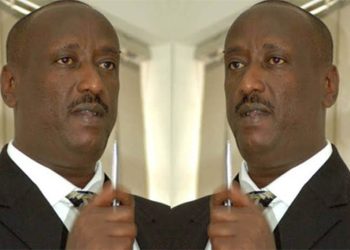








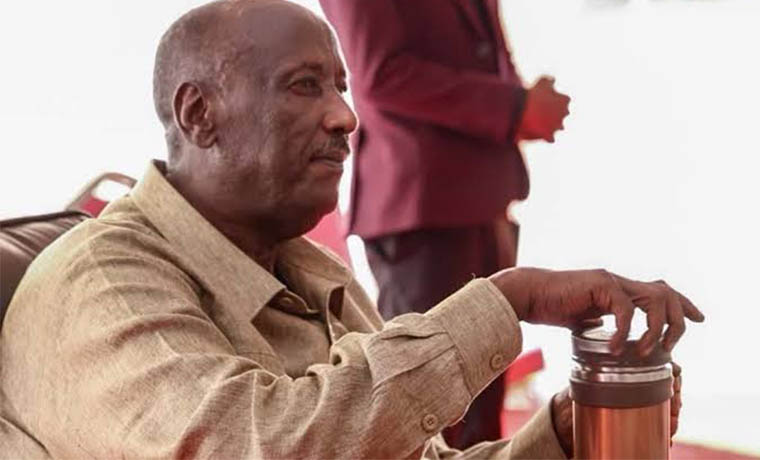
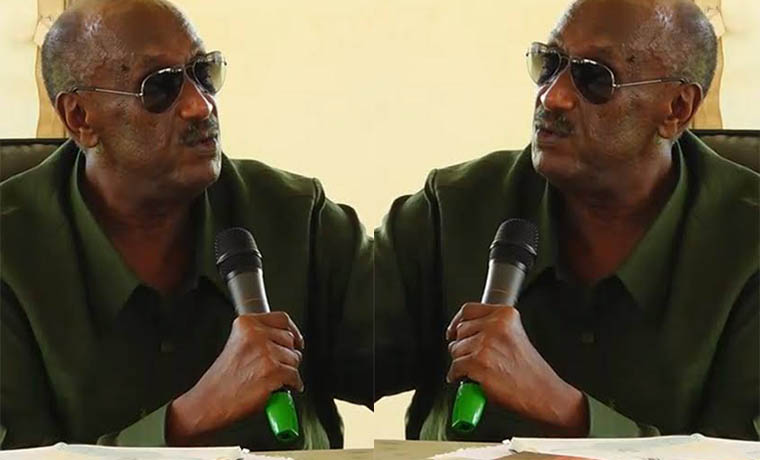
Women could take up at least one-third of the positions responsible for implementing Uganda’s proposed national power-sharing arrangement under recommendations by Gen Salim Saleh, who wants female leaders given a guaranteed stake in decisions giving shape to the country’s political future.
In a working paper co-authored with Prof Ogenga Otunnu, Saleh proposes that women’s organizations, civil society groups and female MPs push for a minimum 33% representation on the proposed Joint Implementation Committee, the body expected to oversee the execution and monitoring of commitments under the Consociational Democracy Agreement (CDA).
The proposal seeks to prevent the proposed national settlement from becoming another political arrangement dominated by male politicians, with women only appearing in consultations or being treated as beneficiaries of decisions made by men.
Salim Saleh also proposes incorporating gender parity provisions into the broader power-sharing formula to ensure that women’s interests are considered in political negotiations, appointments and the implementation of national reforms.
But his recommendations go beyond securing seats at the negotiating table. He wants women to become active players in national reconciliation, conflict resolution, land justice and monitoring government service delivery.
The paper proposes mobilizing women’s networks across ethnic, religious, regional and political party lines to challenge the manipulation of identity and promote cooperation among communities.
Saleh argues that women should take leading roles in reconciliation, healing, social justice and peacebuilding initiatives at parliamentary and lower levels.
On land ownership, he proposes reforms to strengthen women’s tenure security, particularly through the proposed land-bank and land-mediation processes.
This would place women’s land rights within the broader national settlement, which identifies unresolved land disputes, historical dispossession and unequal access to resources as continuing sources of conflict and marginalization.
Rhe veteran soldier also wants organized women’s groups to monitor government commitments in health, education and water, arguing that weaknesses in service delivery in these sectors have significant consequences for women.
Under the proposed accountability framework, women’s organizations would document the impact of government programmes using gender-disaggregated information and submit their findings to the proposed review committee every year.
The paper also seeks to give women a prominent role in documenting Uganda’s troubled political history, proposing that they participate in the national historical-memory process as witnesses, narrators and advocates.
This would allow women to record their experiences of past injustices, displacement, political violence and conflict, ensuring that their accounts are incorporated into the country’s reconciliation process.
His recommendations reflect his wider argument that national political settlements cannot achieve lasting inclusion when sections of society remain outside the institutions responsible for negotiating and implementing reforms.
Salim Saleh therefore wants women’s participation to extend beyond symbolic representation to actual decision-making, implementation and accountability.
The proposed Joint Implementation Committee would be among the key structures responsible for translating the agreement’s recommendations into practical interventions, making the proposed one-third representation a significant part of the arrangement’s governance framework. (For comments on this story, get back to us on 0705579994 [WhatsApp line], 0779411734 & 041 4674611 or email us at mulengeranews@gmail.com).