








By Ben Musanje
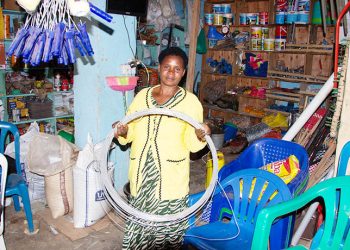
For thousands of women who have fled conflict and instability in their home countries to seek refuge in Uganda’s Nakivaale Refugee Settlement, rebuilding their lives comes with a daunting challenge: finding the financial means to survive and become economically independent.
But amid the struggles of displacement, limited resources and stiff business competition, a new financial lifeline is opening doors for women entrepreneurs, helping them turn small business ideas into income-generating ventures.
Through the Government’s Generating Growth Opportunities and Productivity for Women Enterprises (GROW) Project, women in Nakivaale are gaining access to affordable credit and financial services to start, strengthen and expand their businesses.

UGAFODE Microfinance Limited, one of the participating financial institutions delivering the programme in the settlement, says the initiative is giving women an opportunity to move beyond economic dependence and build sustainable livelihoods.

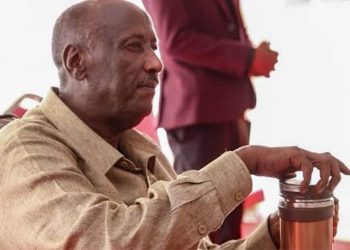
Samuel Muhoozi, Sales and Marketing Officer at UGAFODE Nakivaale, says the financial institution began extending its services to Nakivaale in 2020, following efforts by the Office of the Prime Minister to promote economic empowerment among refugees rather than having them depend solely on humanitarian food assistance.
Nakivaale, which comprises Juru sub-base camp, the main base camp and Rubondo sub-base camp, hosts refugees from different countries, many of whom face financial, economic and social challenges as they try to rebuild their lives.
According to Muhoozi, grocery businesses, particularly the sale of food and drinks, are among the most common economic activities in the settlement. Others engage in small-scale agriculture and other microenterprises to earn a living.
However, the growing number of people venturing into similar businesses has created intense competition, making access to capital and business management skills increasingly important.
“When people come here, they face a lot of challenges, both financially and economically. Most of the businesses they engage in are grocery businesses, selling food and drinks, but because many people are doing the same thing, competition becomes a big challenge,” Muhoozi explained.
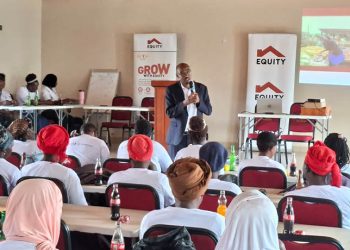
He said UGAFODE initially encountered hesitation from refugees who were unfamiliar with formal financial services. The institution responded by introducing financial literacy programmes and business skills training to equip them with the knowledge and confidence to manage their finances and enterprises.
With time, more refugees began opening accounts and applying for loans to establish businesses or inject additional capital into existing ones.
Muhoozi said UGAFODE offers different loan packages, including smaller amounts for entrepreneurs who need modest capital to get started.
The introduction of the GROW Project in 2025, however, marked another opportunity, particularly for women seeking affordable financing to grow their enterprises.
He noted that the programme attracted many women who opened accounts with UGAFODE and subsequently accessed GROW-supported loans to invest in their businesses.
“These loans are very helpful to women entrepreneurs because they come with low interest rates, giving them an opportunity to boost their businesses and become profitable,” he said.
Implemented by the Government of Uganda with support from the World Bank and the Private Sector Foundation Uganda (PSFU), the GROW Project aims to increase women’s access to financial and business development services, enabling them to start, strengthen and expand their enterprises.
Through participating financial institutions such as UGAFODE, the programme is extending these opportunities to women entrepreneurs in refugee settlements, including Nakivaale.
For women who have had to start over in an unfamiliar environment, access to credit could mean the difference between abandoning a business idea and turning it into a source of income.
Nevertheless, access to finance is only one part of the struggle. Entrepreneurs in Nakivaale also contend with unpredictable weather conditions, including prolonged droughts and heavy rains that sometimes destroy their temporary shelters and disrupt their livelihoods.
Muhoozi said these challenges, coupled with business competition and limited financial resources, continue to affect the economic progress of refugees.
He called on the government and development partners to increase funding for refugee empowerment initiatives, expand business development training and strengthen financial inclusion, especially for women and young people.
He also urged the government to facilitate more grants and affordable financing for financial institutions to enable them to extend credit to refugees who often lack the collateral required to secure conventional loans.
Muhoozi emphasised that additional economic empowerment projects targeting women, youth and other vulnerable groups would help create opportunities not only in refugee settlements but also in surrounding host communities.
As Nakivaale’s women entrepreneurs navigate the difficult journey from displacement to self-reliance, programmes such as GROW are creating opportunities for them to access capital, grow businesses and reclaim control over their economic futures.
For many, the ambition is no longer simply to survive in a settlement, but to build businesses capable of sustaining their families and securing a more independent future. (For comments on this story, get back to us on 0705579994 [WhatsApp line], 0779411734 & 041 4674611 or email us at mulengeranews@gmail.com).